America’s LNG Future
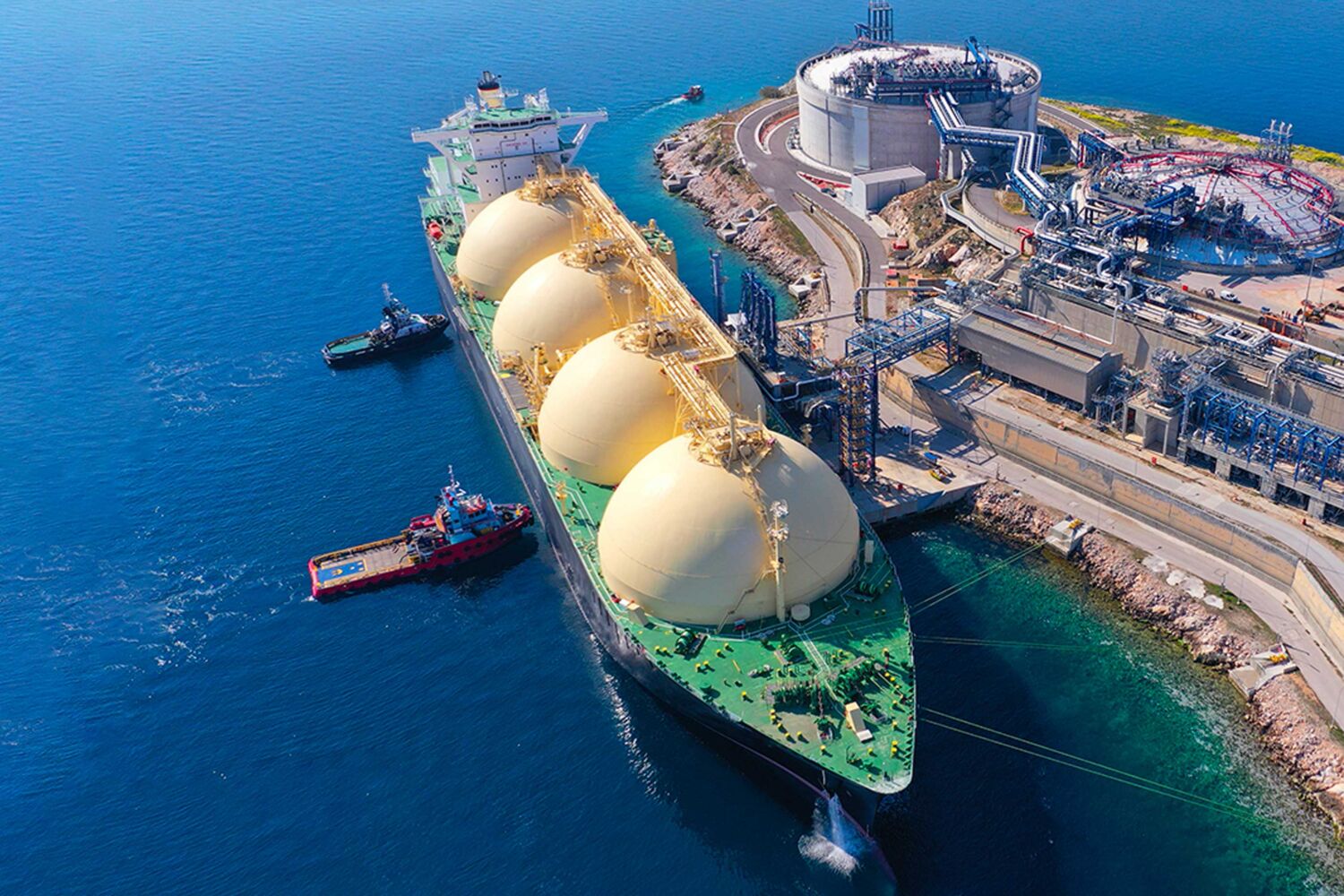
As our planet becomes more electrified and industrialized, demand for energy of all kinds increases. One fuel where America has an advantage is natural gas. But too many politicized regulations are threatening American dominance.
We use natural gas in two principal ways: We burn it to generate electricity and we use it for other important, value-added products such as feedstock and plastics. Both uses have increased amid record production in the United States.
When natural gas is extracted from the earth, it’s in its familiar gaseous state. We mostly move it around by pipeline — to houses, to factories, and to Canada and Mexico. But, exporting it to far-away countries requires converting it to liquid form called Liquified Natural Gas, or LNG for short. This involves cooling it down to 260 degrees below zero Fahrenheit, so it takes up less space and is safer to move around on specialized ocean carriers.
The United States is the global leader in LNG exports thanks to recent technological advances that allow the US to access its massive reserves and because billions of dollars have been invested in the last decade in building high-tech export facilities. American gas is produced safely by a skilled labor force that protects the environment, which cannot be said of all gas producers overseas.
Unlike other fuels like diesel, gasoline, and propane, LNG exports are tightly regulated and those regulations have become more political than economic in nature. Laws from as far back as 1938 allow regulators to play games today, threatening to snatch from American exporters a once-in-a-generation opportunity to respond to the increasing global demand for LNG.
America’s first LNG export facility, based in Alaska with fuel bound for Japan, was approved in 1967. The authorization was less than 3 pages long. Today’s regulations mean the application for a license is thousands of pages, including economic and environmental impact analyses. The license itself can be more than 100 pages long.
Cumbersome licensing comes with the territory of tightly regulated businesses. But when permits can be rescinded, or encumbered with new requirements, or withheld for political reasons, application and licensing costs are too steep. In early 2024, the Biden Administration paused regulatory decisions on LNG exports to most countries. The same thing happened in 2012. Projects waiting for their paperwork are simply frozen. This means that future growth is frozen in place.
While the global market for LNG skyrockets due to electrification and industrialization, regulatory uncertainy threatens America’s ability to secure its position as the world’s top LNG exporter. Businesses and investors need to trust their permits, not wonder if shifting political winds will suddenly knock their projects off course.
Three important reforms will ensure America’s leadership in this space.
First, the Biden Administration’s pause on LNG export decisions should be lifted as soon as possible. Constructing LNG export facilities requires years, and delays in decisions today will continue to impact American exporters far into the future.
Second, the federal government should streamline its export approval process for LNG. Options such as creating new categories of pre-approved exports and even removing the Department of Energy from the equation altogether should all be on the table.
Finally, the Federal Energy Regulatory Commission’s environmental reviews of LNG export facilities should be depoliticized. Rather than letting its analysis stray into climate change impacts, the Commission should focus on its core mission instead… technical reviews of energy infrastructure and ensuring the reliability of US electricity grids.
An energy-dominant America is an America where, among other things, strong and fair trading relationships can be established with countries that trust our permits and our contracts. This enables us to compete with our geopolitical adversaries and help our allies. A rational export policy will keep natural gas supply high so that all sectors benefit, not just LNG exports – whether it’s gas as feedstock for American manufacturing or fuel for electric generation.
After all, the gas will be produced somewhere and by somebody. And if that’s in America and by Americans, that’s a good thing.