Is Global Shipping the Hidden Weak Link in the Energy Transition?
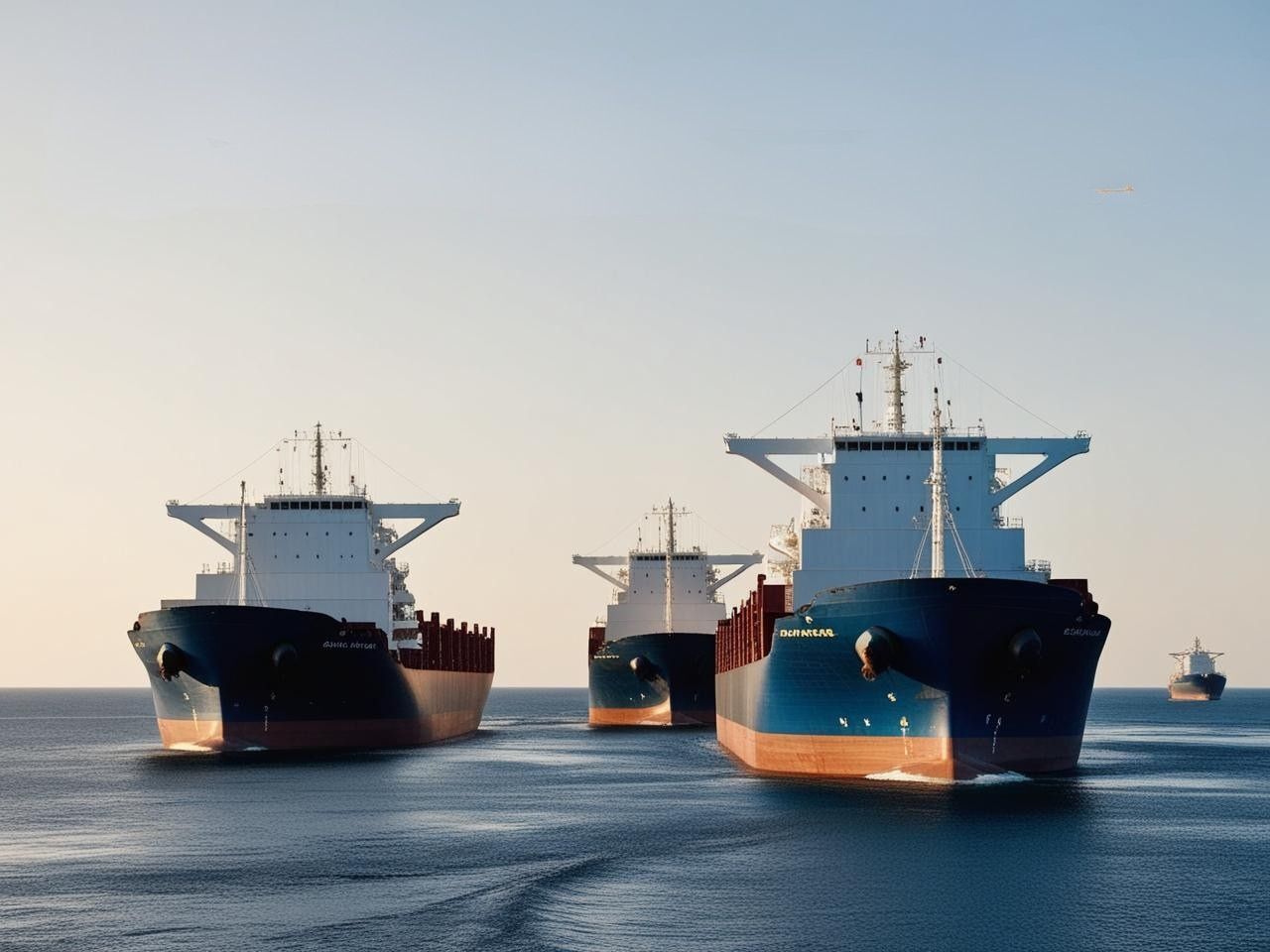
In today’s globalized economy, nearly everything we consume—electronics, cars, food, and even the raw materials that power the so-called green revolution—travels by sea. Maritime shipping is the invisible engine of modern trade, responsible for moving nearly 80% of the world’s goods. Yet, as the world pushes toward an ambitious energy transition, few have considered the logistical reality of what this shift entails.
Our latest research, The Energy Transition’s Global Shipping Challenge, highlights a critical oversight: The push to replace fossil fuels with renewable energy technologies requires an unprecedented expansion in mineral extraction and transport. These minerals—lithium, cobalt, nickel, and rare earth elements—must be mined, refined, and shipped across oceans before they can be turned into batteries, solar panels, and wind turbines.
This isn’t just a minor adjustment—it’s a seismic shift. The International Energy Agency (IEA) estimates that meeting global net-zero goals will require a fourfold to sixfold increase in critical mineral production. That means exponentially more maritime transport. The world’s maritime infrastructure to handle this surge simply does not exist.
A Shipping Shortage with No Easy Fix
The numbers tell the story. The energy transition will require millions of tons of additional minerals to be extracted and shipped from mines in Africa, South America, and Australia to refining hubs, primarily in China. From there, the refined materials must be transported to manufacturing centers in the U.S., Europe, and Asia before the final products—EV batteries, solar panels, and wind turbine components—are distributed worldwide.
This process is already pushing maritime logistics to its limits. The only way to meet the expected surge in demand is to nearly double global shipbuilding capacity by 2035. Yet, shipbuilding is not an industry that scales overnight. It requires skilled labor, vast infrastructure, and long-term investment—factors that cannot be conjured up at will.
Here’s the harsh reality: The U.S. builds less than 1% of the world’s new ships each year. Decades of outsourcing have hollowed out American shipbuilding, leaving us dependent on foreign manufacturers. This puts both our economy and national security at risk. The transition falters if we can’t move the raw materials required for energy production.
The Fuel Problem: What Will Power the Ships?
Even if we miraculously expand shipbuilding, there’s another looming question: What will power these vessels?
The International Maritime Organization (IMO) has set aggressive decarbonization targets, pushing the shipping industry away from traditional bunker fuel toward low-carbon alternatives. But the reality is that viable alternatives—such as ammonia, hydrogen, and biofuels—are not ready for large-scale adoption. These fuels are costly, unproven at scale, and require entirely new fueling infrastructure at ports worldwide.
This creates a double bind: The energy transition demands more shipping, but the policies to decarbonize the industry could inhibit its expansion. The result? Higher costs, supply chain disruptions, and delays in delivering the materials needed for renewable energy expansion.
A National Security and Economic Imperative
Beyond the logistical and technological hurdles, the lack of shipping capacity presents a strategic vulnerability. The U.S. has ceded control of a vital industry to foreign powers, particularly China, which dominates critical mineral mining, refining, and, importantly, shipbuilding. If China or other geopolitical rivals control the transport of critical energy materials, they effectively control the pace and direction of the energy transition.
We argue that revitalizing U.S. shipbuilding must become a policy priority to avoid this risk. This includes:
- Investing in domestic shipyard expansion to boost production capacity.
- Reforming maritime regulations to streamline approval processes and cut red tape.
- Bolster support for our domestic maritime industry.
- Strengthening alliances with trusted partners to secure stable mineral supply chains.
Without immediate action, the U.S. risks falling behind—not just in energy production but in the ability to sustain a reliable and resilient economy.
The Bottom Line
The energy transition isn’t just about replacing oil rigs with wind farms or swapping gas stations for EV chargers. It’s about the entire supply chain that makes these technologies possible. And that supply chain has an invisible and massive weak link: shipping.
Without a major expansion in maritime transport—and a strategic rethink of how we build, fuel, and manage our global shipping fleet—the energy transition could grind to a halt before it even fully begins.
The next time policymakers tout the promise of a green future, they should look hard at the ships required to get us there.