Energy Education: Foundational or Aspirational? A Survey of Top 50 U.S. Universities
The Issue
Mark P. Mills
Energy is a subject that is both complex and far-reaching for a simple reason: energy is needed for every activity, product, service, business, and even every means of exchange. Thus, it matters what students are taught.
What do universities focus on when it comes to energy course work, not when students are in pursuit of energy-specific or environmental-focused degrees, but in pursuit of degrees in economics, business, political science, law, and engineering in general? To put the question simply, are students being educated about the reality of the energy world that exists, or about an aspirational future dominated by climate-driven policy goals that call for an “energy transition”?
One might aspire to abandon petroleum, for example, but oil energizes some 95% of all the transportation machines on the planet. Oil is the world’s largest traded commodity and continues to be critical for economic growth and geopolitical stability.
One might similarly aspire to see wind and solar supply most electricity, but global natural gas and coal use are expanding rapidly. And it was the shale revolution that vaulted the U.S. to first place as the world’s biggest natural gas producer and a dominant exporter. In fact, it was that capacity that turned out to have been pivotal in delinking Europe from Russian gas dependency.
Many of us have anecdotal evidence about what university students are taught about energy matters, but to find out more definitively whether energy education is broadly agnostic, or to what extent curricula are bent to climate aspirations, we partnered with Professor Shon Hiatt at the University of Southern California to undertake a survey.
The Survey
Shon R. Hiatt, PhD
Using a keyword search, we identified 1,425 energy classes from the 2024-2025 school term among the top 50 U.S. universities, the latter taken from the U.S. News & World Report rankings. We then obtained course descriptions, syllabi (where available), departmental affiliations, and school/college affiliations. To facilitate cross-departmental comparisons, we standardized department names and grouped them into broader categories. For instance, variations such as “arts & sciences,” “humanities & sciences,” and “college of arts & sciences” were consolidated under the label “Arts & Sciences.” These categories enabled us to aggregate departments into more general clusters, as reflected in our data set’s “specific department” and “broader department” charts.
Course theme
Then we used BERTopic, a Natural Language Processing artificial intelligence tool, to identify key themes in these courses. We employed topic modeling techniques to extract the top three most important words or phrases from each course description. We defined five categories—Economics, Climate, Renewables, Fossil Fuels, and Policy—and constructed comprehensive regular-expression patterns to capture relevant keywords and phrases for each category. The patterns included terms such as “market(s)” and “cost-benefit” for Economics; “climate change” and “carbon footprint” for Climate; “solar” and “wind” for Renewables; “coal”, “oil”, and “natural gas” for Fossil Fuels; and “policy(ies)” and “regulat*” for Policy.
We implemented a function that applies these patterns to each cleaned course description in a sequential manner, to obtain a matching category. If none of the patterns match, the course is labeled “Other.” This function was then applied to all course descriptions, and the resulting theme labels were saved in the “theme” column of our data set. Through this process, each course was categorized as Economics, Climate, Renewables, Fossil Fuels, Policy, or Other. As illustrated in Figure 1, 42% of classes were predominantly Economics themed, 15% Climate, 8% Renewables, 4% Policy, 3% Fossil Fuels, with the remaining 27% non-classified (Other).
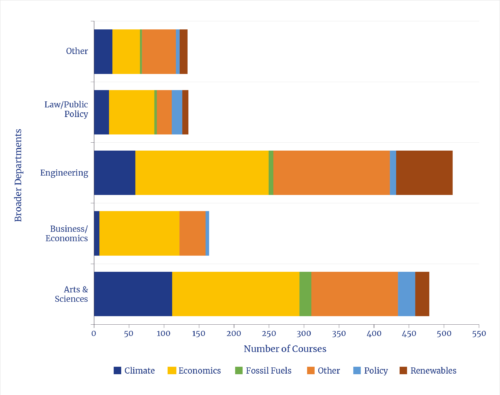
Figure 1. Energy Course Theme by Department
Climate-focused learning objective
When analyzing course curricula, a broad thematic label such as “Economics” or “Policy” may belie a more focused learning objective, such as addressing climate change. To determine whether addressing climate change was a predominant course objective, we employed semantic clustering on extracted keywords related to energy or climate, categorizing similar terms into overarching topics. Our climate keywords also included targeted searches for specific terms, including “climate change,” “climate justice,” and “energy transition.” Each course was then classified as either “climate-focused” (oriented toward solving climate problems and lowering carbon emissions) or “climate agnostic” (focusing on understanding energy systems, policy, markets, or technologies more broadly) based on the prevalence of the terms. The analysis as illustrated in Figure 2 revealed that 1,031 courses (71%) had a climate-focused learning objective, while 394 (29%) were climate-agnostic.
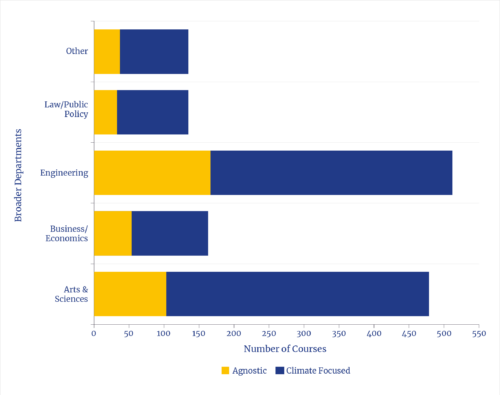
Figure 2. Climate -focused Learning Objective
Energy technology prevalence
Finally, we sought to examine the predominant energy technologies discussed across all courses. To do so, we analyzed the keywords extracted from the course descriptions by aggregating the focal words of energy technologies associated with each course and calculated their frequency of occurrence. By tallying the occurrences of each keyword, we identified the top 10 common technologies emphasized in the courses. As illustrated in Figure 3, solar, wind, and geothermal technologies tend to dominate course curricula, while fossil fuel technologies fail to make the list.
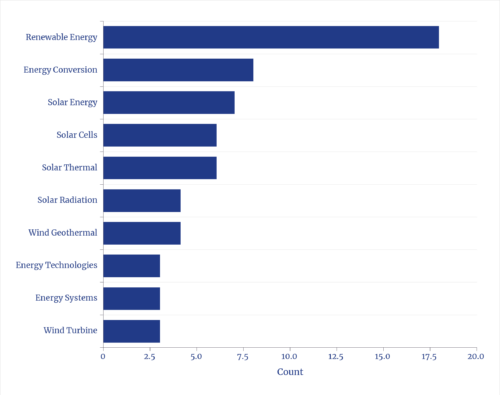
Figure 3. Most Prevalent Energy Technologies Identified in Courses
Perspectives
Mark P. Mills
Education matters. What we know about anything comes from whom we choose to listen to, what we choose to read, and, of course, what we’re taught.
For employers seeking college graduates to work in non-energy-centric businesses—whether in finance, manufacturing, supply chains, or international policy—there is a distinct difference between the value of an education anchored in reality versus aspirations. Energy policy priorities, whether for corporate or policy goals, are driven by numerous objectives from cost and reliability to security or environmental issues. But regardless of goals, what is possible in meaningful time frames is anchored in the underlying realities of physics, engineering, geology, geography, geopolitics, and human nature. Ignoring the extant realities of energy will render students unprepared for making sensible decisions, whether in the public or private sector. A sound grounding in the realities of the present is needed to prepare for the future.
As the above survey of curricula shows, not only does climate change dominate, but when it comes to energy technologies mentioned, nothing related to fossil fuels shows up in a list of the top 10 technologies across all courses. Meanwhile, the reality, one that has changed by only a tiny fraction over the past two decades, is that fossil fuels supply over 80% of global energy. And regardless of climate-motivated aspirations and plans, even in the International Energy Agency’s optimistic transition scenario, fossil fuels will remain critical for decades.
It bears noting that the survey results don’t tell us exactly what is being taught, or who’s teaching, whether guest lecturers or adjunct professors from activist organizations, or from energy corporations. And it could be that some course descriptions are “click bait” and may not reflect course content. It would be interesting to know more. Nonetheless, the curricula descriptions are likely indicative of the framing of the course work, and thus of a pervasive energy bias infused into every subject-matter domain.
ABOUT THE AUTHORS
Shon R. Hiatt, PhD is a professor of business administration at the University of Southern California and director of the USC Marshall Business of Energy Initiative where he leads a multidisciplinary team of faculty, students, and industry partners to advance solutions in global energy with a focus on business value creation through balancing energy security, safety, reliability, affordability, and cleanliness. His research on business strategy, innovation, and entrepreneurship has been published in leading academic journals and featured in popular media outlets. Prior to joining USC, he was a faculty member at Harvard Business School. He received a BA and MPA from Brigham Young University and MS and PhD from Cornell University.
Mark P. Mills is the Executive Director of the National Center for Energy Analytics, a distinguished senior fellow at the Texas Public Policy Foundation, a contributing editor at City Journal, a faculty fellow at Northwestern University’s school of engineering, and co-founding partner in Montrose Lane. His online PragerU videos have been viewed over 10 million times. He is author of The Cloud Revolution: How the Convergence of New Technologies Will Unleash the Next Economic Boom and a Roaring 2020s, (2021). Previous books include Digital Cathedrals: The Information Infrastructure Era, (2020), Work InThe Age Of Robots (2018), and The Bottomless Well, (2005), about which Bill Gates said, “This is the only book I’ve ever seen that really explains energy.” He served as Chairman/CTO of ICx Technologies helping take it public in a 2007 IPO. Mark served in President Reagan’s White House Science Office and, earlier, was an experimental physicist and development engineer in microprocessors and fiber optics, earning several patents. He earned his physics degree from Queen’s University, Canada.