The Battery Storage Delusion: Utility-Scale Batteries Are No Silver Bullet
The Issue
Utility-scale lithium-ion battery energy storage systems (BESS), together with wind and solar power, are increasingly promoted as the solution to enabling a “clean” energy future.1 Advocates argue that batteries can store surplus power from wind and solar generation and discharge it when needed.2 As a result, governments, utilities, and investors have directed billions of dollars toward utility-scale battery installations worldwide.
This growing reliance on battery storage reflects an intriguing narrative: that batteries can resolve the intermittent and weather-dependent aspects of wind and solar and significantly reduce, if not eliminate, the need for fossil fuels in power generation. Yet this enthusiasm often overlooks the physical and economic realities of the lithium-ion battery storage technology that is currently in use. While batteries can provide valuable short-term support to the grid, they cannot function as long-duration energy storage (LDES) solutions or scale to the levels needed to back up large-scale energy systems that are reliant on intermittent wind and solar.
By focusing on utility-scale batteries as a viable solution for a “renewable” energy future, policy discussions risk overlooking critical technical, material, and life-cycle constraints. Without a clear understanding of these limits, investments and regulations could undermine energy reliability and security while misallocating and depleting raw materials, energy, finances, and other resources—thereby intensifying the environmental pressures that batteries are intended to alleviate and diverting much-needed investment in peak-power-capable, dispatchable energy generation infrastructure toward short-term, energy-consuming storage infrastructure.
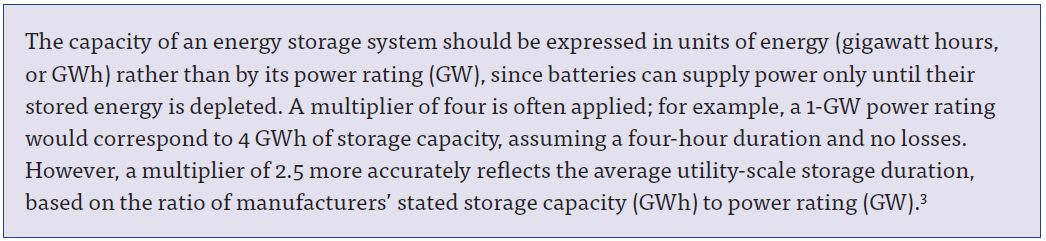
Figure 1 Installed Energy Storage Capacity Requirement by 2030
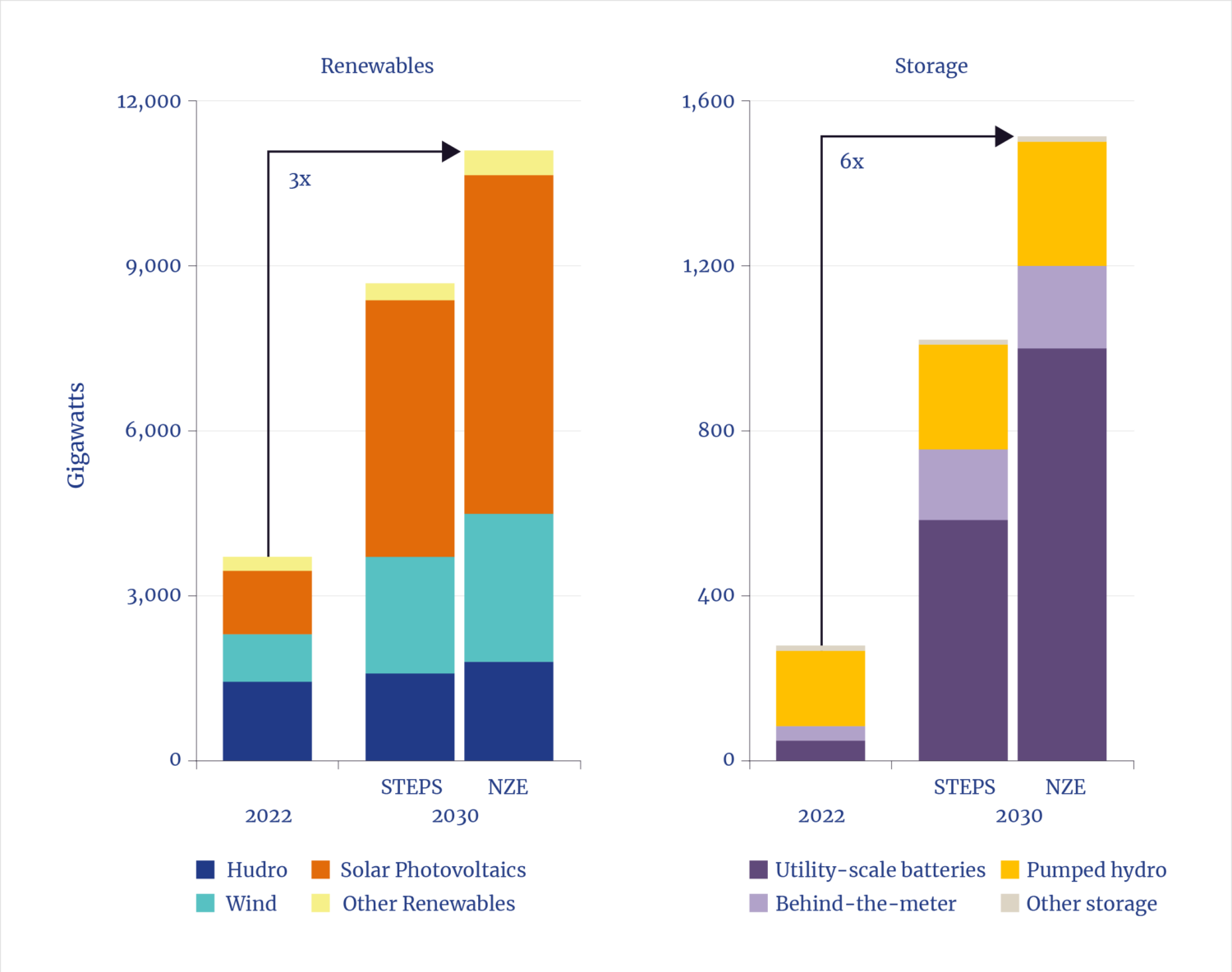
Source: Adapted from Oskaras Alšauskas et al., IEA 2024, Batteries and Secure Energy Transitions (International Energy Agency, 2024), fig 2.1, 68. This is a work derived by NCEA from IEA material, and NCEA is solely liable and responsible for this derived work. The derived work is not endorsed by the IEA in any manner.
The Reality
Utility-scale batteries are not long-duration, dispatchable power sources; they are energy sinks that carry significant economic and environmental costs. Most are designed to store chemical energy that can be extracted as electrical energy for one to four hours.4 A 400-MW battery system with a four-hour duration provides, in theory, 1,600 MWh of stored energy. In contrast, a 400-MW gas plant can operate almost indefinitely—if fuel is available. Batteries cannot deliver power continuously and must be recharged, often via the same intermittent power they were meant to buffer. They do not provide reliable backup.
Efficiency is frequently overstated. Manufacturers often cite round-trip efficiencies of 85% or higher, yet field data suggest that real-world efficiency is closer to 70% due to inverter losses, thermal management, control systems, and auxiliary loads.5,6
Battery life span and degradation further compound these limitations. Most lithium-ion batteries—currently the dominant chemistry for utility-scale systems—last for 10 to 13 years and degrade by 3% to 7% annually.7 Systems regularly require partial module replacements after six to eight years.
The scale required for sufficient backup is staggering. A single 1-GWh battery installation requires roughly 700,000 tons of mined, processed, and transported raw materials and consumes approximately 450 GWh of energy to manufacture—450 times its rated gross storage capacity—when the entire system and life cycle are taken into account.8
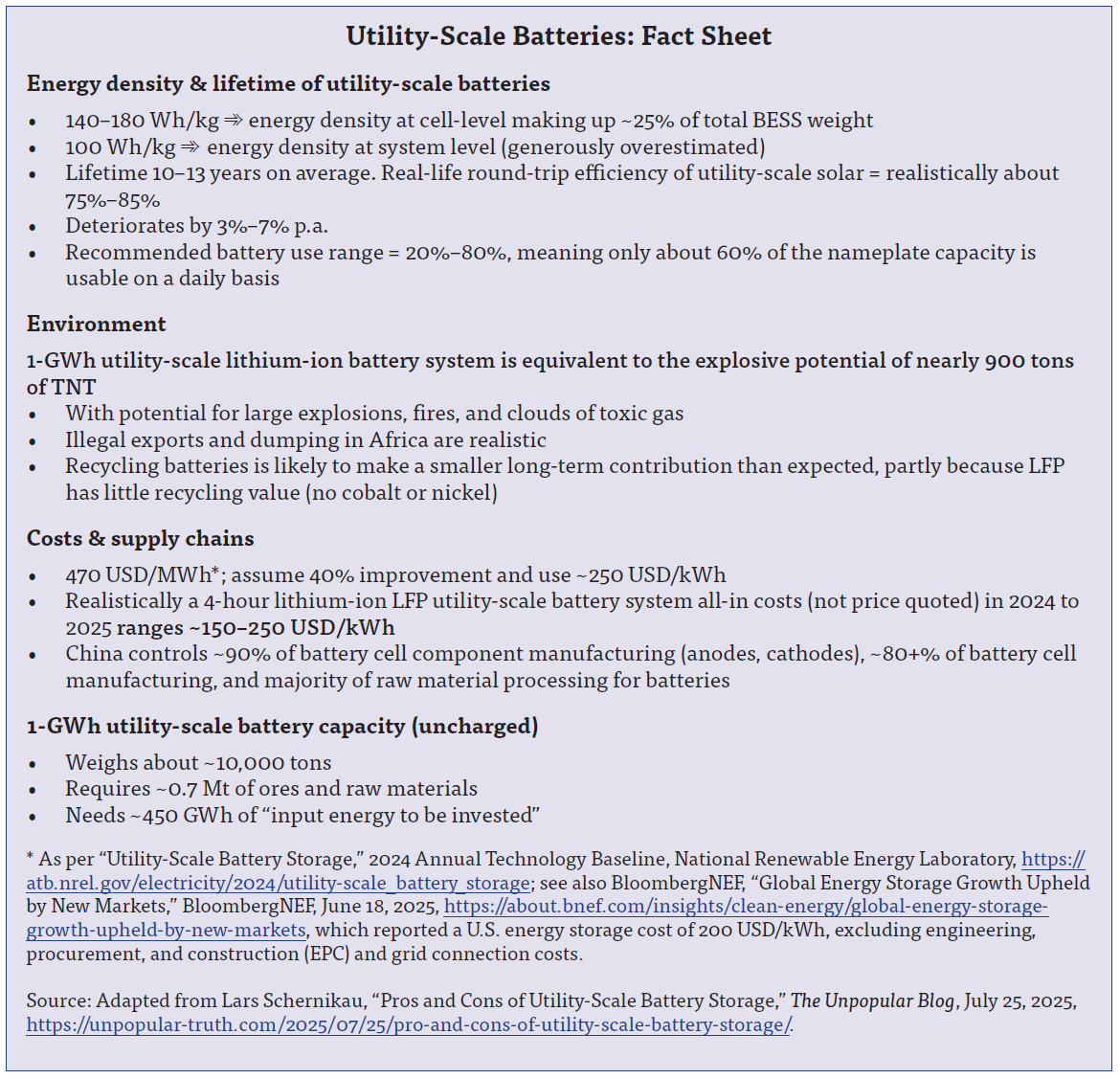
For Germany, in the absence of dispatchable generation or electricity imports, maintaining sufficient battery backup during a typical winter day (i.e., 60 GW sustained over 24 hours) would require approximately 1.9 TWh of utility-scale lithium-ion batteries, assuming 75% net round-trip efficiency. Producing this capacity would entail roughly 1.3 billion tons of materials and approximately 850 TWh of input energy; this cycle would need to be repeated about every 10 years, if battery life span is optimal.9,10,11 Scaling this technology to national levels would demand billions of tons of material extraction and thousands of TWh of up-front energy investment, most of it derived through fossil fuels. That raises serious questions about whether solar- or wind-power systems with battery backup are truly better for the environment.
Safety risks also increase with scale. The stored energy in larger 1-GWh lithium-ion systems is comparable to hundreds of tons of TNT, and thermal runaway events have caused fires and explosions in battery facilities, ships, and aircraft. The larger and more densely packed these systems become, the greater the risk.12
Battery recycling is often suggested as a solution to the environmental disposal burden of large-scale energy storage, but the numbers indicate otherwise. Recycling is five to 10 times less energy-intensive than producing new batteries, but most utility-scale batteries currently deployed will not even reach the end of their service life before 2035, delaying theoretical recycling benefits for years.13 Furthermore, lithium iron phosphate (LFP) batteries, which dominate utility-scale deployments, lack the higher-value cobalt and nickel that traditionally drive battery recycling economics. Instead, LFPs consist primarily of iron, lithium, phosphate, and graphite—materials that have significantly lower market value, making large-scale recycling less financially attractive and less likely to be implemented.
Regulatory environments for waste handling also vary widely, which can exacerbate environmental risks. Europe and China enforce strict regulations against improper disposal within their territories, but countries such as India and the U.S. have weaker enforcement. These inconsistent regulations have led to growing concerns about battery waste being transported across borders. Dumping in parts of Africa is common, and exporting waste beyond national territories appears to be allowed even in Europe and China. The environmental and human toll of such dumping is largely externalized by shifting the consequences elsewhere.
Perspectives
Policymakers and regulators must reconsider their expectations regarding what utility-scale batteries can realistically deliver. Batteries provide value in specific grid applications—particularly for frequency regulation, voltage support, and bridging short-term supply gaps—but they do not transform wind and solar installations into reliable, dispatchable power plants.14
Rather than expanding short-duration battery storage to compensate for weather-dependent generation, energy strategies should prioritize firm, electricity-generating, peak-power-capable, dispatchable capacity that ensures power availability even during extended periods of low wind and sun, known as Dunkelflaute (a German term for the “dark doldrums”).
The narrative that batteries can solve the intermittency problem at scale is not only technically flawed but also misleading, as it diverts attention from the development of power systems that actually generate—rather than consume or partially store—electricity and that are more robust, realistic, and cost-effective. Reliance on short-duration batteries as a core solution risks increased electricity shortages and higher energy costs.
Utility-scale batteries can enhance grid stability—but they are not a scalable or sustainable solution to overcome the intermittency of wind and solar. Policymakers should prioritize investment in proven, dispatchable energy systems while supporting research into emerging technologies, including long-duration energy storage (LDES) systems that are both economically viable and environmentally sustainable.
Endnotes
- Oskaras Alšauskas et al., Batteries and Secure Energy Transitions (International Energy Agency, 2024), https://www.iea.org/reports/batteries-and-secure-energy-transitions.
- BloombergNEF, “Global Energy Storage Growth Upheld by New Markets,” BloombergNEF, June 18, 2025, https://about.bnef.com/insights/clean-energy/global-energy-storage-growth-upheld-by-new-markets.
- Vikram Linga, “Duration of Utility-Scale Batteries Depends on How They’re Used,” Today in Energy, U.S. Energy Information Administration, March 25, 2022, https://www.eia.gov/todayinenergy/detail.php?id=51798.
- “Utility-Scale Battery Storage,” 2024 Annual Technology Baseline, National Renewable Energy Laboratory, https://atb.nrel.gov/electricity/2024/utility-scale_battery_storage.
- John Fannon, “Gridscale Batteries and Fire Risk” (NetZeroWatch, 2024), https://static1.squarespace.com/static/656f411497ae14084ad8d03a/t/66fd2383b56dbc6906390297/1727865736681/Fannon-Batteries.pdf.
- Sarah Lichtner, Ross Brindle, and Lindsay Pack, Electric Power Industry Needs for Grid-Scale Storage Applications(U.S. Department of Energy, 2010), https://www.energy.gov/oe/articles/electric-power-industry-needs-grid-scalestorage-applications.
- Lars Schernikau, “Pros and Cons of Utility-Scale Battery Storage,” The Unpopular Blog, July 25, 2025, https://unpopular-truth.com/2025/07/25/pro-and-cons-of-utility-scale-battery-storage.
- Schernikau, “Pros and Cons.”
- Giles Parkinson, “‘Watershed Moment’: Big Battery Storage Prices Hit Record Low in Huge China Auction,”RenewEconomy, July 2, 2025, https://reneweconomy.com.au/watershed-moment-big-battery-storage-prices-hitrecord-low-in-huge-china-auction.
- Heinz Schandl et al., “Global Material Flows and Resource Productivity: The 2024 Update,” Journal of Industrial Ecology 28, no. 6 (December 2024): 2012–31, https://doi.org/10.1111/jiec.13593.
- Simon P. Michaux, Estimation of the Quantity of Metals to Phase Out Fossil Fuels in a Full System Replacement, Compared to Mineral Resources, Geological Survey of Finland Bulletin 416 (GTK, 2024), https://tupa.gtk.fi/julkaisu/bulletin/bt_416.pdf.
- Edmund John Fordham and Wade William Magill Allison, “Safety of Grid Scale Lithium-Ion Battery Energy Storage Systems,” 2021, https://www.researchgate.net/publication/352158070_Safety_of_Grid_Scale_Lithium-ion_Battery_Energy_Storage_Systems.
- Schernikau, “Pros and Cons.”
- Schernikau, “Pros and Cons.”