What President Trump Needs to Say About Britain’s Economy-Destroying Net Zero Climate Policies
This week, President Trump is making his second state visit to Britain, a country that is Ground Zero of Net Zero. Once the cradle of the Industrial Revolution, Britain now serves as a cautionary tale of what happens when green ideology tries to cancel physics.
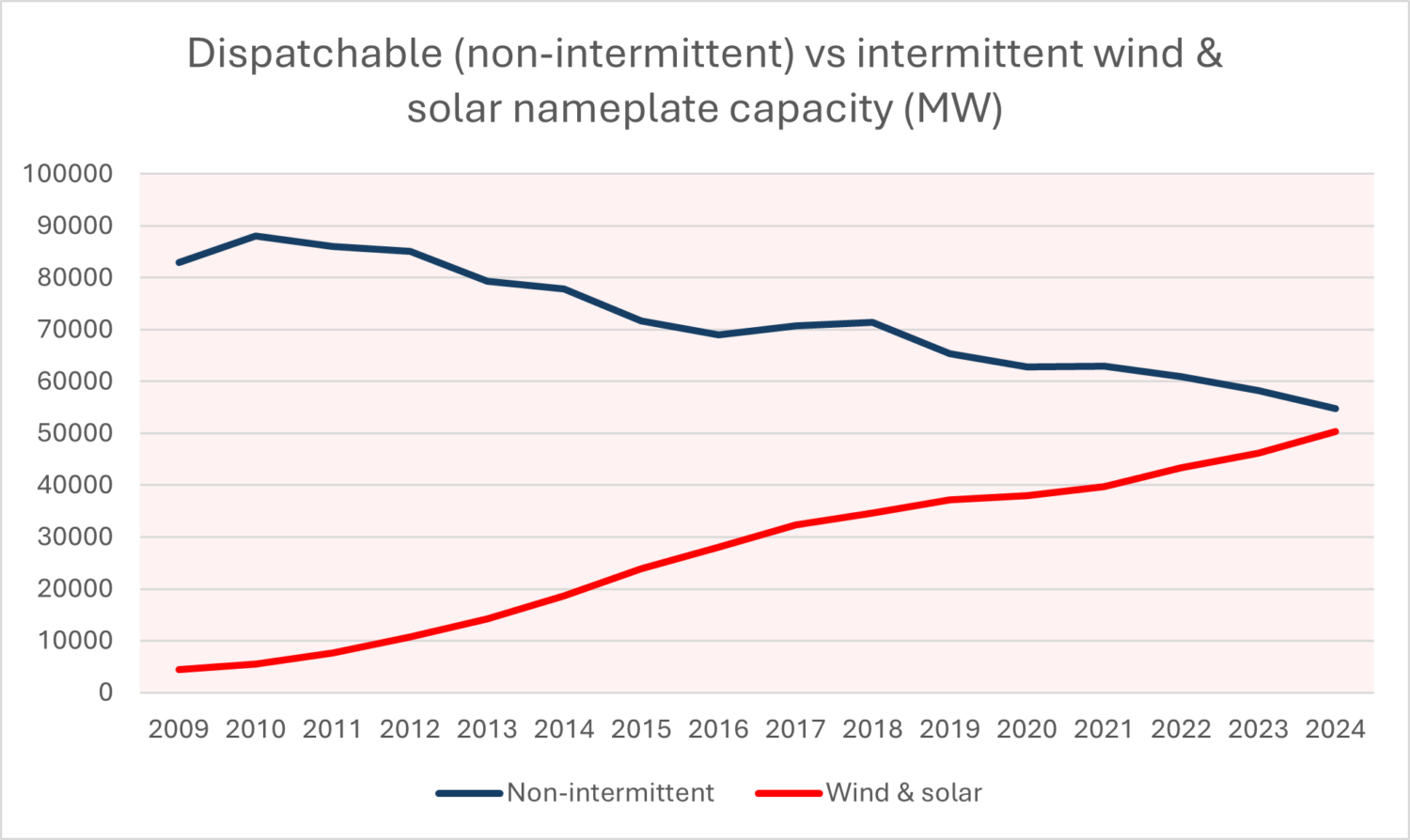
The 2008 Climate Change Act imposed a legal duty on the government to cut greenhouse gas emissions by 80% by 2050, a target which increased in 2019 to 100%, i.e., net zero. Then, to signal its climate virtue ahead of the UN Glasgow climate conference, the government decided to “power past coal.” Coal-fired capacity went from nearly 24 GW in 2010 to zero last year. But the coal-fired power stations that were blown up weren’t replaced with new dispatchable capacity. Other than hydro and bio-energy (burning wood chips from trees felled in North America), all other types of dispatchable capacity also fell, including gas and nuclear. Overall, Britain’s dispatchable capacity has fallen nearly 40% since 2010.
Having taken 33GW of dispatchable capacity off the grid, billions of pounds of renewable subsidies saw 45 GW of wind and solar come onto the grid. In 2010, for every one giga watt (GW) of wind and solar, there were nearly 20 GW of coal, gas, nuclear and a smattering of hydro. Last year, for every 1 GW of wind and solar, there were only 1.3 GW of dispatchable capacity.
This makes the grid more fragile. The more wind and solar, the higher the risk of blackouts – think Spain and Portugal earlier this year; Texas in 2021, and California multiple times.
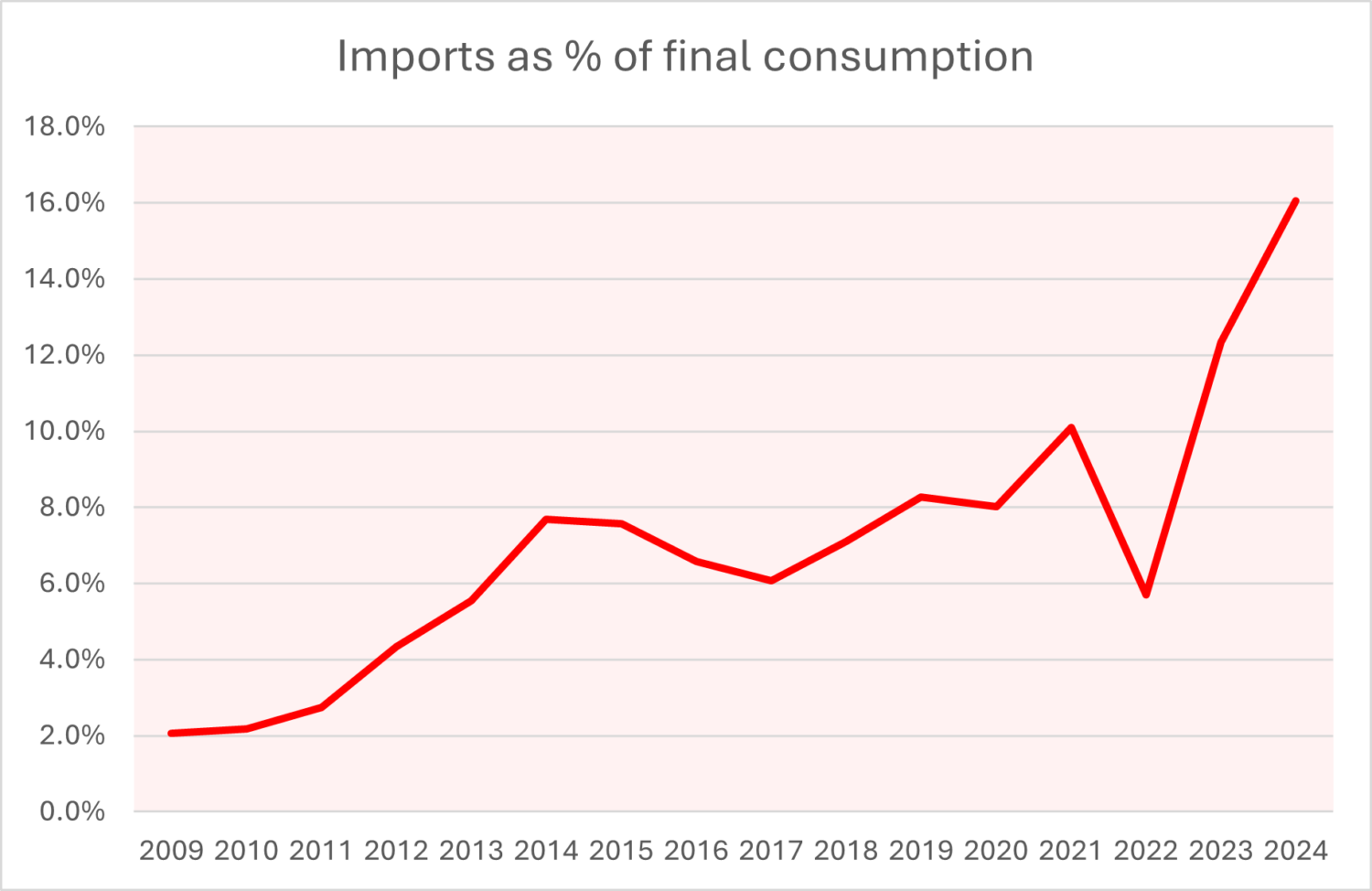
The reduction in dispatchable capacity means Britain does produce enough electricity to meet demand. As a result, electricity imports rose from 2% of demand in 2010 to 16% in 2024. Britain now depends on the fickleness of the weather and the kindness of strangers for its energy.
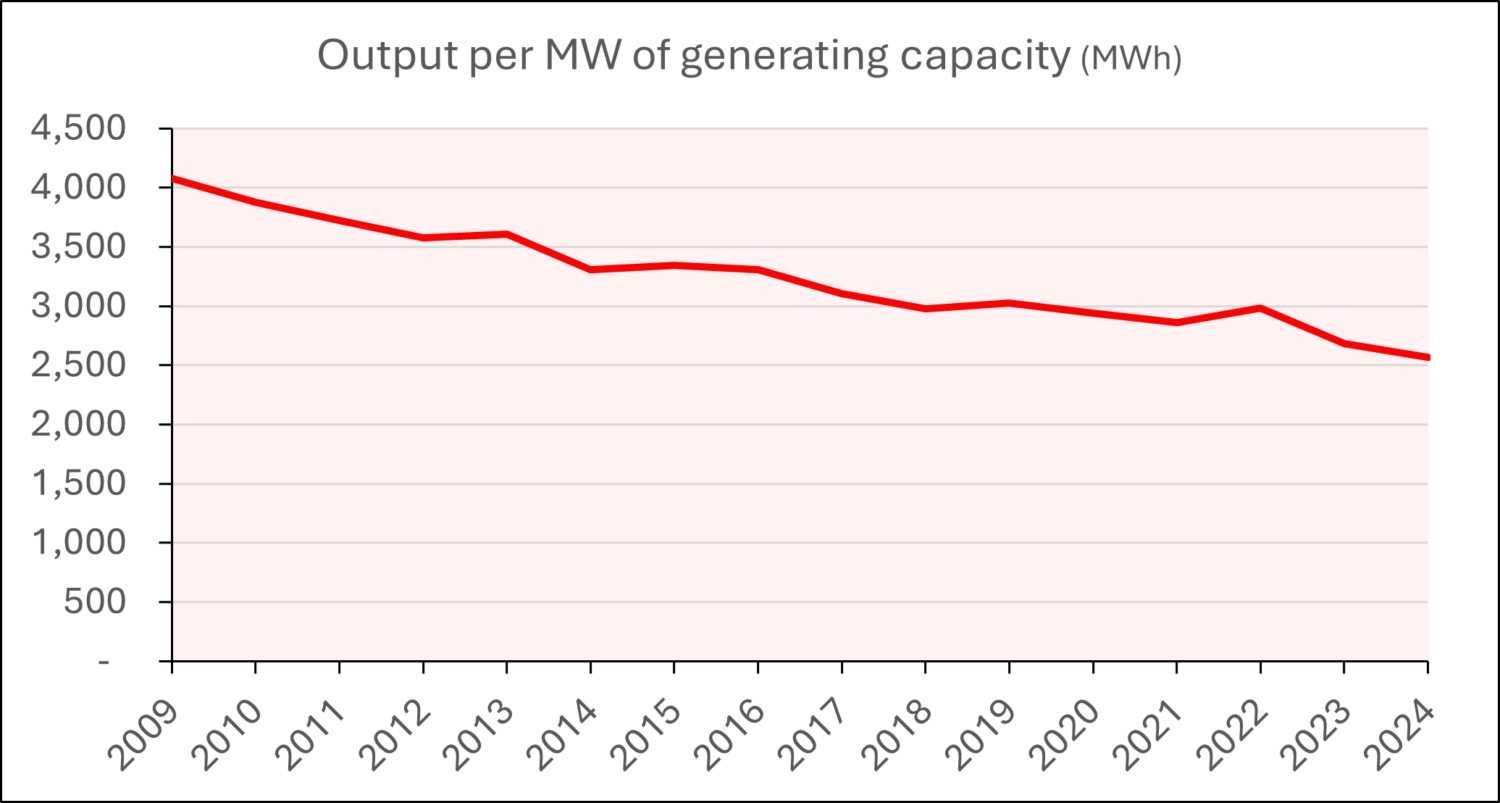
In addition to worsening energy security, renewables have caused a steep reduction in grid productivity. In 2009, one megawatt of capacity produced 4,000 MWh. In 2024, one megawatt produced only 2,586 MWh, a 37% decline. More capacity, less output.
The whole grid numbers are even more shocking. In 2009, 87 GW of generating capacity, with virtually no wind and solar, produced 356 terra watt hours (TWh) of electricity. In 2024, 100 GW, comprising nearly 50 percent wind and solar, produced only 270 TWh. Thus a 15% increase in capacity generated 24% less electricity.
This is accord with the First Law of the Energy Transition: You need more to produce less. The inefficiency and intermittency of renewables that crushes grid productivity pushes up electricity costs for everyone and makes people poorer, which gives us the Second Law of the Energy Transition: “The Energy Transition is an Energy Regression.”
This has macro-economic consequences. Research by the economic historian Nicholas Crafts shows that Britain’s growth rate in the period 2007–2019 was its weakest since 1780. The unprecedented deterioration in productivity growth since 2007 has profound geopolitical implications. Peace through strength requires having strong economies. Without any economic growth, Britain’s pledge to spend 5% of GDP on defense by 2035 is pure fantasy.
Rearming means reindustrializing and reindustrializing means recarbonizing. The same holds true across Europe. Europe cannot deter threats from the East while spending trillions of euros fighting climate change. It’s one or the other.
Despite what the EU wants to believe, geopolitics has not been canceled by climate change. Britain and Europe are prisoners of green ideology condemning their continent to decline. Once again, the New World is being called to come to the rescue of the Old, this time, to free it from the bondage of Net Zero.