ESC

Search NCEA

Find research, scholars, events, and media

Grid reliabilityMark MillsNuclearRenewable costs
Research
42results

Ask a question

Get an AI-powered answer grounded in NCEA research

Costs of renewable mandatesGrid reliability

American Energy + AI Effort to Provide Near-Term Path to Power AI Growth

American Energy + AI Effort to Provide Near-Term Path to Power AI Growth
November 17, 2025

Cabinet officials and leaders from energy, tech, finance, and policy outline concrete steps to add firm power for AI-scale demand

WASHINGTON, Nov. 17, 2025 /PRNewswire/ -- The Hamm Institute for American Energy's American Energy + AI Initiative, along with the National Center of Energy Analytics and the CGCN Group's American Energy + AI Coalition, today announced the outcomes of the American Energy + AI DC Summit.

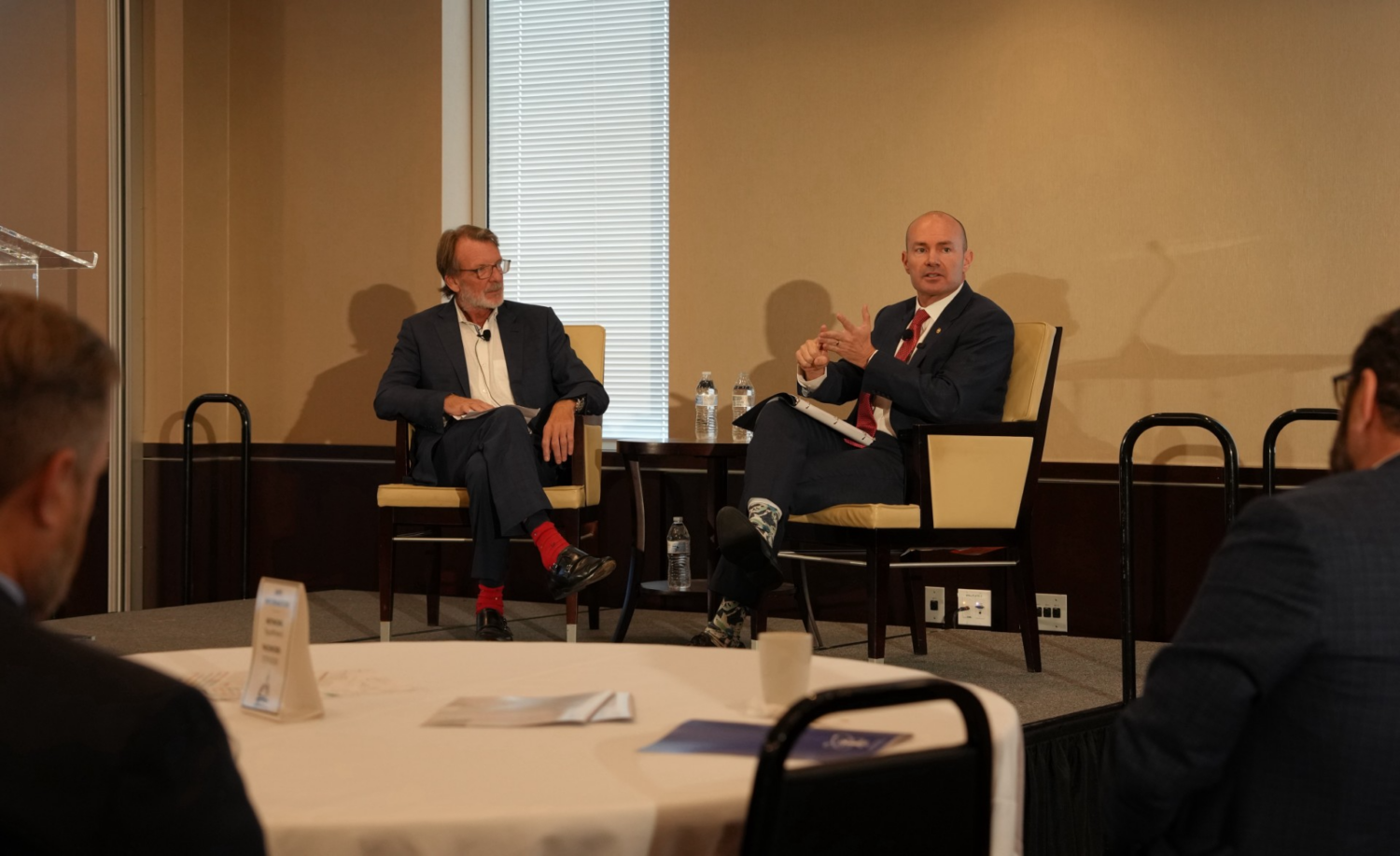
The working session brought together U.S. cabinet officials, senior industry executives, investors and policy experts to examine how the United States can add enough firm power, on near-term timelines, to meet rapidly rising AI-driven demand. The event was held at GE Vernova's Washington, D.C. office.

U.S. Secretary of Energy Chris Wright and U.S. Deputy Secretary of the Interior Kate MacGregor provided a briefing on current efforts and remaining gaps.

They participated in the discussion as part of the administration's focus on modernizing federal tools at the Department of Energy and Department of the Interior to support increased power production, transmission buildout, and smarter use of federal lands and emergency authorities.

Through its American Energy + AI Initiative, the Hamm Institute has spent the past year commissioning new research on how to power AI with firm energy, translating that work into policy-ready insights, and hosting working sessions from Oklahoma City to Palo Alto to bring industry, policymakers and investors into alignment around near-term solutions.

"America's ability to lead in AI will depend on whether we can build enough firm power, fast. The Hamm Institute's American Energy + AI Initiative exists to turn convenings like the Summit into steel in the ground, projects underway, and a clear research-backed roadmap that industry and policymakers can use," said Ann Bluntzer Pullin, PhD, executive director of the Hamm Institute for American Energy.

As the non-political partner, the Hamm Institute is leading the convening. In contrast, the American Energy + AI Coalition, led by CGCN, is focused on the policy, legislative and regulatory roadmap required to translate those findings.

"This was yet another productive session by the leaders of the Hamm Institute. Through extensive outreach and dialogue, they are developing concrete, meaningful policy reforms to help advance the power and AI goals shared by the electricity and technology sectors, as well as the Trump administration," said Mike Catanzaro, CEO of CGCN Group and executive director of the American Energy + AI Coalition. "Many thanks to Secretary Wright and Deputy Secretary MacGregor for their participation today and their effective leadership on this critically important issue for the nation."

The Hamm Institute for American Energy commissioned a new study from Mark P. Mills, executive director of the National Center for Energy Analytics and distinguished fellow at the Hamm Institute, titled The Rise of AI: A Reality Check on Energy and Economic Impacts. The report analyzes how surging AI deployment is reshaping U.S. electricity demand and the broader economy and outlines the scale of new firm power required for America to stay competitive. Mills, who testified on AI and data centers before the House Subcommittee on Economic Growth, Energy Policy, and Regulatory Affairs in April 2025, shared key implications for policymakers during the Summit.

"Forecasters, pundits, and policymakers have all been surprised, even shocked, by the magnitude and speed of electricity demand emerging to power AI and the hundreds of billions of dollars of data centers under construction and planned," said Mills. "The economic and strategic importance of the AI race sidelines the idea of an energy transition and highlights the old 'all-of-the-above' approach, especially the immediate needs for more natural gas."

The Rise of AI is the first paper in a series of reports and forecasts to be produced between the two organizations.

GE Vernova hosted the Summit as part of its work to support customers across power generation, grid, and nuclear as they respond to surging demand from AI, data centers, and advanced manufacturing.

"AI has tremendous opportunity to drive economic growth, and it all starts with energy," said GE Vernova CEO Scott Strazik. "Behind every data center is critical demand for reliable and affordable power. The countries that build resilient, modern energy systems will define the next wave of global competitiveness. We are excited about the opportunity to help our customers and appreciate the Hamm Institute leading this work with research and convenings along with the partnership of Secretaries Burgum and Wright as the Administration works to develop smart energy and innovation policies to shape the future."

Read the Report

About the Hamm Institute for American Energy

The Hamm Institute for American Energy at Oklahoma State University is a national hub for research, workforce development, and policy innovation focused on American energy security. Through its American Energy + AI Initiative, the Institute is working with partners across industry, government, and academia to ensure the United States can power the AI era with abundant, reliable, and affordable energy. Learn more at hamminstitute.org.

About the American Energy + AI (AEAI) Coalition

The American Energy + AI (AEAI) Coalition is a diverse and integrated group of the major stakeholders in the digital technology and electricity sectors. Its purpose is to address the most pressing policy challenge of our time: enabling the rapid build-out of the nation's electricity grid to meet growing demand from artificial intelligence (AI), data centers, and other sources.

About CGCN

CGCN is a fully integrated advocacy, policy analysis, strategic communications, and campaign management firm that specializes in helping corporations, nonprofits, and trade associations navigate complex legislative and regulatory issues. Lean more at CGCN.com

About the National Center for Energy Analytics (NCEA)

The National Center for Energy Analytics is a think tank devoted to data-driven analyses of policies, plans, and technologies surrounding the supply and use of energy essential for human flourishing. Through objective analyses of energy policies and their implications, NCEA aims to inform policymakers, industry leaders, and the public on critical energy issues." America's leadership in AI will ultimately depend on whether we can bring enough firm power online, quickly. Through the American Energy + AI Initiative, the Hamm Institute is working to turn days like today into steel in the ground, projects moving forward, and a practical, research-backed roadmap for industry and policymakers."

More insights
An analysis by the National Center for Energy Analytics of the nation’s largest grid finds a renewables-only system is physically implausible, cost-prohibitive, and inefficient at reducing carbon emissions.

New Study: A Wind-Solar-Battery Grid Would Cost PJM Ratepayers More Than $4 Trillion, Six Times the Cost of Natural Gas and Nuclear

NCEA finds a renewables-only PJM grid would cost ratepayers over $4 trillion, six times the cost of a natural gas and nuclear system, and stay implausible.

National Center for Energy Analytics · Jul 09, 2026 · 3 min

New Analysis Finds Corn Ethanol Policy Falls Short on Energy, Emissions, and Resource Efficiency

New Analysis Finds Corn Ethanol Policy Falls Short on Energy, Emissions, and Resource Efficiency

NCEA analysis finds corn ethanol delivers limited net energy, uses 992 gallons of water per gallon produced, and may raise emissions above gasoline.

· Apr 23, 2026 ·

New Energy Security Index Warns U.S. Risks Losing Shale-Era Energy Security Gains

New Energy Security Index Warns U.S. Risks Losing Shale-Era Energy Security Gains

NCEA's new Energy Security Index warns the shale era's security gains are eroding, with mineral supply risk reshaping U.S. exposure through 2035.

· Mar 13, 2026 ·

NCEA Report Finds Partial Return to Realism in IEA's World Energy Outlook 2025, but Warns Key Risks Remain

NCEA Report Finds Partial Return to Realism in IEA's World Energy Outlook 2025, but Warns Key Risks Remain

The IEA's restored Current Policies Scenario shows oil demand rising through 2050 with no peak, but NCEA finds four key risks still unaddressed.

· Jan 29, 2026 ·

Report: No Evidence of Global Energy Transition Despite Trillions Spent on Decarbonization

Report: No Evidence of Global Energy Transition Despite Trillions Spent on Decarbonization

New issue brief finds emissions and fossil-fuel use still rising after three decades of international climate agreements and record renewable investment.

· Nov 12, 2025 ·

New Analysis Warns of Hidden $50 Billion Liability as Wind and Solar Projects Age Without Decommissioning Safeguards

New Analysis Warns of Hidden $50 Billion Liability as Wind and Solar Projects Age Without Decommissioning Safeguards

As wind and solar projects reach end of life, NCEA finds up to $50 billion in unfunded U.S. decommissioning liabilities with few safeguards in place.

· Oct 28, 2025 ·

Report Finds "Missing Pieces" in IEA's 2025 Critical Minerals Outlook, Calls for New U.S. Minerals Policy Model

Report Finds "Missing Pieces" in IEA's 2025 Critical Minerals Outlook, Calls for New U.S. Minerals Policy Model

NCEA finds critical gaps in the IEA's 2025 Critical Minerals Outlook and calls for a new U.S. minerals policy model built on supply-chain realism.

· Oct 21, 2025 ·

Report: New Financing Strategy Needed to Spark America's Nuclear Energy Revival

Report: New Financing Strategy Needed to Spark America's Nuclear Energy Revival

NCEA proposes unlocking private equity capital to finance the next generation of large-scale nuclear reactors as U.S. power demand accelerates.

· Aug 12, 2025 ·

National Center for Energy Analytics Welcomes Stephen D. Eule as Visiting Fellow

National Center for Energy Analytics Welcomes Stephen D. Eule as Visiting Fellow

NCEA appoints Stephen D. Eule as visiting fellow, bringing decades of experience in energy, climate, and technology policy to the center's research.

· Jul 18, 2025 ·

Former IEA Oil Market Chief Joins National Center for Energy Analytics as Visiting Fellow

Former IEA Oil Market Chief Joins National Center for Energy Analytics as Visiting Fellow

Neil Atkinson, former head of oil at the IEA, joins NCEA as a visiting fellow providing research and analysis on global oil market issues.

· Apr 28, 2025 ·

NCEA Report Urges Policymakers to Reject Flawed "Social Cost of Carbon" as Basis for Energy Decisions

NCEA Report Urges Policymakers to Reject Flawed "Social Cost of Carbon" as Basis for Energy Decisions

Jonathan Lesser finds the social cost of carbon rests on arbitrary assumptions, and urges policymakers to reject it as a basis for energy decisions.

· Apr 23, 2025 ·

Study: Maritime Shipping is the Black Hole of the Energy Transition

Study: Maritime Shipping is the Black Hole of the Energy Transition

NCEA examines how maritime shipping, largely absent from energy forecasts, links critical minerals supply to the renewable power industry.

· Apr 03, 2025 ·

Veteran energy experts find 23 problematic assumptions within IEA's World Energy Outlook 2024

Veteran energy experts find 23 problematic assumptions within IEA's World Energy Outlook 2024

NCEA experts identify 23 problematic assumptions in the IEA's World Energy Outlook 2024, challenging its central projections for future oil demand.

· Jan 29, 2025 ·

New Report Suggests Electrification Mandates Worsen Energy Affordability, Power Access, Economist Jonathan Lesser, PhD, urges policymakers to adopt a more rational planning framework

New Report Suggests Electrification Mandates Worsen Energy Affordability, Power Access, Economist Jonathan Lesser, PhD, urges policymakers to adopt a more rational planning framework

NCEA finds mandates to electrify the economy while rationing energy use may deepen the affordability crisis and restrict power access.

· Jan 22, 2025 ·

National Center for Energy Analytics Appoints Policy Analyst Rupert Darwall as Senior Fellow

National Center for Energy Analytics Appoints Policy Analyst Rupert Darwall as Senior Fellow

Policy analyst Rupert Darwall joins NCEA as senior fellow, expanding the center's expertise on U.S. energy policy and regulation.

· Jan 14, 2025 ·

NCEA Releases Inaugural Report Revealing Projected $2 - 4 Trillion Cost to Build Nationwide Electric Vehicle Charging Infrastructure

NCEA Releases Inaugural Report Revealing Projected $2 - 4 Trillion Cost to Build Nationwide Electric Vehicle Charging Infrastructure

NCEA's first study projects $2 to $4 trillion to build nationwide EV charging infrastructure, documenting the costs of an all-electric future.

· Jun 07, 2024 ·

New Report from the National Center for Energy Analytics Outlines Pathways to Preserve and Expand U.S. Dominance in Global LNG

New Report from the National Center for Energy Analytics Outlines Pathways to Preserve and Expand U.S. Dominance in Global LNG

Senior fellow Tristan Abbey examines the politicization of LNG exports and sets out three pathways to preserve U.S. dominance in global gas.

· Oct 23, 2024 ·

Critical Minerals Expert Peter Bryant Joins National Center for Energy Analytics Advisory Board

Critical Minerals Expert Peter Bryant Joins National Center for Energy Analytics Advisory Board

Critical minerals expert Peter Bryant, board chair of Clareo, joins NCEA's advisory board with decades of mining and energy sector experience.

· Sep 30, 2024 ·

New Report Shows Securities and Exchange Commission Planned Climate Rules Will Accelerate Systemic Financial and Economic Risk

New Report Shows Securities and Exchange Commission Planned Climate Rules Will Accelerate Systemic Financial and Economic Risk

Senior fellow Paul H. Tice finds the SEC's planned climate disclosure rules would add regulatory burden and accelerate systemic financial risk.

· Sep 11, 2024 ·