ESC

Search NCEA

Find research, scholars, events, and media

Grid reliabilityMark MillsNuclearRenewable costs
Research
42results

Ask a question

Get an AI-powered answer grounded in NCEA research

Costs of renewable mandatesGrid reliability

Report: New Financing Strategy Needed to Spark America's Nuclear Energy Revival
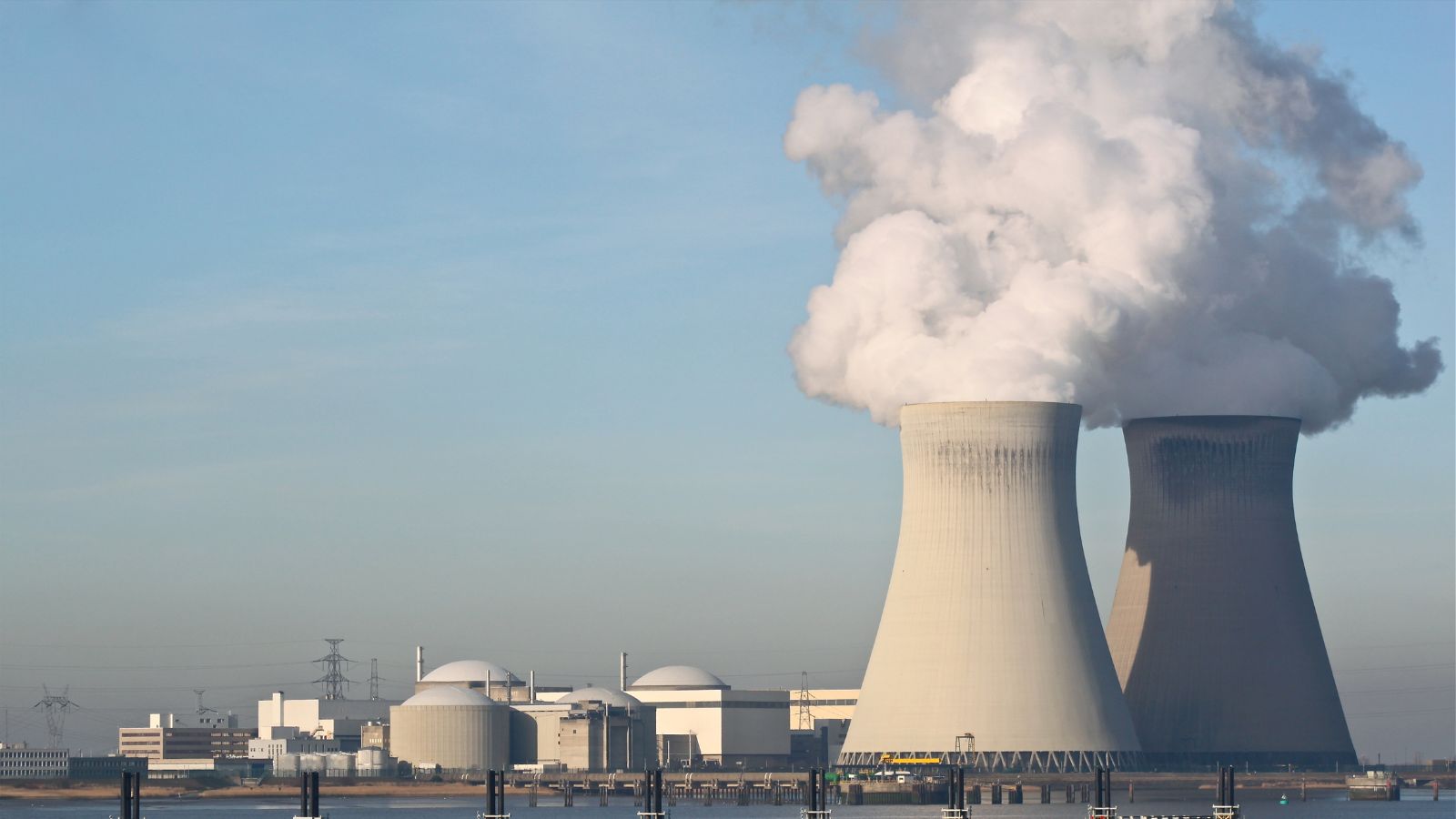
Report: New Financing Strategy Needed to Spark America's Nuclear Energy Revival
August 12, 2025

As America's power grid faces mounting reliability concerns and unprecedented demand growth driven by the digital economy, a new report from the National Center for Energy Analytics proposes a financing strategy to spark nuclear energy's revival: unlock private equity capital to build the next generation of large-scale nuclear reactors.

The report, authored by senior fellow Paul H. Tice, argues that financial risk, not technology, is the primary blocker to kickstarting nuclear construction in the United States.

"Despite nuclear's proven reliability and long operating life, there is minimal support for building new large reactors, largely due to cost perceptions. The sticker shock from Georgia Power's Vogtle Units #3 and #4 at $16,000 per kilowatt still looms large, even though much of that cost escalation came from several nonrecurring factors," says Tice. "Cost and financial risk should not be limitations. The United States can revitalize its nuclear sector by tapping into the nearly $1 trillion of infrastructure-related private equity capital available, including the $479 billion in cash on hand at Big Tech companies."

Tice proposes an asset-based project finance model which would replace the outdated utility-driven approach of the past 60 years. It shifts reactor sponsorship away from risk-averse electric utilities and toward global infrastructure investment firms who are more experienced in managing and financing complex greenfield construction projects. The core of the plan includes:

  • Use Asset-Based Project Finance: Apply the same model used for building LNG terminals, toll roads, and data centers--highly leveraged financing with up to 90% debt, secured by project assets and cash flows, not utility balance sheets.
  • Tap into Private Capital: Firms like Brookfield, Blackstone, KKR, and Macquarie have billions of dollars of dry powder ready to deploy. Big Tech companies--Microsoft, Amazon, Google, Meta--have already signed nuclear PPAs and could invest directly in new builds that power their data centers.
  • Deploy Large Scale, Proven Technology: Focus on replicating the 1.1-gigawatt Westinghouse AP1000 reactor used at Vogtle, which has now been de-risked. Unit #4 was built 30% more efficiently than Unit #3, with improved economics and performance. Over time, the cost of building the next AP1000 should continue to decline.
  • Leverage Government Loans, Not Subsidies: The Department of Energy's Loan Programs Office can provide low-cost credit guarantees to support early projects. No new tax subsidies should be necessary once the first projects prove successful.

For policymakers, Tice urges them to focus on demonstrating proof-of-concept with one or more privately financed AP1000 reactors completed on budget and on time then let market forces scale deployment nationwide. He recommends identifying 5 to 10 new AP1000 reactor sites, particularly at existing nuclear or recently retired coal plants, where permitting hurdles are lower and grid connections already exist. Several sites across Georgia, Illinois, and the Carolinas are strong candidates.

Attracting private equity capital to the nuclear sector will also require greater regulatory certainty. Tice recommends that the recently announced reforms at the Nuclear Regulatory Commission be implemented as soon as possible, given that this agency has been the chief source of reactor construction delays over the past 50 years.

"Shortening the U.S. nuclear building cycle while switching to a project finance approach should be enough to allow new large nuclear reactors to stand on their own economic feet," the report states. "Fast-tracking the approval of a short list of nuclear project sites...should be a Trump priority."

The report, "A Strategy for Financing the Nuclear Future," is available at https://energyanalytics.org/financing-the-nuclear-future/

Read the report

About the National Center for Energy Analytics (NCEA):

The National Center for Energy Analytics is a think tank devoted to data-driven analyses of policies, plans, and technologies surrounding the supply and use of energy essential for human flourishing. Through objective analyses of energy policies and their implications, NCEA aims to inform policymakers, industry leaders, and the public on critical energy issues.

More insights

An analysis by the National Center for Energy Analytics of the nation’s largest grid finds a renewables-only system is physically implausible, cost-prohibitive, and inefficient at reducing carbon emissions.

New Study: A Wind-Solar-Battery Grid Would Cost PJM Ratepayers More Than $4 Trillion, Six Times the Cost of Natural Gas and Nuclear

NCEA finds a renewables-only PJM grid would cost ratepayers over $4 trillion, six times the cost of a natural gas and nuclear system, and stay implausible.

National Center for Energy Analytics · Jul 09, 2026 · 3 min

New Analysis Finds Corn Ethanol Policy Falls Short on Energy, Emissions, and Resource Efficiency

New Analysis Finds Corn Ethanol Policy Falls Short on Energy, Emissions, and Resource Efficiency

NCEA analysis finds corn ethanol delivers limited net energy, uses 992 gallons of water per gallon produced, and may raise emissions above gasoline.

· Apr 23, 2026 ·

New Energy Security Index Warns U.S. Risks Losing Shale-Era Energy Security Gains

New Energy Security Index Warns U.S. Risks Losing Shale-Era Energy Security Gains

NCEA's new Energy Security Index warns the shale era's security gains are eroding, with mineral supply risk reshaping U.S. exposure through 2035.

· Mar 13, 2026 ·

NCEA Report Finds Partial Return to Realism in IEA's World Energy Outlook 2025, but Warns Key Risks Remain

NCEA Report Finds Partial Return to Realism in IEA's World Energy Outlook 2025, but Warns Key Risks Remain

The IEA's restored Current Policies Scenario shows oil demand rising through 2050 with no peak, but NCEA finds four key risks still unaddressed.

· Jan 29, 2026 ·

American Energy + AI Effort to Provide Near-Term Path to Power AI Growth

American Energy + AI Effort to Provide Near-Term Path to Power AI Growth

Cabinet officials and energy, tech, and finance leaders outline concrete steps to add firm power on the timelines AI-scale demand requires.

· Nov 17, 2025 ·

Report: No Evidence of Global Energy Transition Despite Trillions Spent on Decarbonization

Report: No Evidence of Global Energy Transition Despite Trillions Spent on Decarbonization

New issue brief finds emissions and fossil-fuel use still rising after three decades of international climate agreements and record renewable investment.

· Nov 12, 2025 ·

New Analysis Warns of Hidden $50 Billion Liability as Wind and Solar Projects Age Without Decommissioning Safeguards

New Analysis Warns of Hidden $50 Billion Liability as Wind and Solar Projects Age Without Decommissioning Safeguards

As wind and solar projects reach end of life, NCEA finds up to $50 billion in unfunded U.S. decommissioning liabilities with few safeguards in place.

· Oct 28, 2025 ·

Report Finds "Missing Pieces" in IEA's 2025 Critical Minerals Outlook, Calls for New U.S. Minerals Policy Model

Report Finds "Missing Pieces" in IEA's 2025 Critical Minerals Outlook, Calls for New U.S. Minerals Policy Model

NCEA finds critical gaps in the IEA's 2025 Critical Minerals Outlook and calls for a new U.S. minerals policy model built on supply-chain realism.

· Oct 21, 2025 ·

National Center for Energy Analytics Welcomes Stephen D. Eule as Visiting Fellow

National Center for Energy Analytics Welcomes Stephen D. Eule as Visiting Fellow

NCEA appoints Stephen D. Eule as visiting fellow, bringing decades of experience in energy, climate, and technology policy to the center's research.

· Jul 18, 2025 ·

Former IEA Oil Market Chief Joins National Center for Energy Analytics as Visiting Fellow

Former IEA Oil Market Chief Joins National Center for Energy Analytics as Visiting Fellow

Neil Atkinson, former head of oil at the IEA, joins NCEA as a visiting fellow providing research and analysis on global oil market issues.

· Apr 28, 2025 ·

NCEA Report Urges Policymakers to Reject Flawed "Social Cost of Carbon" as Basis for Energy Decisions

NCEA Report Urges Policymakers to Reject Flawed "Social Cost of Carbon" as Basis for Energy Decisions

Jonathan Lesser finds the social cost of carbon rests on arbitrary assumptions, and urges policymakers to reject it as a basis for energy decisions.

· Apr 23, 2025 ·

Study: Maritime Shipping is the Black Hole of the Energy Transition

Study: Maritime Shipping is the Black Hole of the Energy Transition

NCEA examines how maritime shipping, largely absent from energy forecasts, links critical minerals supply to the renewable power industry.

· Apr 03, 2025 ·

Veteran energy experts find 23 problematic assumptions within IEA's World Energy Outlook 2024

Veteran energy experts find 23 problematic assumptions within IEA's World Energy Outlook 2024

NCEA experts identify 23 problematic assumptions in the IEA's World Energy Outlook 2024, challenging its central projections for future oil demand.

· Jan 29, 2025 ·

New Report Suggests Electrification Mandates Worsen Energy Affordability, Power Access, Economist Jonathan Lesser, PhD, urges policymakers to adopt a more rational planning framework

New Report Suggests Electrification Mandates Worsen Energy Affordability, Power Access, Economist Jonathan Lesser, PhD, urges policymakers to adopt a more rational planning framework

NCEA finds mandates to electrify the economy while rationing energy use may deepen the affordability crisis and restrict power access.

· Jan 22, 2025 ·

National Center for Energy Analytics Appoints Policy Analyst Rupert Darwall as Senior Fellow

National Center for Energy Analytics Appoints Policy Analyst Rupert Darwall as Senior Fellow

Policy analyst Rupert Darwall joins NCEA as senior fellow, expanding the center's expertise on U.S. energy policy and regulation.

· Jan 14, 2025 ·

NCEA Releases Inaugural Report Revealing Projected $2 - 4 Trillion Cost to Build Nationwide Electric Vehicle Charging Infrastructure

NCEA Releases Inaugural Report Revealing Projected $2 - 4 Trillion Cost to Build Nationwide Electric Vehicle Charging Infrastructure

NCEA's first study projects $2 to $4 trillion to build nationwide EV charging infrastructure, documenting the costs of an all-electric future.

· Jun 07, 2024 ·

New Report from the National Center for Energy Analytics Outlines Pathways to Preserve and Expand U.S. Dominance in Global LNG

New Report from the National Center for Energy Analytics Outlines Pathways to Preserve and Expand U.S. Dominance in Global LNG

Senior fellow Tristan Abbey examines the politicization of LNG exports and sets out three pathways to preserve U.S. dominance in global gas.

· Oct 23, 2024 ·

Critical Minerals Expert Peter Bryant Joins National Center for Energy Analytics Advisory Board

Critical Minerals Expert Peter Bryant Joins National Center for Energy Analytics Advisory Board

Critical minerals expert Peter Bryant, board chair of Clareo, joins NCEA's advisory board with decades of mining and energy sector experience.

· Sep 30, 2024 ·

New Report Shows Securities and Exchange Commission Planned Climate Rules Will Accelerate Systemic Financial and Economic Risk

New Report Shows Securities and Exchange Commission Planned Climate Rules Will Accelerate Systemic Financial and Economic Risk

Senior fellow Paul H. Tice finds the SEC's planned climate disclosure rules would add regulatory burden and accelerate systemic financial risk.

· Sep 11, 2024 ·