Energy and Materials: A New Synthesis

There is widespread bipartisan appreciation for the risks and realities of import dependencies for minerals, particularly those designated as critical, because of practicalities in supply chains and especially for strategic and geopolitical reasons.
Listen
The Issue
The search is on for bipartisan appreciation of the risks and realities of minerals import dependencies, particularly for those commodities designated as critical. Practicalities in supply chains, along with strategic and geopolitical tensions, are setting the rules of engagement. Lists can help to focus attention yet are subject to many interpretations and can be poor tools for setting priorities. In reality, all of the elements on the periodic table are important given the varied needs of a large, complex economy. And dependency issues are not just about the basic elements but also about broad classes of materials, chemicals, and industrial gases.
All of this calls for a redefinition of what constitutes critical—and for a different conversation altogether. That conversation needs to go beyond an emphasis on more mining or minerals processing. A fresh discourse should incorporate questions about industrial capability and means for enhancing resilience, including the power of substitution by fostering new classes of advanced materials and realistic pathways for deploying them. It should also extend beyond federal, state, and local domains to opportunities abroad with friends and allies.
The Reality
For years, U.S. policymakers and decision-makers have wrestled with how best to restore the comparative advantages in domestic minerals and materials supply chains. Presidents have acted through various executive orders, Congress through lawmaking, and federal agencies through specific directives.1 Most of this work has focused on defining and closing perceived vulnerability gaps.2 Officials use the U.S. Geological Survey’s List of Critical Minerals and information from the U.S. Department of Energy to decide which projects will receive federal grants and loans.3 The goal is to begin replacing lost production capacity in the United States.4
But what is critical? What does it mean to denote certain commodities as critical minerals in a country with vast resources, a base more than suitable to support growth in mining and resource extraction? In reality, the United States is not wholly dependent on importing raw materials. Rather, it makes use of global supply chains to import processed materials and finished products containing the minerals and materials of interest, a situation reflective of declining domestic manufacturing capacity. How should policymakers think strategically about materials supply chains when many of the domestic manufacturers that would anchor demand for those materials through offtake agreements are no longer present? Are there different options, considering that both things must be done—boosting supply chain security and reinvigorating and recapturing U.S. industrial manufacturing capacity?
Blasts from the Past . . .
Why and how did the United States shed its comparative advantages in materials and manufacturing? The United States was the top supplier of energy and materials to its allies during World War II.5 But in the years that followed, wartime production capacity was consolidated and scaled back, even as new conflicts and stressors emerged.6 The country had worked its natural resources hard—everything from oil, gas, and chemicals to iron, steel, aluminum, and other materials.
By the 1970s oil shocks, the United States had become reliant on petroleum imports. Amid these shocks, changing prices and shifting demand associated with new technologies and societal and political responses left higher-cost, older factories exposed. Included in the maelstrom were businesses deemed too big to fail—such as the automotive industry. Meanwhile, competitive pressures had been building for key domestic-produced metals. Investment had shifted toward lower-cost, more robust opportunities abroad, leaving U.S. mining and minerals processing far weaker than it once was.
The start of the information technology (IT) age coincided with the globalization of supply chains for manufacturing chips and electronics, as innovators sought every comparative advantage to make and distribute the devices people now take for granted. Apple was one of many companies that took risks in working with dominant manufacturers and supply chains in Northeast Asia and later in Taiwan and China.7 The improvements to quality of life brought on by the rapid growth of IT industries have been profound.
The end result for the United States and its geopolitical stature, however, has been stark, especially as the United States and China effectively traded places in manufacturing dominance. What does it mean to go from commanding more than 40% of finished aluminum output in 1970 to only 1% in 2022, while China flipped from a bare 1% in 1970 to well over 50% during the same period? Or from about a quarter of copper metal output to 4% over that time, while China, in turn, went from barely 2% to more than 40%?8 Or to go from producing more than a third of chips in 1990 to about 10% in 2022? Does it matter? If so, what is to be done about it?9
. . . Become Water Under Bridges
Many argue that the past is just that, and that the pressure now is for the U.S. government to guarantee the financial risk (essentially, putting taxpayer money on the line) for the wide range of minerals, energy, and manufacturing projects that are currently underway to mitigate vulnerability gaps.
Instead, the broader conversation at the federal level and elsewhere should evolve away from a primarily scarcity- and dependency-driven framework and toward a more constructive and strategically differentiated approach centered on innovation, substitution, advanced materials, and industrial capability. Can the United States really outcompete China on metals smelting and refining? That question is increasingly under scrutiny, along with whether the country even wants to outcompete.
If policymakers firmly shift attention to innovation as the solution driver, what important insights can be gained? For one, it turns discussions away from the notion of trying to replicate China’s industrial model toward identifying areas where the United States and its partners may possess different comparative advantages that work to their collective benefit.
A more forward-looking and bipartisan narrative centered on innovation, resilience, and practical deployment pathways could go a long way toward defusing tensions domestically and worldwide.
Putting Energy into the Line of Sight
Energy plays a role in all of this. One of the most important facets of the materials landscape is plastics and resins—the fastest-growing segment,10 which depends heavily on hydrocarbons (oil- and natural gas–based compounds)—an area where the United States is dominant (see figure 1). That dominance is not temporary, either; the U.S. materials base is underpinned by natural gas, and there is currently no evidence of future shortages.11
Figure 1. Commodity, Energy, and GDP Growth Indexed to 1984
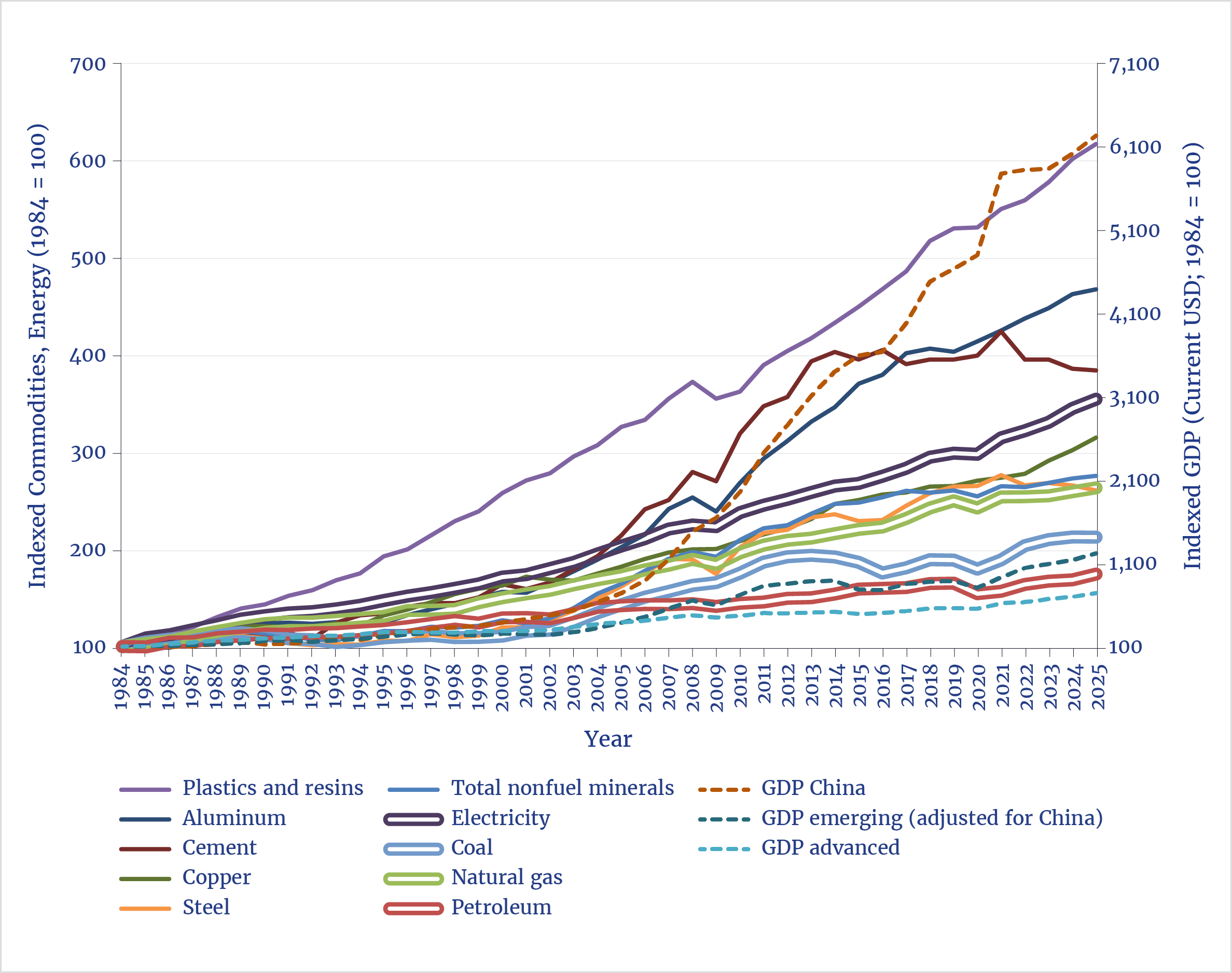
Note: GDP is gross domestic product. All series indexed to 1984 = 100; datapoints are author’s calculations.
Sources: Adapted from Michelle Michot Foss, Minerals and Materials Challenges for Our Energy Future(s): Dateline 2024 (Rice University’s Baker Institute for Public Policy, 2024), 14, figure 1. Plastics and resins data from the author’s analysis of International Energy Agency (IEA), The Future of Petrochemicals: Towards More Sustainable Plastics and Fertilsers (IEA, 2018), with information from Plastics Europe, Plastics: The Fast Facts 2025 (Plastics Europe, 2025); and American Chemistry Council (ACC), The Resin Review—2026 (ACC, 2026), cross-checked against proprietary data licensed from S&P Global and other sources. Aluminum data from International Aluminium Institute, “Primary Aluminium Production,” dataset, accessed October 15, 2026. Cement data from “Cement Statistics and Information,” National Minerals Information Center, U.S. Geological Survey, accessed October 15, 2026, https://www.usgs.gov/centers/national-minerals-information-center/cement-statistics-and-information. Copper data from “Selected Copper Statistics,” International Copper Study Group, accessed October 15, 2026, https://icsg.org/selected-copper-statistics. Steel data from World Steel Association, “Annual Production Steel Data,” dataset, accessed October 15, 2026. Total nonfuel minerals data from Austrian Federal Ministry of Finance (BMF), World Mining Data (BMF, 1984–2025). Electricity, coal, natural gas, and oil (production) data from Energy Institute (EI), Statistical Review of World Energy 2026 (EI, 2026). GDP (current U.S. dollars; GDP emerging excludes China) data from International Monetary Fund, “World Economic Outlook,” dataset, released April 2026.
For decades, materials categorized as plastics and resins have been used in place of metals, achieving better performance with less weight in many applications. Vehicles and aircraft, construction of buildings and interiors, home and office appliances, and electronics have all improved through the use of carbon-based materials (see figure 2). In fact, advanced carbon materials—including carbon nanomaterials—offer one of the most promising pathways to the invention of new materials. Advanced composites and ceramics, composites that integrate ceramics, epoxies that incorporate carbon nanomaterials and metals, and carbon fibers and textiles that enable smart products and other inventions such as biomedical implants—these are already becoming mainstream and will continue to replace traditional materials and designs.
Figure 2. Fuel Burn Trends for New Commercial Jet Aircraft: 1960–2024
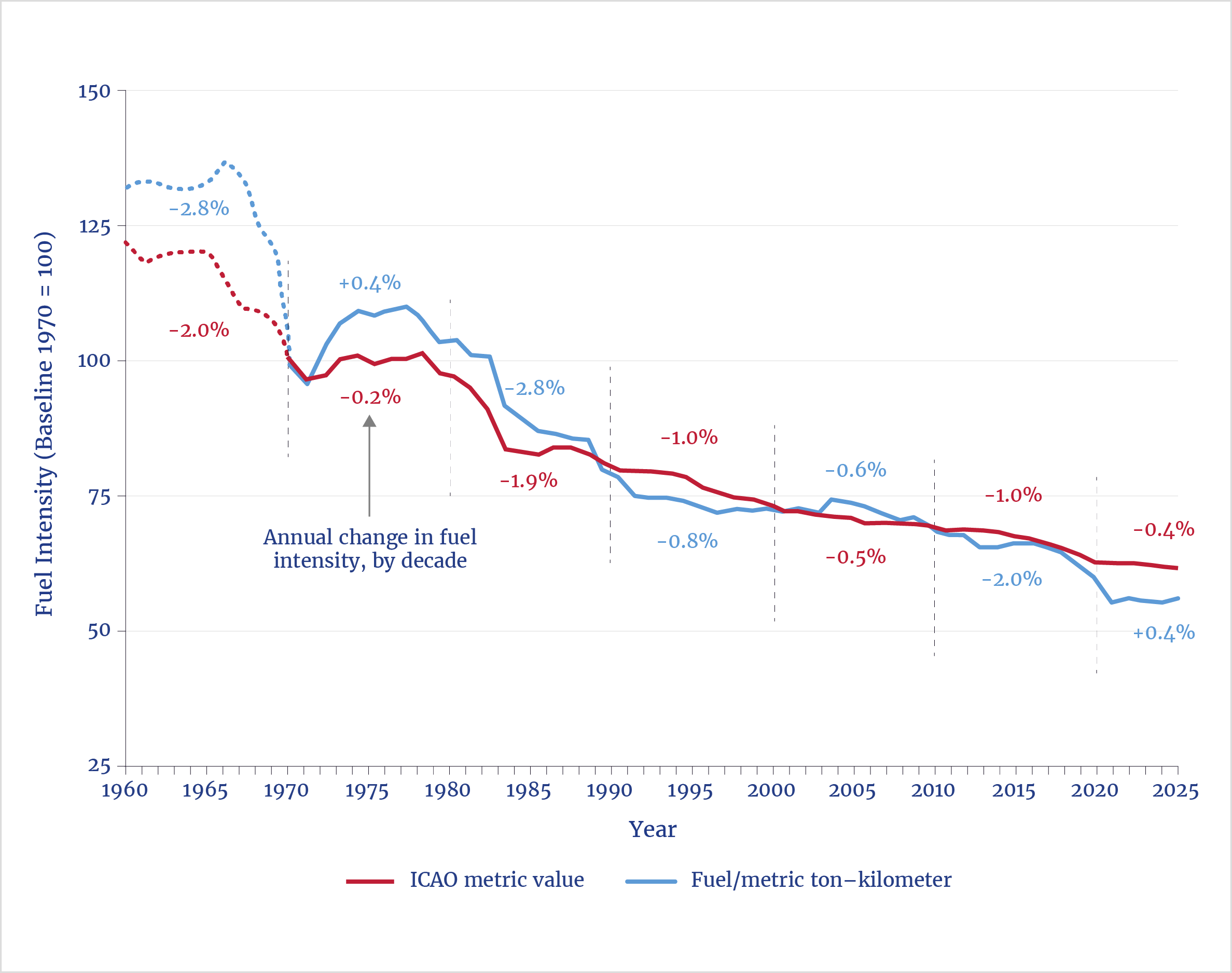
Note: ICAO is the International Civil Aviation Organization.
Source: Adapted from Mehak Hameed and Dan Rutherford, Fuel Burn of New Commercial Jet Aircraft: 1960 to 2024, Working Paper No. 2025-287 (International Council on Clean Transportation, 2025), 8, figure 1.
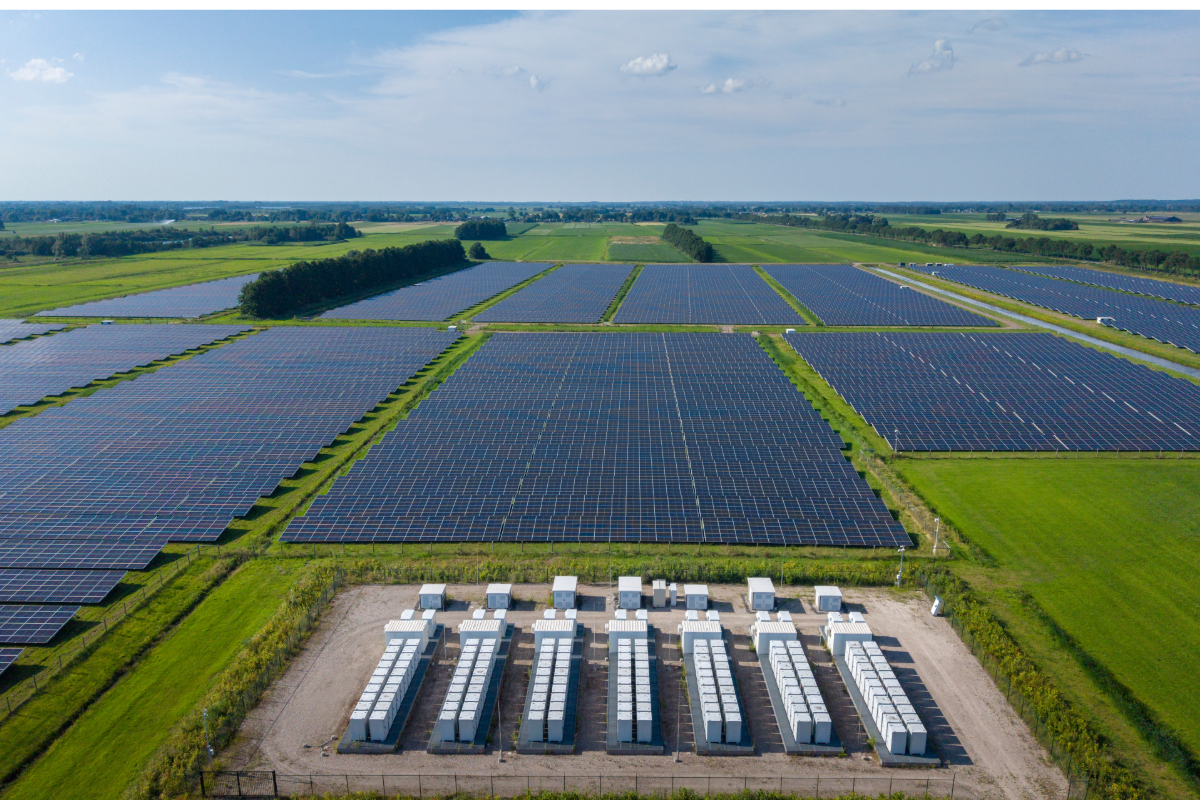
Much of the anxiety surrounding minerals and materials for energy comes from the demand that alternative, intermittent energy technologies place on them. Wind, solar, and similar technologies, along with battery energy storage intended to support them, require large amounts of resource inputs—metals, plastics, and cement, as well as land, water, and energy. But they share a common limitation: They require 100% of the capital expenditure and materials commitments up front for nameplate capacity but produce or deliver energy only some of the time.12 Utilization rates (time-adjusted capacity factors) for utility-scale intermittent wind and solar in 2025 were 33.8% and 24.0%, respectively, with slight declines for both since 2016.13 That means additional burdens are placed on supporting systems—such as electricity grids, energy storage, or energy reserves from other sources—for balancing and reliability.
If these resources are going to be used, how should the investment for capital and materials be financed, given these resources’ part-time use? Who is going to pay for the costs associated with the scale and scope of system support? These questions are often deferred through government subsidies, adding to the broader burden of energy subsidies. Achieving fiscal discipline would require reevaluating public spending on energy and materials, as with other areas of the budget.
Advancing the Dialogue on Advanced Materials
By now, though, the notion that an energy transition can radically reduce or eliminate the use of hydrocarbons remains firmly entrenched, even as various policies scale back such ambitions and the data show no evidence of such a transition.14
Even so, the materials commitments for alternative energy have generated extensive debate, produced tangled policies and regulatory approaches,15 and increased pressures on responsible sourcing. There cannot be a clean, green, humane energy future if the underlying, essential materials supply chain is not also clean, green, and humane. Nor can the response be distilled to recycling, which has its own limitations.
Energy technologies of all sorts, as well as defense systems and most everyday products, depend on metals and other inorganic minerals, which means wrestling to some degree with the challenges of mining and processing and with regulatory constraints. A significant, even vital, consideration is whether pursuing and accelerating advanced materials could not only ease the burdens on traditional metals and minerals but also provide better source materials to begin with. High-performance technologies require high-performance materials. Along with that could come new pathways for producing these advanced materials in ways that reduce, or even resolve, many of the more complicated risks and uncertainties surrounding traditional materials.
Indeed, advanced materials should be viewed as part of ongoing, even inevitable, transformations that both improve old energy technologies and enable new ones. That formulation could resonate with the public—it avoids unnecessary ideological conflicts while broadening what transition means. Adopting pragmatic language can help build broader partnerships. Materials, like energy and all else, have always undergone transitions marked by increasing options and capabilities, and the notion of a materials transition is already in circulation. A more balanced approach to systems thinking, a strong dose of political realism, and practical considerations for commercialization could go a long way toward building broader, constructive coalitions for new strategies.
Perspective
In the current policy climate, the questions of what materials, for what purpose, and for whose benefit are rarely asked.
Even less common is starting with what services are required. That is a much different approach from simply asking what material suits a given application. Users desire certain services from materials, delivered through properties such as electrical conductivity, thermal stability, strength, flexibility (or stiffness), anticorrosion, magnetism, and much more—and the less weight, the better. They may not even realize that service is the criterion, but every time people plug in a device to recharge it, expecting it to perform as advertised, they are relying on the materials to deliver that service.
Follow-up questions arise:
· What advanced materials can provide these services with performance equal to or better than that of traditional metals and minerals?
· What needs to be done to move these advanced materials forward?
· Over what time frame could that happen?
· What trade-offs and considerations are involved?
· What are the implications?
Shifting the conversation from a singular focus on the scarcity of critical minerals toward a broader proposition brings smarter materials, substitution, efficiency, dematerialization, and technological innovation into consideration.
From there, commercialization and deployment of advanced materials technologies can be addressed, including:
· Financing and capital formation
· Permitting
· Standards and testing
· Procurement pathways
· Tax credits and incentives
· Institutional fragmentation
A focus on materials services and advances in materials does not alleviate the need for realistic deployment options and stronger institutional capability. In many respects, given the demands of materials science, these requirements may be just as important as the technologies themselves. Successful commercialization and scaling require credible institutions, workable regulatory pathways, financing mechanisms, standards, data transparency, and durable policy support.
In fact, all the components of good governance are still needed. The difference lies in how the problem is defined and framed.
Little of this is new. Critical minerals issues increasingly resemble earlier oil and gas security discussions in their geopolitical dimensions and in the importance of reliable data and institutional transparency. Minerals commodities markets remain much less transparent and institutionally developed than energy markets, which may create opportunities for professional associations, analytical organizations, and public-private partnerships to play constructive roles over time.
As with oil and gas molecules, minerals byproducts and coproducts pose some of the biggest challenges for critical minerals. Many elements of strong interest come out as byproducts of larger production processes—gallium from aluminum production, tellurium from copper production, germanium from lead and zinc smelting, and so on.[xvi] Rare earth elements, by occupying their spot on the periodic table, tend to raise concerns about managing radionuclides (radioactive materials).17 These minor elements lack price signals and are not the primary materials that producers target. Instead, their supply is subject to political influence from the producers that have invested in their recovery—namely, China.18 In the United States, in particular, hard lessons were learned regarding natural gas monetization—specifically, the need to invest in midstream processing to separate molecules and build independent value chains and revenue strategies.19 The hard lessons for listed critical minerals are only beginning.
Adapting a traditional energy trilemma framework may be useful for thinking about minerals and advanced materials.20 The framework weighs three competing dimensions:
· Economics (affordability, capital, price)
· Security (supply chains, governance, geopolitics)
· Environment (pollution, climate, permitting and social acceptance)
Considering the services required, what choices offer the most realistic path toward optimizing all three?
The task now is to somehow find the operational discipline to translate the broader conceptual framework into durable, actionable strategies. For example, this could include identifying services for which material substitution (or advanced materials) could reduce strategic vulnerability; using specific technologies as case studies; mapping barriers from development through commercialization and scale; and bringing together relevant industry, government, research, and financial players to work on mitigation strategies and tactics.
This issue brief draws on research the author conducted with support from Rice University’s Baker Institute for Public Policy Center for Energy Studies and Rice University Carbon Hub; related publications are available in the Baker Institute’s research library. It also benefited from input provided by colleagues who participated in nonattribution roundtable discussions in April and May 2026. The author especially thanks Adam Sieminski for helpful comments and discussions.
- See Executive Office of the President, Executive Order 13817, “A Federal Strategy to Ensure Secure and Reliable Supplies of Critical Minerals,” Federal Register 82, no. 246 (December 26, 2017): 60835–37; Executive Office of the President, Executive Order 14017, “America’s Supply Chains,” Federal Register 86, no. 38 (March 1, 2021): 11849–54; Infrastructure Investment and Jobs Act, Pub. L. No. 117-58, 135 Stat. 429 (2021); and U.S. Department of Energy (DOE), Notice of Final Determination on 2023 DOE Critical Materials List (DOE, 2023).
- See “About the 2025 List of Critical Minerals,” Mineral Resources Program, U.S. Geological Survey (USGS), November 6, 2025, https://www.usgs.gov/programs/mineral-resources-program/science/about-2025-list-critical-minerals. The USGS built detailed scenarios to assess economic and national security vulnerabilities for executive-branch decision-making.
- See “Interior Department Releases Final 2025 List of Critical Minerals,” USGS, November 14, 2025, https://www.usgs.gov/news/science-snippet/interior-department-releases-final-2025-list-critical-minerals. This list is updated periodically.
- See U.S. Department of Commerce (DOC), A Federal Strategy to Ensure Secure and Reliable Supplies of Critical Minerals (DOC, 2019), 22. Exec. Order No. 13817, n. 3, mandated a 180-day review of national critical minerals supply based on the USGS determination coordinated through the DOC.
- Daniel Yergin, The Prize: The Epic Quest for Oil, Money & Power (Simon & Schuster, 2008), 383, 393; and Harry S. Truman et al., Nineteenth Report to Congress on Lend-Lease Operations: For the Period Ended March 31, 1945 (U.S. Government Printing Office, 1945), 8, 23–26, 31.
- E. W. Pehrson and H. D. Keiser, “Review of the Mineral Industries in 1945,” in Minerals Yearbook, 1945 (U.S. Bureau of Mines, 1947), 7.
- Jenny Chan et al., “The Politics of Global Production: Apple, Foxconn and China’s New Working Class,” New Technology, Work and Employment 28, no. 2 (2013): 100–115; see also Patrick McGee, Apple in China (Scribner, 2025), for a definitive history.
- Gabriel Collins and Michelle Michot Foss, Critical Minerals and Materials Geoeconomics: Lessons and Ideas from Past Wars and Strategic Competitions (Rice University’s Baker Institute for Public Policy, 2025), 6. Aluminum and copper shares for 1970 and 2022 are the author’s calculations based on USGS data from Mineral Industry Surveys and Mineral Commodity Summaries, as presented in that report; see also Michelle Michot Foss, Minerals and Materials Challenges for Our Energy Future(s): Dateline 2024 (Rice University’s Baker Institute for Public Policy, 2024), 46–47.
- Semiconductor Industry Association (SIA), 2025 State of the U.S. Semiconductor Industry (SIA, 2025). Semiconductor shares for 1990 and 2022 are from that report; see also Michelle Michot Foss, “Energy and Security—It’s Material,” in Energy and Resilience: Policy Briefs 2025, comp. by Kenneth B. Medlock III (Rice University’s Baker Institute for Public Policy, 2025), 14–21; and Michelle Michot Foss, “ ‘Energy and Materials Realism’ and Its Discontents,” in Energy Insights 2025 (Rice University’s Baker Institute for Public Policy, 2025), 79–92.
- Collins and Michot Foss, Critical Minerals and Materials Geoeconomics, 4.
- Michelle Michot Foss, “All Value Chains Begin Upstream,” chap. 1 in Monetizing Natural Gas in the New “New Deal” Economy, ed. Michelle Michot Foss et al. (Palgrave Macmillan, 2021); and Tristan Abbey, A Generational Opportunity: Achieving U.S. Dominance in Global LNG (National Center for Energy Analytics, 2024).
- Nameplate capacity refers to the maximum output for equipment under ideal conditions, as rated by the manufacturer.
- U.S. Energy Information Administration (EIA), Electric Power Annual 2025 (EIA, 2026), table 4.08.B.
- Climate Action Tracker, “Both Canada and the U.S. Roll Back Climate Policies,” press release, October 13, 2026; and Energy Institute, 2026 Statistical Review of World Energy, 75th ed. (Energy Institute, 2026), 4, 14, 23, 37, 50, 61, and the accompanying dataset. Oil, natural gas, and coal accounted for 86% of global total energy supply in 2025; that share was down only about 3 percentage points from 2015, when the Paris Agreement was adopted. Over the same period, fossil fuel consumption rose about 11%, from 467 to 518 exajoules. The share of fossil fuels has fallen only about 4 percentage points since 1990.
- European Commission, Proposal for a Regulation of the European Parliament and of the Council Amending Regulation (EU) 2023/1542 as Regards Obligations of Economic Operators Concerning Battery Due Diligence Policies (European Commission, 2025), 1–2.
- Michot Foss, Minerals and Materials Challenges, 12.
- Michelle Michot Foss and Jacob Koelsch, Of Chinese Behemoths: What China’s Rare Earths Dominance Means for the U.S. (Rice University’s Baker Institute for Public Policy, 2022); and James Varney, “America’s Critical Mining Industry Finds Itself in a Deep Hole,” RealClearInvestigations, August 6, 2025.
- Michot Foss, Minerals and Materials Challenges, 12; and Kevin Stocklin, “How China Uses Transition to Renewables to Exert Global Dominance,” The Epoch Times, September 14, 2024.
- Michelle Michot Foss et al., “Petrochemicals: An Industrial Renaissance?,” chap. 3 in Monetizing Natural Gas in the New “New Deal” Economy, ed. Michelle Michot Foss et al. (Palgrave Macmillan, 2021).
- “World Energy Trilemma Framework,” Transition Toolkit, World Energy Council (WEC), accessed September 28, 2026, https://www.worldenergy.org/transition-toolkit/world-energy-trilemma-framework. WEC’s dimensions are energy security, energy equity, and environmental sustainability.