
The Crippling Costs of Electrification and Net-Zero Energy Policies in the Pacific Northwest
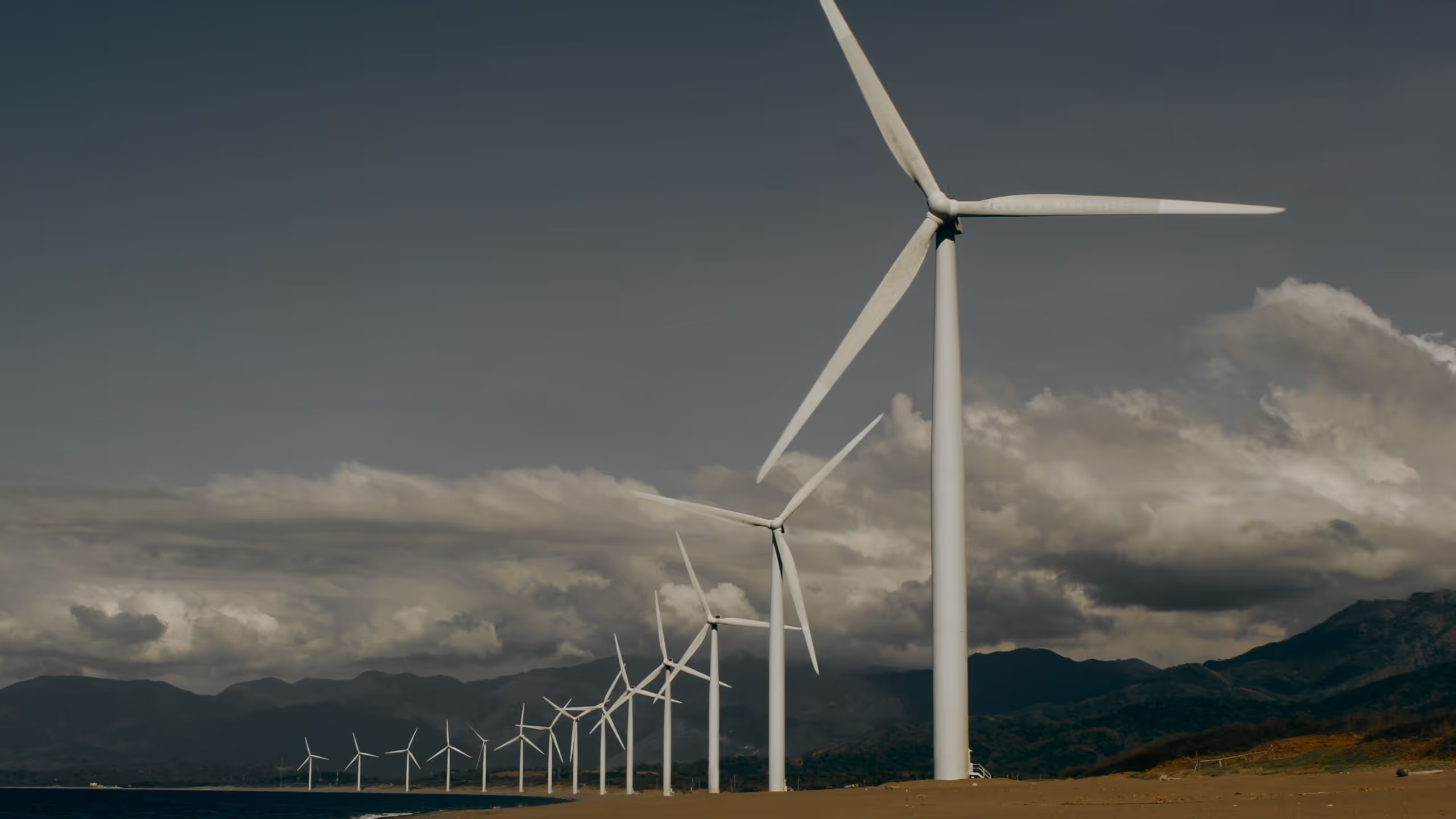
This report, published by Discovery Institute's Reasonable Energy program and co-authored by NCEA Senior Fellow Jonathan Lesser and Mitchell Rolling, examines the economic consequences of net-zero energy policies in Washington and Oregon.
The study finds that both states' plans to eliminate fossil-fuel energy sources and reach zero energy-related greenhouse gas emissions by 2050 would double existing electricity demand at a projected cost of $549.9 billion — a burden shouldered by Pacific Northwest households and small businesses.
Key findings include:
- Average household electric bills could increase by 450% by 2050
- Small business electric bills would rise from roughly $600/month to nearly $4,000/month
- The resulting global temperature reduction would be less than 0.003 degrees Celsius — too small to measure
- Meeting the same electricity demand with natural gas and nuclear would cost $85.9 billion — one-sixteenth the cost of an all-renewables approach
The report concludes that both states would be better served by abandoning net-zero mandates and investing in reliable, lower-cost electricity from natural gas and nuclear generation.
-2%20(15).png)
-6%20(9).png)
-6%20(8).png)
-3%20(1).png)