NCEA Report Finds Partial Return to Realism in IEA's World Energy Outlook 2025, but Warns Key Risks Remain

NCEA Report Finds Partial Return to Realism in IEA's World Energy Outlook 2025, but Warns Key Risks Remain
January 28, 2026 -- The National Center for Energy Analytics (NCEA) today released a new report, "The Return of Realism in Global Oil Forecasts," offering a critique of the International Energy Agency's World Energy Outlook 2025 (WEO 2025). The analysis concludes that while the IEA has taken meaningful steps toward restoring analytical credibility, important assumptions and risks remain insufficiently addressed.
After a five-year absence, the IEA's reinstatement of its Current Policies Scenario (CPS) marks a significant shift in how global energy futures are modeled. Unlike recent editions that relied almost exclusively on aspirational policy pathways, WEO 2025 once again includes a baseline grounded in policies that are in operation. This change materially alters the outlook for global energy demand and oil consumption.
The report is written by Neil Atkinson, IEA's former head of oil and visiting fellow at NCEA, and Adam Sieminski, senior adviser to the board of trustees of the King Abdullah Petroleum Studies and Research Center (KAPSARC) and former administrator of the U.S. Energy Information Administration (EIA) under President Barack Obama.
"In recent years, the IEA's focus on the aspirations that are inherent in many national energy policies--rather than on including realities--paints a picture of possible futures that are self-evidently unrealistic and can thus mislead policymakers and investors who view the World Energy Outlook as an important contribution to planning. World Energy Outlook 2025 marks a significant yet incomplete return to analytical realism," Atkinson and Sieminski wrote in their report.
Under the restored CPS, global oil demand continues to rise through 2050, with no projected peak. Even under the IEA's Stated Policies Scenario (STEPS), oil demand peaks later and at higher levels than forecast in WEO 2024. NCEA finds that these revisions align more closely with observed trends, including population growth, rising incomes in developing economies, continued industrialization, and expanding electricity and data infrastructure.
Despite this recalibration, the report highlights four critical areas where WEO 2025 continues to fall short.
- While the IEA acknowledges higher overall energy demand, it still underestimates the durability of fossil fuel use across multiple sectors.
- Emissions pathways remain anchored to assumptions about policy implementation that are increasingly disconnected from political and economic realities, particularly among major economies that collectively represent the majority of global GDP.
- The WEO 2025 does not adequately model constraints related to critical minerals and energy security. Export controls, supply concentration, declining ore grades, infrastructure bottlenecks, and geopolitical risks pose material challenges to large-scale deployment of energy transition technologies, yet these factors remain insufficiently reflected in demand forecasts.
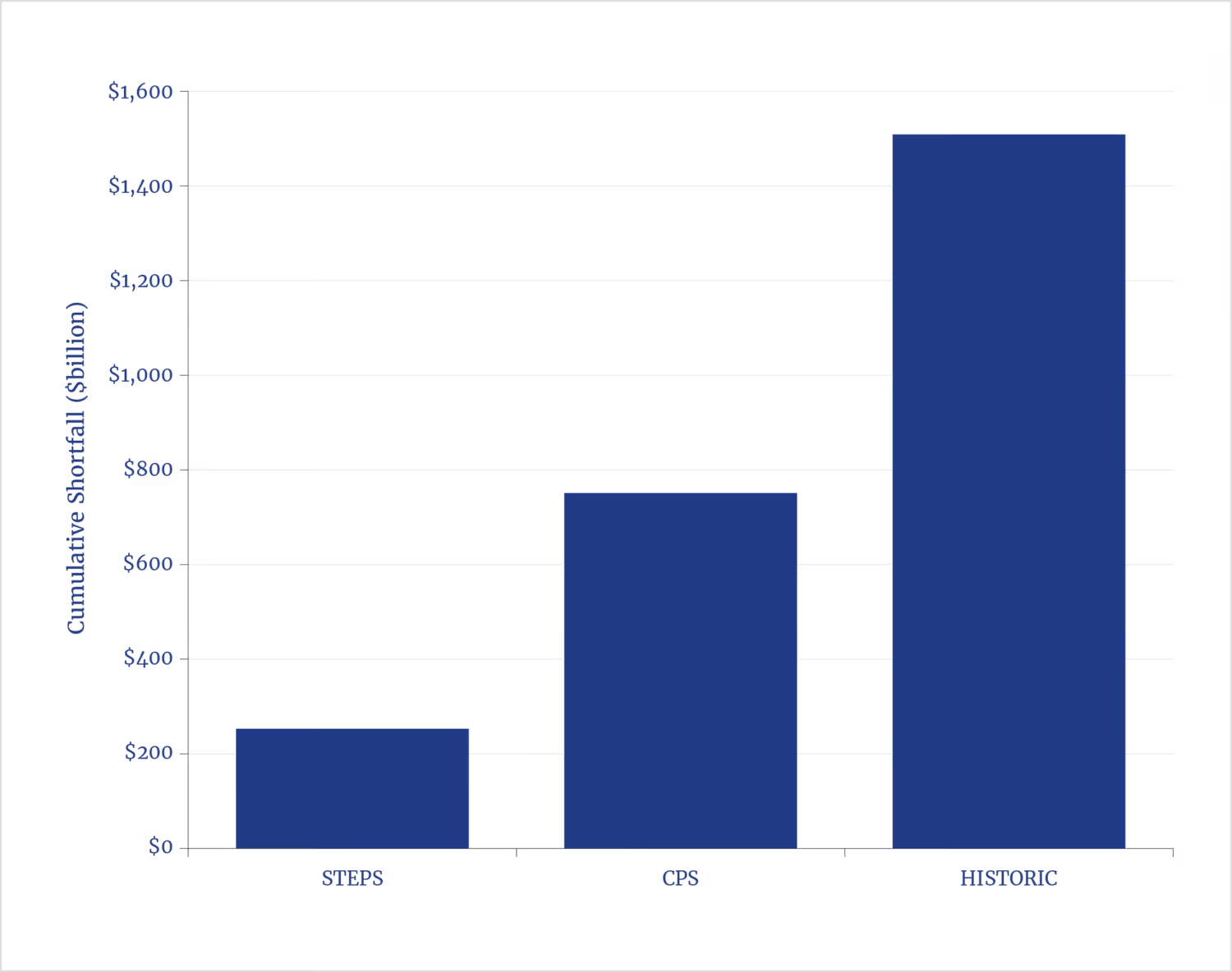
- NCEA warns that years of messaging around imminent peak oil demand and calls to curtail upstream investment have contributed to today's fragile supply outlook. WEO 2025 now acknowledges that sustained underinvestment could lead to supply shortfalls, price volatility, and increased geopolitical dependence. Under realistic demand scenarios, the report estimates that hundreds of billions of dollars in additional oil and gas investment will be required over the coming decade to avoid destabilizing market imbalances.
As a recommendation, the authors urge policymakers and investors treat the restored CPS as a central planning reference and to rebalance energy strategies.
"The world will consume more energy, including more oil, for far longer than previously projected. This emphasizes the urgent need for policies that balance emissions reduction goals with affordability, security, and economic development--three factors that are vital for global prosperity and stability," they wrote.
Atkinson and Sieminski presented their findings on January 27, 2026 at the NCEA's energy briefing series. To watch the recording of the event, visit https://energyanalytics.org/energy-delusions/.
More insights

New Energy Security Index Warns U.S. Risks Losing Shale-Era Energy Security Gains
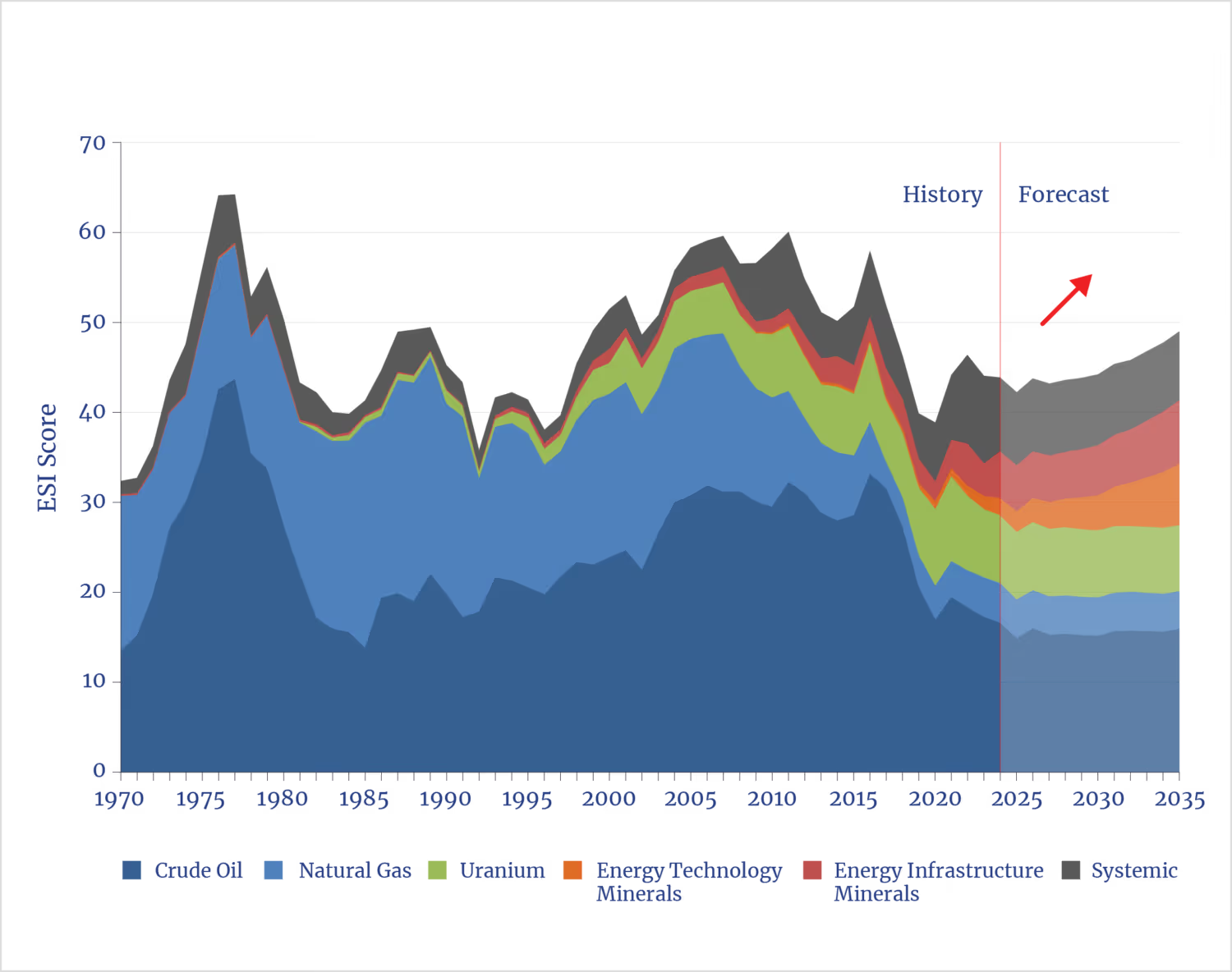
The energy security gains the United States achieved during the shale revolution are beginning to erode and could continue weakening through 2035, according to a new report from the National Center for Energy Analytics (NCEA).

.jpeg)
New Analysis Warns of Hidden $50 Billion Liability as Wind and Solar Projects Age Without Decommissioning Safeguards
WASHINGTON, D.C., October 27, 2025 -- As wind turbines and solar panels reach the end of their operational life spans, the United States is facing a massive and largely unacknowledged financial risk: billions of dollars in unfunded liabiliti


Report: New Financing Strategy Needed to Spark America's Nuclear Energy Revival
As America's power grid faces mounting reliability concerns and unprecedented demand growth driven by the digital economy, a new report from the National Center for Energy Analytics proposes a financing strategy to spark nuclear energy's re
National Center for Energy Analytics Welcomes Stephen D. Eule as Visiting Fellow
The National Center for Energy Analytics (NCEA), a Washington, D.C.-based energy think tank, today announced the appointment of Stephen D. Eule as a visiting fellow, bringing decades of experience in energy, climate, and technology policy t
Former IEA Oil Market Chief Joins National Center for Energy Analytics as Visiting Fellow
National Center for Energy Analytics (NCEA), a Washington, D.C.-based energy think tank, announced today it has added Neil Atkinson as a visiting fellow. In this role, he will provide research and analysis of oil market issues.

NCEA Report Urges Policymakers to Reject Flawed "Social Cost of Carbon" as Basis for Energy Decisions
Federal and state governments use a measurement known as the social cost of carbon (SCC) to quantify the economic damage caused by each additional ton of carbon dioxide (CO2) emitted into the atmosphere. More specifically, policymakers are
Study: Maritime Shipping is the Black Hole of the Energy Transition
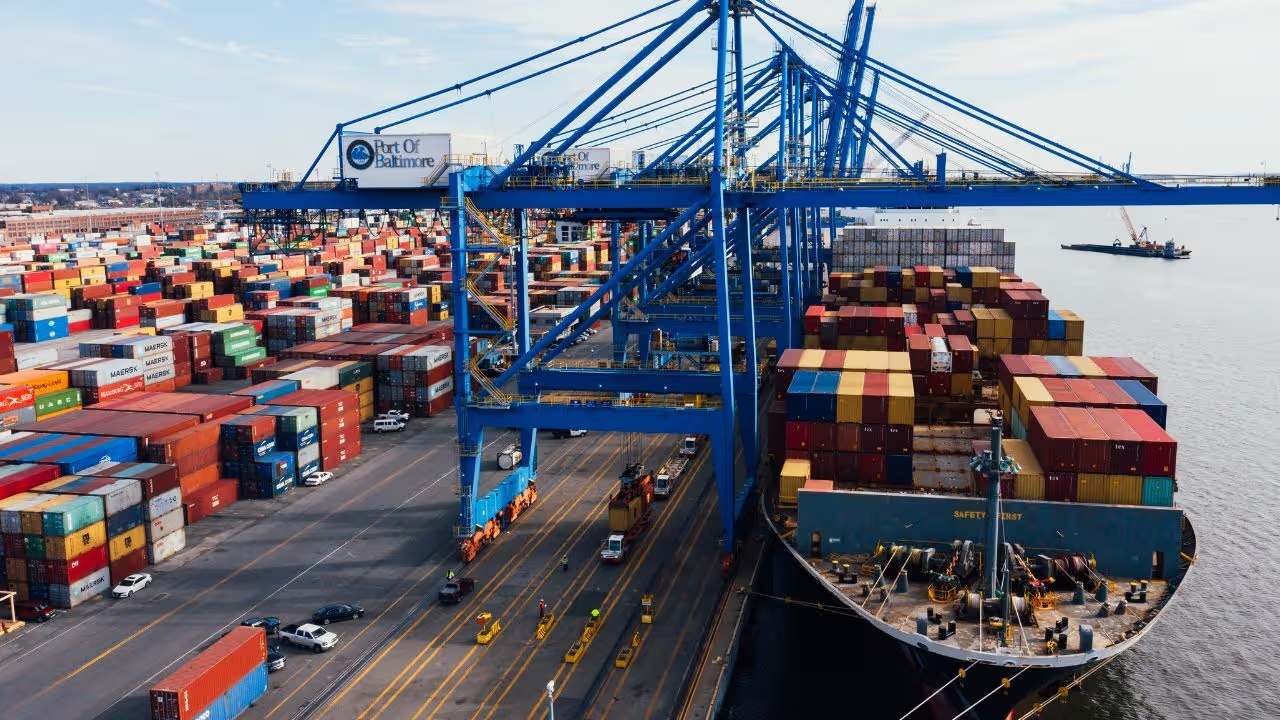
The global shipping industry has long played a central role in the energy-materials supply chain. Yet, few energy forecasts and analysts have considered how maritime shipping is a weak link of the energy transition, according to a National

Veteran energy experts find 23 problematic assumptions within IEA's World Energy Outlook 2024
WASHINGTON, January 30, 2025 -- Industry players consider the International Energy Agency's signature annual report, the World Energy Outlook, to contain highly credible analyses. However, a new critique from the National Center of Energy An

New Report Suggests Electrification Mandates Worsen Energy Affordability, Power Access, Economist Jonathan Lesser, PhD, urges policymakers to adopt a more rational planning framework
According to a National Center for Energy Analytics (NCEA) report, mandates to electrify the American economy while rationing customers' energy use may worsen the energy affordability crisis and power access.

National Center for Energy Analytics Appoints Policy Analyst Rupert Darwall as Senior Fellow
Washington, D.C., - National Center for Energy Analytics (NCEA), a Washington, D.C.-based energy think tank, has added policy analyst Rupert Darwall as a senior fellow. In this role, Darwall will leverage his extensive knowledge on U.S. ene
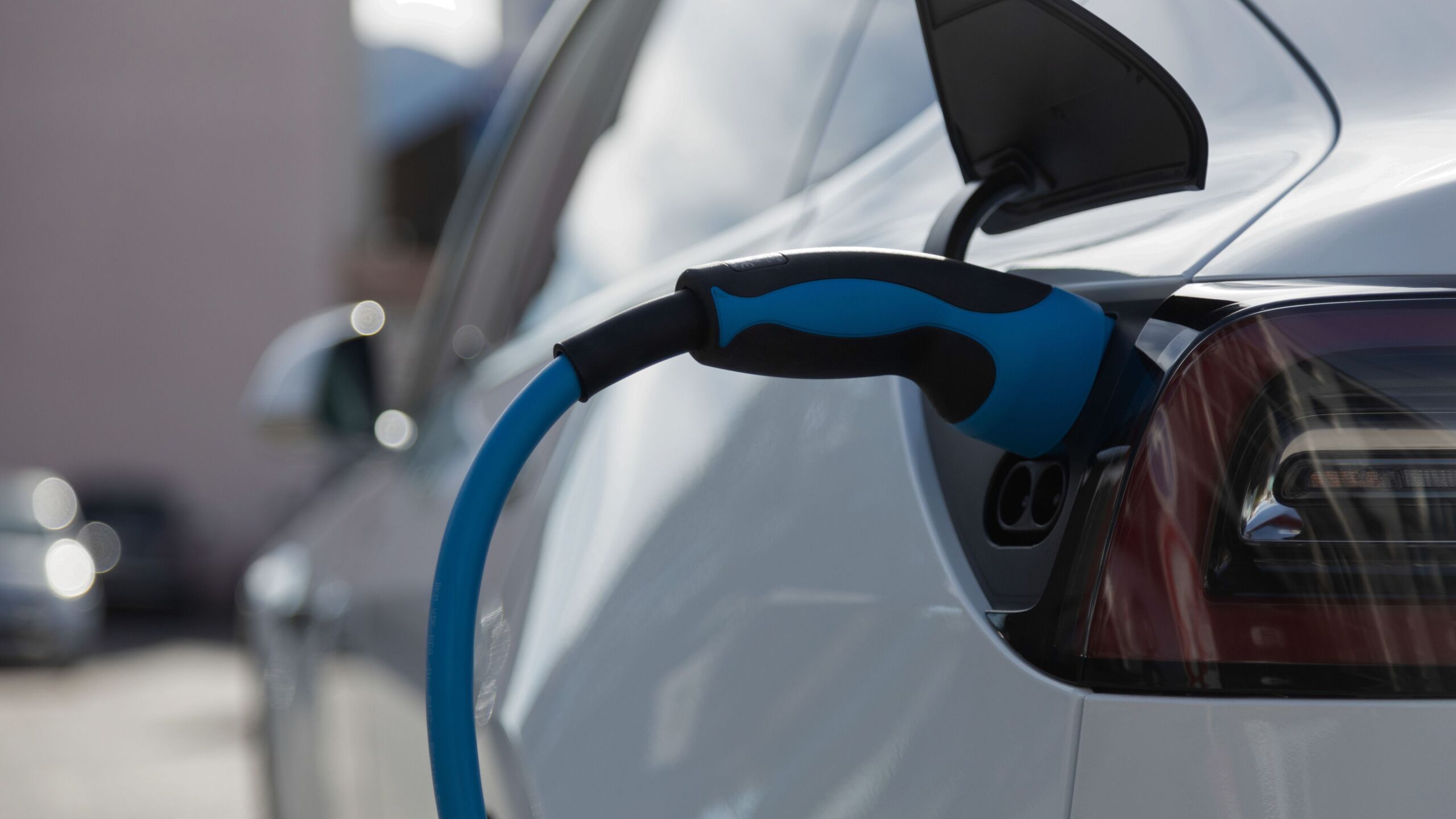
NCEA Releases Inaugural Report Revealing Projected $2 - 4 Trillion Cost to Build Nationwide Electric Vehicle Charging Infrastructure
WASHINGTON, D.C. -- Today, the National Center for Energy Analytics (NCEA) released its first-ever study, which evaluates the realities of the ongoing push for an all-electric vehicle (EV) future. The study documents the overlooked and

New Report from the National Center for Energy Analytics Outlines Pathways to Preserve and Expand U.S. Dominance in Global LNG
Washington, D.C. - Today, National Center for Energy Analytics (NCEA) Senior Fellow Tristan Abbey published a report examining the politicization of liquid natural gas (LNG) exports and recommending three pathways to ensure the United

Critical Minerals Expert Peter Bryant Joins National Center for Energy Analytics Advisory Board
National Center for Energy Analytics (NCEA) announces the addition of Peter Bryant to its Advisory Board. Bryant, Board Chair of Clareo and Co-Founder and Board Chair of the Development Partner Institute, brings decades of practical experience in advising the mining and energy sectors.

New Report Shows Securities and Exchange Commission Planned Climate Rules Will Accelerate Systemic Financial and Economic Risk
Washington, D.C. - Today, National Center for Energy Analytics (NCEA) Advisor and Senior Fellow Paul H. Tice published an in-depth report evaluating the impact on U.S. financial markets from the planned climate rules from the U.S. Securitie