New Analysis Finds Corn Ethanol Policy Falls Short on Energy, Emissions, and Resource Efficiency


Washington, D.C. -- A new report from the National Center for Energy Analytics, finds that the United States' long-standing reliance on corn ethanol as a transportation fuel has failed to achieve its intended energy, environmental, and economic objectives.
The report, Ethanol as Fuel: A Bridge to Nowhere, provides a comprehensive evaluation of ethanol's performance across water use, energy efficiency, emissions, and market dynamics. Drawing on federal data and life-cycle analysis, the study concludes that corn ethanol remains heavily dependent on fossil fuel inputs, delivers limited net energy benefits, and may increase environmental strain relative to conventional gasoline.
"Originally intended as a temporary bridge to a future of environmentally friendly, low-emission, nonfood crop biofuels grown renewably on uncultivated land, corn ethanol has instead become a multibillion-dollar-per-year subsidy-harvesting operation, sustained by federal fuel-blending consumption mandates and perpetual regulatory exemptions to GHG reduction and pollution emission rules," wrote Todd "Ike" Kiefer, a visiting fellow at NCEA and the study's author, in the report.
In the United States, 40 percent of the corn crop is now used for ethanol production, yet it displaces only 10.5 percent of gasoline volume--equivalent to just 7 percent of total energy in the fuel supply. The report argues that this imbalance reflects structural limitations rather than temporary policy or technological gaps, noting that ethanol's contribution remains modest despite more than two decades of federal mandates under the Renewable Fuel Standard (RFS).
The analysis also highlights the resource intensity of ethanol production, particularly its impact on water systems and land use. For instance, producing a gallon of corn ethanol requires approximately 992 gallons of water, compared to 5.6 gallons for gasoline. At the same time, the process imposes significantly higher demands on freshwater resources and contributes to environmental degradation through agricultural runoff and land-use changes."
Several other drawbacks to ethanol fuel include:
- The limited energy efficiency of corn ethanol: The estimated energy return on investment (EROI) is approximately 1.5:1, far below the 6:1 threshold generally considered necessary to sustain a modern, energy-intensive economy.
- Life-cycle emissions analysis: When accounting for land-use changes and production impacts, greenhouse gas emissions associated with corn ethanol can exceed those of gasoline.
- The performance of advanced biofuels, particularly cellulosic ethanol: Despite decades of federal support and private investment which was expected to provide a scalable, lower-impact alternative, these technologies remain negligible in production, accounting for approximately 0.5% of corn ethanol volumes.
"In terms of water resources, air quality, net energy contribution, and greenhouse gas emissions, corn ethanol has been a step backward," Kiefer wrote.
Kiefer's findings suggest that continued reliance on ethanol mandates risks misallocating resources while exacerbating pressures on land, water, and agricultural markets. The report calls for a reassessment of current biofuel policies in favor of alternatives that more effectively advance energy security and environmental goals.
"It is past time for the administration and Congress to acknowledge reality, stop subsidizing a program that undermines their own stated policy goals, and move toward alternative policies and spending that genuinely support national energy independence, a cleaner environment, and the American family farmer," the report stated.
More insights
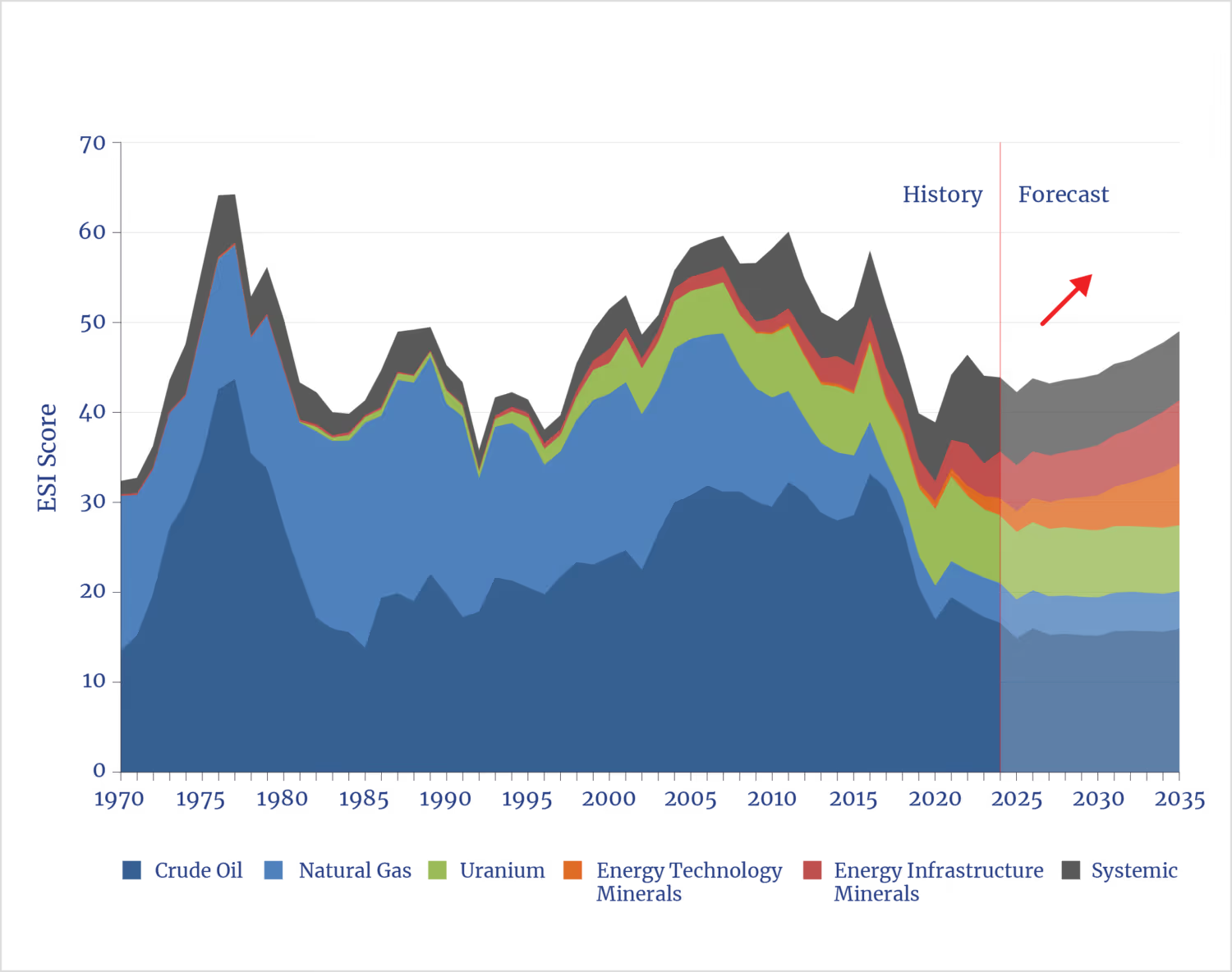
New Energy Security Index Warns U.S. Risks Losing Shale-Era Energy Security Gains
The energy security gains the United States achieved during the shale revolution are beginning to erode and could continue weakening through 2035, according to a new report from the National Center for Energy Analytics (NCEA).

.jpeg)
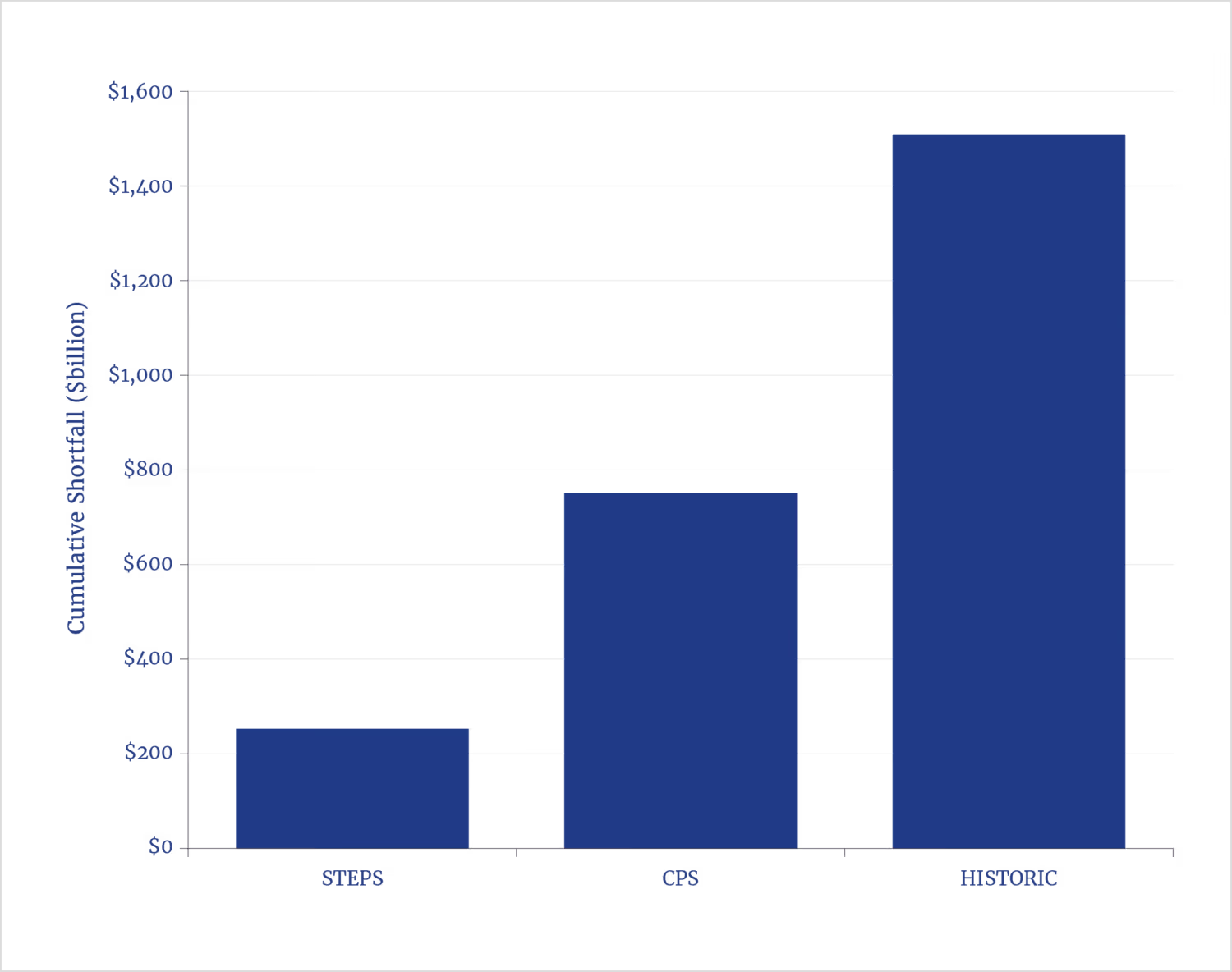
New Analysis Warns of Hidden $50 Billion Liability as Wind and Solar Projects Age Without Decommissioning Safeguards
WASHINGTON, D.C., October 27, 2025 -- As wind turbines and solar panels reach the end of their operational life spans, the United States is facing a massive and largely unacknowledged financial risk: billions of dollars in unfunded liabiliti


Report: New Financing Strategy Needed to Spark America's Nuclear Energy Revival
As America's power grid faces mounting reliability concerns and unprecedented demand growth driven by the digital economy, a new report from the National Center for Energy Analytics proposes a financing strategy to spark nuclear energy's re
National Center for Energy Analytics Welcomes Stephen D. Eule as Visiting Fellow
The National Center for Energy Analytics (NCEA), a Washington, D.C.-based energy think tank, today announced the appointment of Stephen D. Eule as a visiting fellow, bringing decades of experience in energy, climate, and technology policy t
Former IEA Oil Market Chief Joins National Center for Energy Analytics as Visiting Fellow
National Center for Energy Analytics (NCEA), a Washington, D.C.-based energy think tank, announced today it has added Neil Atkinson as a visiting fellow. In this role, he will provide research and analysis of oil market issues.

NCEA Report Urges Policymakers to Reject Flawed "Social Cost of Carbon" as Basis for Energy Decisions
Federal and state governments use a measurement known as the social cost of carbon (SCC) to quantify the economic damage caused by each additional ton of carbon dioxide (CO2) emitted into the atmosphere. More specifically, policymakers are
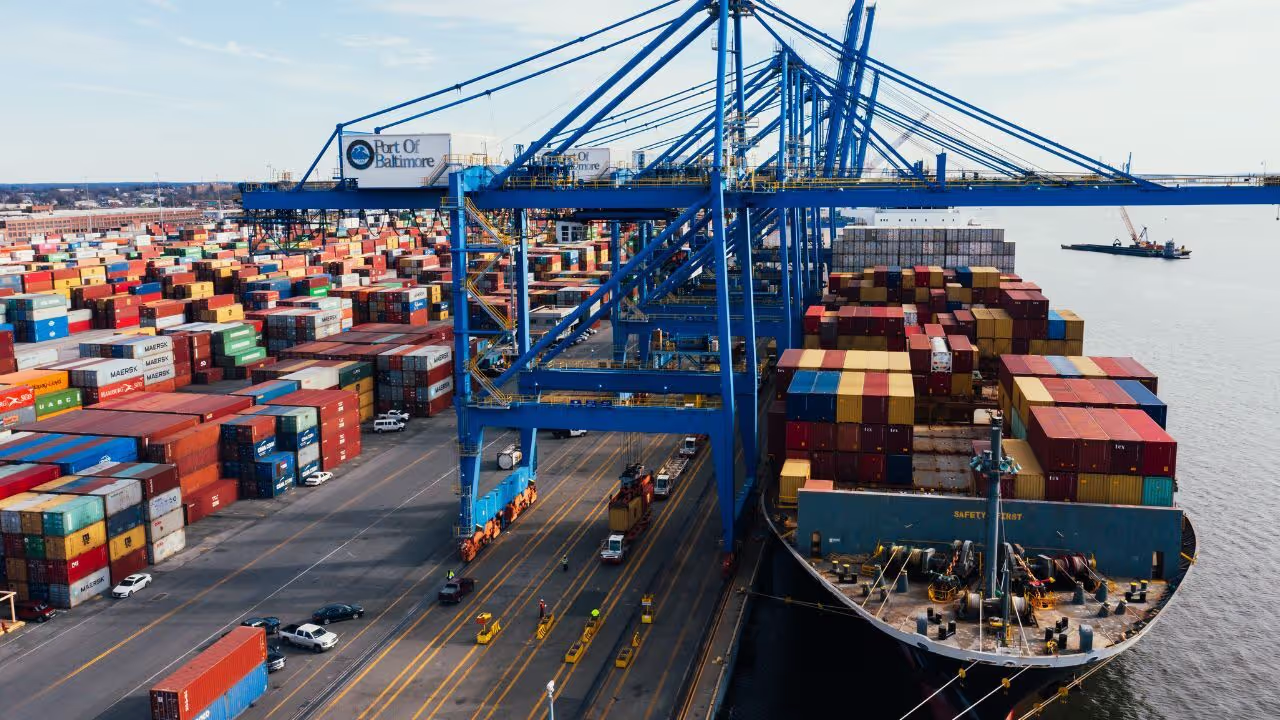
Study: Maritime Shipping is the Black Hole of the Energy Transition
The global shipping industry has long played a central role in the energy-materials supply chain. Yet, few energy forecasts and analysts have considered how maritime shipping is a weak link of the energy transition, according to a National

Veteran energy experts find 23 problematic assumptions within IEA's World Energy Outlook 2024
WASHINGTON, January 30, 2025 -- Industry players consider the International Energy Agency's signature annual report, the World Energy Outlook, to contain highly credible analyses. However, a new critique from the National Center of Energy An

New Report Suggests Electrification Mandates Worsen Energy Affordability, Power Access, Economist Jonathan Lesser, PhD, urges policymakers to adopt a more rational planning framework
According to a National Center for Energy Analytics (NCEA) report, mandates to electrify the American economy while rationing customers' energy use may worsen the energy affordability crisis and power access.

National Center for Energy Analytics Appoints Policy Analyst Rupert Darwall as Senior Fellow
Washington, D.C., - National Center for Energy Analytics (NCEA), a Washington, D.C.-based energy think tank, has added policy analyst Rupert Darwall as a senior fellow. In this role, Darwall will leverage his extensive knowledge on U.S. ene

NCEA Releases Inaugural Report Revealing Projected $2 - 4 Trillion Cost to Build Nationwide Electric Vehicle Charging Infrastructure
WASHINGTON, D.C. -- Today, the National Center for Energy Analytics (NCEA) released its first-ever study, which evaluates the realities of the ongoing push for an all-electric vehicle (EV) future. The study documents the overlooked and

New Report from the National Center for Energy Analytics Outlines Pathways to Preserve and Expand U.S. Dominance in Global LNG
Washington, D.C. - Today, National Center for Energy Analytics (NCEA) Senior Fellow Tristan Abbey published a report examining the politicization of liquid natural gas (LNG) exports and recommending three pathways to ensure the United

Critical Minerals Expert Peter Bryant Joins National Center for Energy Analytics Advisory Board
National Center for Energy Analytics (NCEA) announces the addition of Peter Bryant to its Advisory Board. Bryant, Board Chair of Clareo and Co-Founder and Board Chair of the Development Partner Institute, brings decades of practical experience in advising the mining and energy sectors.

New Report Shows Securities and Exchange Commission Planned Climate Rules Will Accelerate Systemic Financial and Economic Risk
Washington, D.C. - Today, National Center for Energy Analytics (NCEA) Advisor and Senior Fellow Paul H. Tice published an in-depth report evaluating the impact on U.S. financial markets from the planned climate rules from the U.S. Securitie