New Report Suggests Electrification Mandates Worsen Energy Affordability, Power Access, Economist Jonathan Lesser, PhD, urges policymakers to adopt a more rational planning framework



According to a National Center for Energy Analytics (NCEA) report, mandates to electrify the American economy while rationing customers' energy use may worsen the energy affordability crisis and power access.
"Forcing consumers into electrification while limiting their access to electricity and relying on less reliable renewable sources are irrational approaches," said NCEA senior fellow and the report's author Jonathan Lesser, PhD. "Electric utilities should design systems to meet customers' requirements and growing demand, rather than rationing and restricting power access."
Lesser's analysis reveals an epic failure in the electric utility planning process. Because regulators and policymakers haven't focused on increasing supplies of affordable and reliable electricity, consumers are being hit with far higher electric bills and greater risks of rolling blackouts. In northern California, for example, the frequency of power outages has doubled over the past decade. Meanwhile, residential rates throughout the state have increased 75% on average from 2020 to 2024.
Recently, the Department of Energy (DOE) awarded a $15 billion loan to Pacific Gas and Electric (PG&E) to develop virtual power plants--home-based solar and battery storage facilities, and voluntary power shutoffs--as a way to meet customer load. However, Lesser believes this investment still misses the mark.
"While virtual power plants may increase supply, they still epitomize how utilities have failed to plan for the long term, especially when considering grid reliability," according to Lesser. "The DOE's loan to PG&E is a costly bandage that doesn't address a fundamental component of electrification policies, which is ample supplies of affordable and reliable electricity."
Electric utilities are increasingly using direct controls and higher prices to limit or ration electricity use. Lesser recommends incorporating consumers' inconvenience costs directly into utilities' "least-cost" resource planning efforts. This, he stresses, is far better than relying on time-of-use schemes that charge consumers even higher prices when they most want access to electricity, or even direct load controls that allow utilities to shut off power when demand is too high to meet.
Although policymakers have pushed electrification mandates to address carbon dioxide emissions, Lesser believes that using more natural gas and nuclear energy are better options for grid reliability while reducing emissions at a far lower cost.
"Whether or not we have electrification mandates, the U.S. will still need a bigger and stronger infrastructure to avoid power disruptions," he said.
The report, titled "Electrification Without Electricity: An Epic Failure in Planning for Critical Infrastructure," is available at utilities.energyanalytics.org.
About the National Center for Energy Analytics (NCEA):
The National Center for Energy Analytics is a think tank devoted to data-driven analyses of policies, plans, and technologies surrounding the supply and use of energy essential for human flourishing. Through objective analyses of energy policies and their implications, NCEA aims to inform policymakers, industry leaders, and the public on critical energy issues.
Interested in learning more?
https://www.youtube.com/watch?v=iUdSSueKBUg
More insights

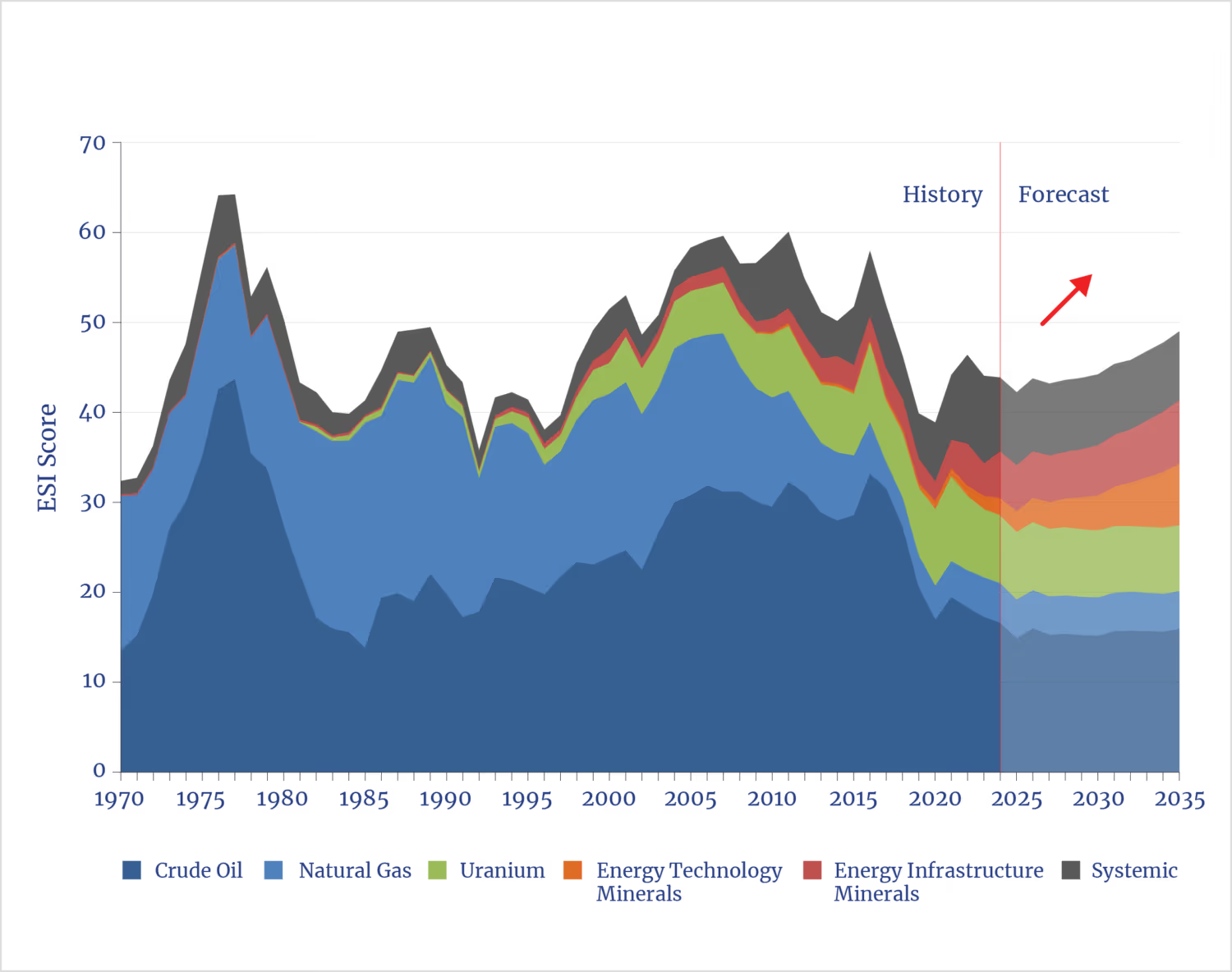
New Energy Security Index Warns U.S. Risks Losing Shale-Era Energy Security Gains
The energy security gains the United States achieved during the shale revolution are beginning to erode and could continue weakening through 2035, according to a new report from the National Center for Energy Analytics (NCEA).

.jpeg)
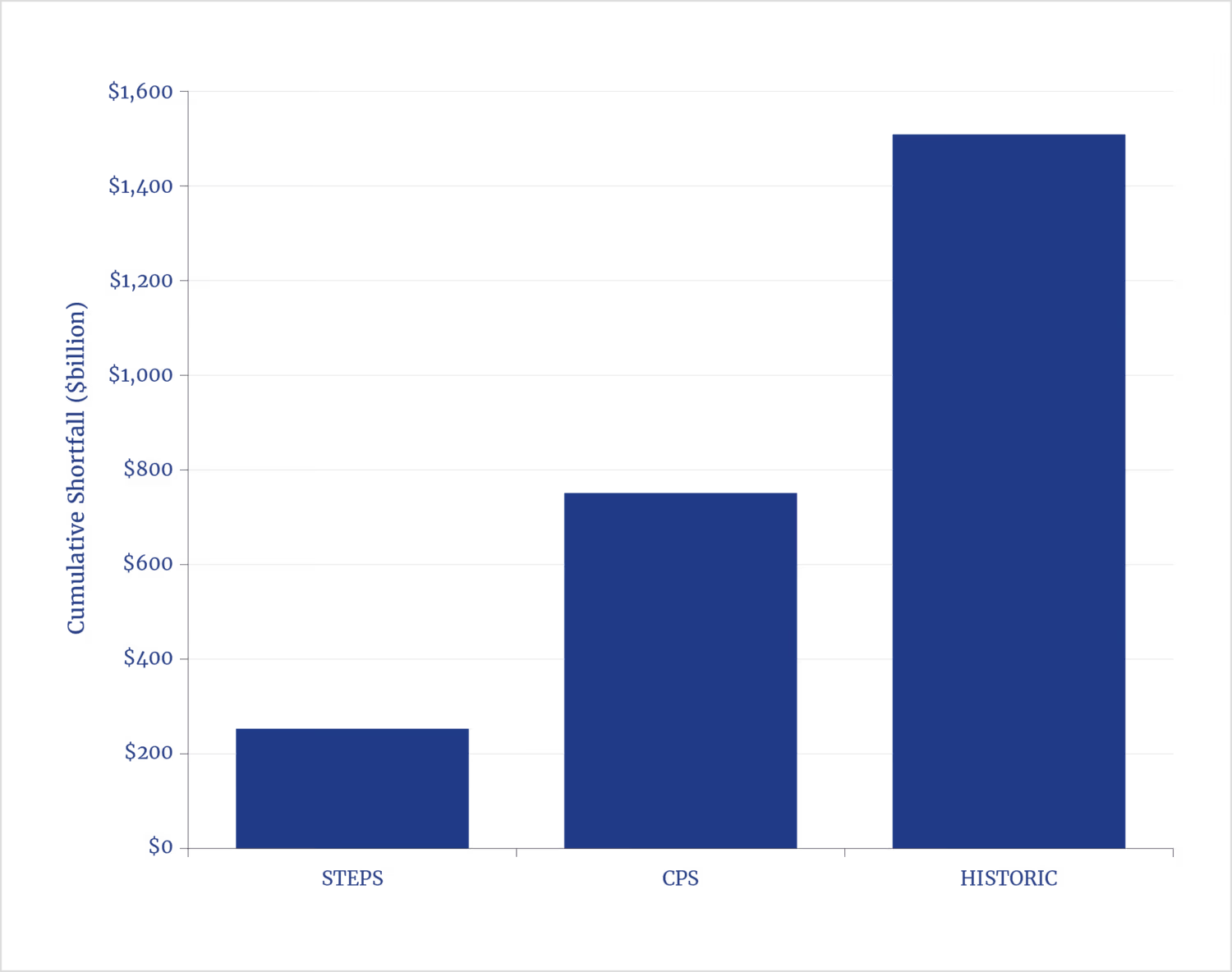
New Analysis Warns of Hidden $50 Billion Liability as Wind and Solar Projects Age Without Decommissioning Safeguards
WASHINGTON, D.C., October 27, 2025 -- As wind turbines and solar panels reach the end of their operational life spans, the United States is facing a massive and largely unacknowledged financial risk: billions of dollars in unfunded liabiliti
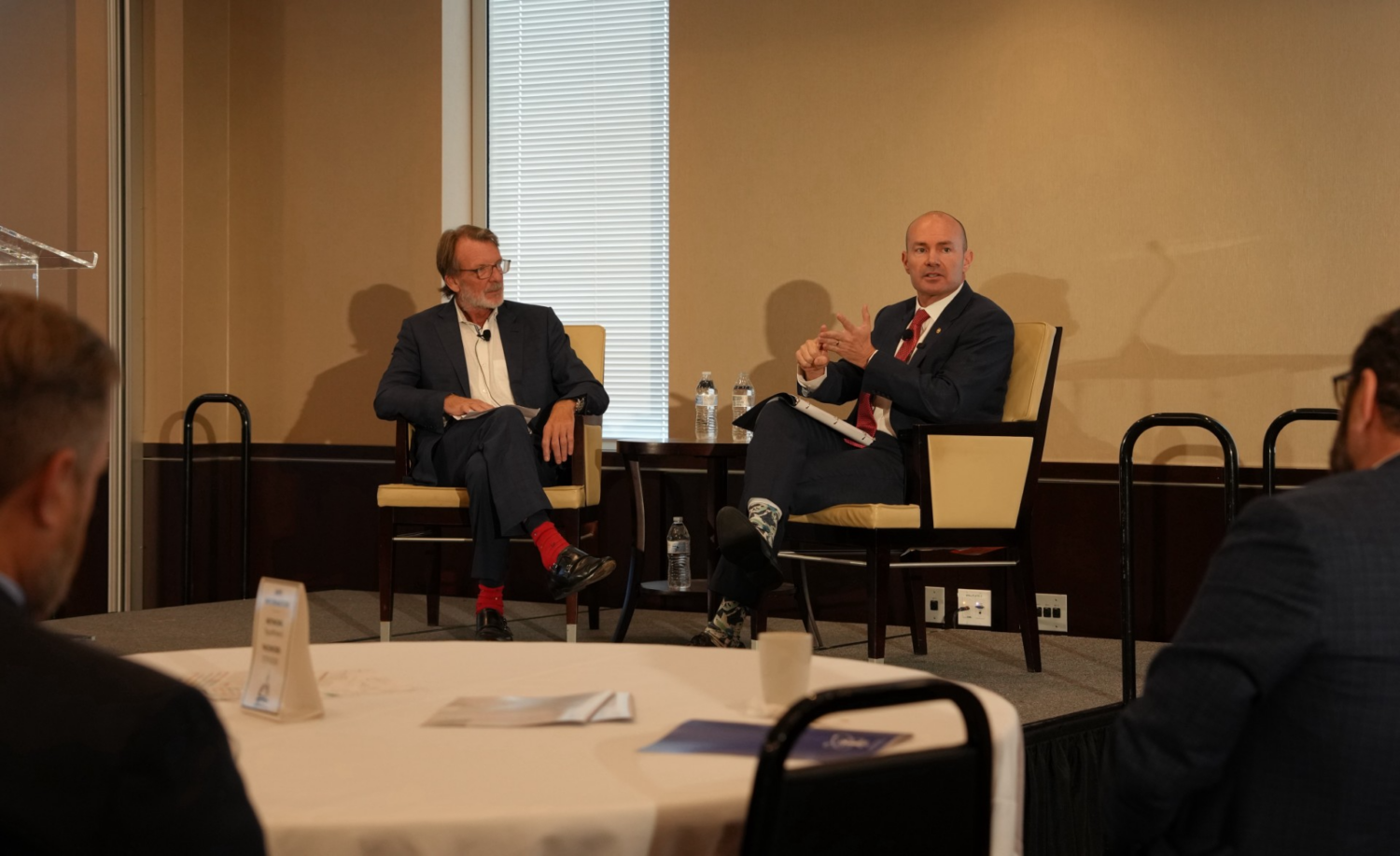

Report: New Financing Strategy Needed to Spark America's Nuclear Energy Revival
As America's power grid faces mounting reliability concerns and unprecedented demand growth driven by the digital economy, a new report from the National Center for Energy Analytics proposes a financing strategy to spark nuclear energy's re
National Center for Energy Analytics Welcomes Stephen D. Eule as Visiting Fellow
The National Center for Energy Analytics (NCEA), a Washington, D.C.-based energy think tank, today announced the appointment of Stephen D. Eule as a visiting fellow, bringing decades of experience in energy, climate, and technology policy t
Former IEA Oil Market Chief Joins National Center for Energy Analytics as Visiting Fellow
National Center for Energy Analytics (NCEA), a Washington, D.C.-based energy think tank, announced today it has added Neil Atkinson as a visiting fellow. In this role, he will provide research and analysis of oil market issues.

NCEA Report Urges Policymakers to Reject Flawed "Social Cost of Carbon" as Basis for Energy Decisions
Federal and state governments use a measurement known as the social cost of carbon (SCC) to quantify the economic damage caused by each additional ton of carbon dioxide (CO2) emitted into the atmosphere. More specifically, policymakers are
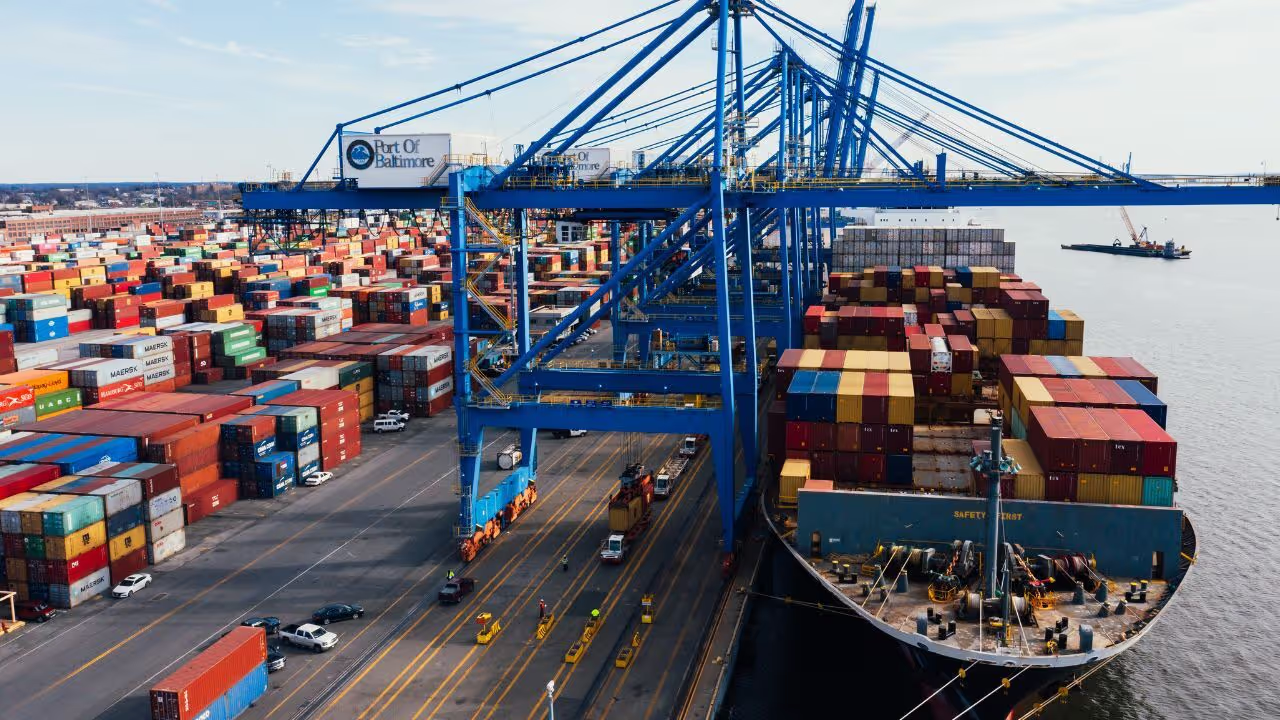
Study: Maritime Shipping is the Black Hole of the Energy Transition
The global shipping industry has long played a central role in the energy-materials supply chain. Yet, few energy forecasts and analysts have considered how maritime shipping is a weak link of the energy transition, according to a National

Veteran energy experts find 23 problematic assumptions within IEA's World Energy Outlook 2024
WASHINGTON, January 30, 2025 -- Industry players consider the International Energy Agency's signature annual report, the World Energy Outlook, to contain highly credible analyses. However, a new critique from the National Center of Energy An

National Center for Energy Analytics Appoints Policy Analyst Rupert Darwall as Senior Fellow
Washington, D.C., - National Center for Energy Analytics (NCEA), a Washington, D.C.-based energy think tank, has added policy analyst Rupert Darwall as a senior fellow. In this role, Darwall will leverage his extensive knowledge on U.S. ene
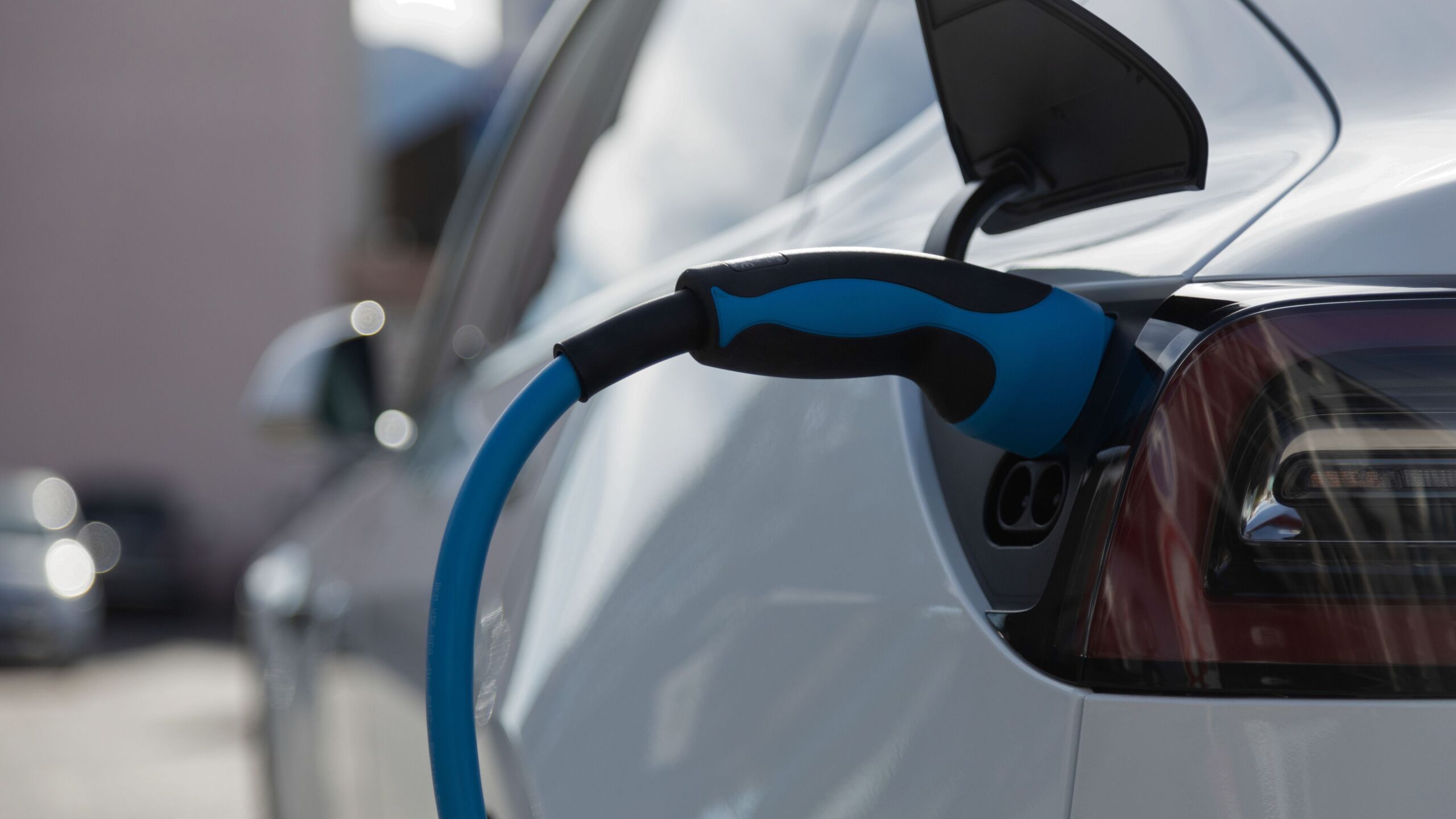
NCEA Releases Inaugural Report Revealing Projected $2 - 4 Trillion Cost to Build Nationwide Electric Vehicle Charging Infrastructure
WASHINGTON, D.C. -- Today, the National Center for Energy Analytics (NCEA) released its first-ever study, which evaluates the realities of the ongoing push for an all-electric vehicle (EV) future. The study documents the overlooked and

New Report from the National Center for Energy Analytics Outlines Pathways to Preserve and Expand U.S. Dominance in Global LNG
Washington, D.C. - Today, National Center for Energy Analytics (NCEA) Senior Fellow Tristan Abbey published a report examining the politicization of liquid natural gas (LNG) exports and recommending three pathways to ensure the United

Critical Minerals Expert Peter Bryant Joins National Center for Energy Analytics Advisory Board
National Center for Energy Analytics (NCEA) announces the addition of Peter Bryant to its Advisory Board. Bryant, Board Chair of Clareo and Co-Founder and Board Chair of the Development Partner Institute, brings decades of practical experience in advising the mining and energy sectors.
New Report Shows Securities and Exchange Commission Planned Climate Rules Will Accelerate Systemic Financial and Economic Risk
Washington, D.C. - Today, National Center for Energy Analytics (NCEA) Advisor and Senior Fellow Paul H. Tice published an in-depth report evaluating the impact on U.S. financial markets from the planned climate rules from the U.S. Securitie