ESC

Search NCEA

Find research, scholars, events, and media

Grid reliabilityMark MillsNuclearRenewable costs
Research
42results

Ask a question

Get an AI-powered answer grounded in NCEA research

Costs of renewable mandatesGrid reliability
Commentary

When Energy Prices Spike, Resist the Crisis-Driven Fix

When oil and gas prices rise, consumers understandably look to government for relief. But history offers a warning
Oil & Gas
Energy Policy
Energy Markets

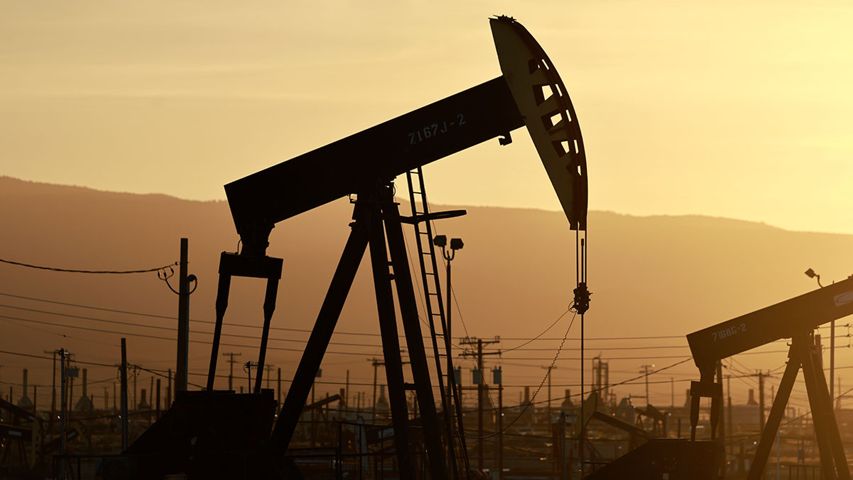
When oil and gas prices rise, consumers understandably look to government for relief. But history offers a warning: policies adopted in the name of fighting an energy crisis can sometimes make the problem worse, and even create expensive failures of their own.

NCEA's latest brief, U.S. Government's Action on Oil and Gas Price Crises: Help or Hindrance?, examines how policymakers have responded to energy-price shocks, from the crises of the 1970s to the current spike associated with the Iran war. Written by Peter Z. Grossman, the brief's central lesson is straightforward: emergency action may provide temporary relief, but durable energy security depends on policies that allow markets to respond and supply to expand.

The International Energy Agency's release of 400 million barrels from emergency stockpiles, for example, may temporarily reduce oil prices. But most government policy tools cannot quickly change the balance between energy supply and demand. Attempts to control prices, restrict production, or force consumers toward favored technologies generally take time to affect the market, and can produce unintended consequences.

The 1970s: A Cautionary Tale

The experience of the 1970s is especially instructive. In 1971, the Nixon administration-imposed wage-price controls across the economy to fight inflation. By the summer of 1973, those controls had been relaxed almost everywhere, except on oil. When the Arab oil embargo followed that October, price controls on oil turned a supply shock into full-blown shortages, gas lines, and market chaos that persisted for the rest of the decade. Nixon pressed ahead despite a direct warning from his own Council of Economic Advisers chairman, who said there was no more effective way to create a fuel crisis than to impose price ceilings.

The eventual removal of oil and natural-gas price controls in the 1980s and early 1990s changed that dynamic. Later embargoes and geopolitical disruptions still pushed prices higher, but they never again produced the shortages and chaos of the 1970s—because the market was allowed to respond.

The Deeper Problem: Acting Before You Understand the Cause

Crises create pressure for policymakers to “do something” before the underlying causes are fully understood. Was a price spike caused by dwindling supplies? Hostile foreign suppliers? Companies withholding production? Government restrictions? Each explanation points to a different, and often contradictory, policy response. Misidentifying the cause can push the market in exactly the wrong direction. The Powerplant and Industrial Fuel Use Act of 1978, for instance, restricted the use of natural gas in new power plants at a time when the real problem was price controls suppressing production of gas that was actually abundant. The law was repealed in 1987, once the mistake became clear.

That pattern of crisis-driven overcorrection has repeated many times, usually in the same direction: toward a government-backed technological “fix” meant to end America's energy problems for good.

  • After the 1970s crises, Washington bet heavily on breeder reactors, solar heating mandates, and synthetic fuels. The synfuels program alone was authorized for $88 billion (about $345 billion in 2025 dollars); Congress ultimately appropriated $20 billion, and only about $1 billion was spent before the program was shut down. Oil prices, which the program assumed would keep climbing, collapsed in 1986 instead.
  • The 2005 and 2007 energy laws bet on cellulosic ethanol, expanding biofuel mandates on the assumption that the technology would be commercially viable within about six years. Two decades later, it still wasn't, and turned out to be unnecessary anyway, because hydraulic fracturing and horizontal drilling unlocked vast domestic oil and gas supplies through market-driven innovation, not a government-designed technological fix.

As political scientist Anthony Downs reflected, the “euphoric enthusiasm” behind these grand technological fixes tends to fade fast once real costs and technical hurdles show up.

What Government Can—and Can't—Do Well

None of this means government has no role in energy markets. Strategic reserves can help manage short-term disruptions; basic research can support genuine innovation; and sound regulation can protect public safety and property rights.

But crisis-driven policies should be judged by their results, not by the urgency of the political messaging that produced them. Price controls suppress the incentives needed to produce more energy. Subsidies and mandates can lock in technologies that later prove costly or unnecessary. And large government programs built on optimistic forecasts leave taxpayers and consumers holding the bill for yesterday's assumptions.

The Case for a Longer View

Energy security requires patience that crises don't allow for. NCEA's foundational work, The Choices We Face: Energy for the 21st Century, argues that human flourishing depends on energy that is affordable, reliable, and secure; and that a diversified portfolio should include oil, natural gas, coal, nuclear power, and renewables. That principle matters most during a price spike, precisely because energy systems cannot be rebuilt overnight.

The most effective long-term response to an energy crisis is not a dramatic new program. It's maintaining a broad range of energy options, encouraging production and investment, and letting markets adapt to changing conditions rather than freezing them in place. As NCEA's brief concludes, the historical record suggests that in moments of energy-market turmoil, the most sensible policy is often to let the market sort itself out.

When prices spike, temporary measures may be appropriate. But the history of U.S. energy policy shows why policymakers should be wary of permanent interventions, rushed mandates, and technological panaceas. The best way to reduce the damage from the next crisis isn't to react more dramatically to this one—it's to build a more flexible, diverse, and resilient energy system before it arrives.


‍

More from the blog

China is often held up as proof that a major economy can rapidly ditch fossil fuels while leading the clean-energy revolution.
Commentary

Two-Headed Dragon: How China Does Fossil Fuels and Renewables

China is often held up as proof that a major economy can rapidly ditch fossil fuels while leading the clean-energy revolution.

National Center for Energy Analytics · · 4 min read

Data centers are often blamed for rising electricity bills. But the evidence tells a more complicated, and more useful, story.
Commentary

The Data Center Blame Game: What's Actually Driving Your Electric Bill

Data centers are often blamed for rising electricity bills. But the evidence tells a more complicated, and more useful, story.

National Center for Energy Analytics · · 4 min read

The United Arab Emirates' decision to leave OPEC was a major blow to the organization; but its most important consequences may come later.
Commentary

What the UAE's OPEC Exit Means for Oil Markets

The United Arab Emirates' decision to leave OPEC was a major blow to the organization; but its most important consequences may come later.

National Center for Energy Analytics · · 5 min red

Commentary

Coal Isn't Disappearing. Energy Policy Should Deal With That Reality.

For decades, Western policymakers have treated coal as a fuel on the way out. But global energy markets are telling a different story.

National Center for Energy Analytics · · 4 min read

Commentary

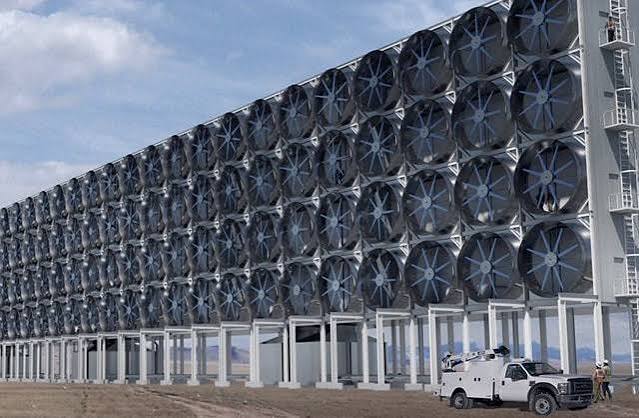
Direct Air Capture: A Lot of Energy for Very Little Climate Impact

Direct air capture is often presented as a technological safety net for climate policy

National Center for Energy Analytics · · 5 min read

Commentary

The $4 Trillion Problem With a Battery-Powered Grid

Batteries are often presented as the missing piece of a wind- and solar-powered electric grid.

· · 5 min read

A long, brightly lit aisle between rows of server racks in a data center
News

Building the Next Generation of Energy Research

Why NCEA is building a custom AI agent and dynamic tools such as the Index of Leading Energy Indicators and NCEA-EMIT.

· Sep 24, 2026 · 9 min

Commentary

America's Electric Grid: A Century-Old System Meets a 21st-Century Surge

NCEA's report by Jonathan Lesser and Patrick McCormick finds America's aging electric grid badly unprepared for a sudden surge in demand.

· ·

Commentary

The Wind Energy Reality Check Nobody Wants to Have

Jonathan Lesser and Portia Roberts test whether decades of promises about cheaper, cleaner, more secure wind power have actually held up.

· ·

Commentary

America's Nuclear Ambition Has a Workforce Problem

Bipartisan support and data center demand put nuclear back on the agenda. The workforce needed to quadruple U.S. capacity by 2050 does not exist.

· ·

For years, the world's most-cited energy forecast told a clean story: oil demand was about to peak, and the transition was on track
Commentary

The World's Top Energy Forecaster Just Quietly Admitted It Got Oil Wrong

For years, the world's most-cited energy forecast told a clean story: oil demand was about to peak, and the transition was on track

National Center for Energy Analytics · Jan 30, 2026 · 3 min

Unlocking U.S. nuclear growth and waste management graphic
Commentary

Solving the Nuclear Waste "Problem"

Public support for nuclear is near record highs, but unease about radioactive waste remains the objection that has stalled expansion for 50 years.

Brett Rampal · May 12, 2026 · 2 min read

NCEA quote graphic on the benefits of natural gas and oil
Commentary

It's a Wonderful Fuel

George Green had reached the end of his rope. Humanity just didn't get that its large and growing appetite for energy was killing the planet.

· Apr 22, 2026 · 4 min read

U.S. Energy Security Index NCEA cover graphic
Commentary

Leading Energy Indicators: Introducing the U.S. Energy Security Index

Energy security rarely dominates the news - until something breaks. A supply disruption. A geopolitical conflict. A cyberattack. A price shock.

· Mar 12, 2026 · 3 min read

Energy sanctions and U.S. global power presentation graphic
Commentary

Energy Sanctions and American Power: How Long Can the Leverage Last?

Not long ago, the United States was an oil supplicant - managing OPEC relationships carefully and constrained by import dependence.

Matthew McManus · Feb 26, 2026 · 2 min read

NCEA quote graphic debunking fossil fuel subsidy claims
Commentary

The $7 Trillion Number That Doesn't Exist

The IMF's $7 trillion fossil fuel subsidy figure is cited worldwide. Most of that sum is not a subsidy in any meaningful sense.

Paul H. Tice · Dec 17, 2025 · 2 min read

NCEA quote graphic on utility-scale battery storage limitations
Commentary

The Grid Doesn't Charge Like a Phone

Picture a battery. A phone that runs out. A laptop that needs plugging in. The battery depletes, you refill it, life goes on.

· Dec 03, 2025 · 2 min read

Rising electricity bill graphic showing increasing costs
Commentary

Why Your Electric Bill Keeps Rising-And What the Usual Explanations Miss

For years, I've watched the debate over rising retail electric rates drift further from the underlying realities of how our power system works.

Jonathan Lesser, PhD · Nov 19, 2025 · 2 min read

NCEA quote graphic on renewable energy decommissioning costs
Commentary

Taxpayers on the Hook? The Coming Renewable Decommissioning Debt

When an oil well runs dry, or a nuclear plant reaches the end of its life, or a coal mine closes, there are rules for what comes next.

Curtis Schube · Oct 28, 2025 · 2 min read

NCEA quote graphic on Britain's net zero climate policies
Commentary

What President Trump Needs to Say About Britain's Economy-Destroying Net Zero Climate Policies

This week, President Trump is making his second state visit to Britain, a country that is Ground Zero of Net Zero.

· Sep 18, 2025 · 2 min read

NCEA quote graphic on energy education at U.S. universities
Commentary

Energy Education: Reality Check, Part 2

In Part 1 of our Energy Education survey, we found that the nation's top 50 universities overwhelmingly frame energy courses through the lens of climate change.

Mark P. Mills · Sep 03, 2025 · 1 min read

NCEA quote graphic on building large nuclear reactors in America
Commentary

Why We're Not Building Large Nuclear Reactors (and How to Start Again)

For the first time in a generation, the stars have aligned for a nuclear energy comeback. Public support is rising. Bipartisan enthusiasm is real.

Paul H. Tice · Aug 12, 2025 · 2 min read

NCEA quote graphic on EIA capacity data and gigawatts
Commentary

Gigawatts Aren't All Created Equal: Why the EIA's Capacity Data Misleads Policymakers

Headlines credit wind and solar with 80% of new capacity, but EIA capacity data measures something different from electricity actually delivered.

Jonathan Lesser, PhD · Jul 24, 2025 · 2 min read

NCEA quote graphic on energy education research findings
Commentary

Is Energy Education Grounded in Reality? New Research Suggests Otherwise

What students are taught matters. This is especially true for energy-an input fundamental to every activity, product, or service in society.

Mark P. Mills · Jul 09, 2025 · 1 min read

Social cost of carbon analysis graphic
Commentary

The Social Cost of Carbon: A High-Stakes, Flawed Metric

For over a decade, the so-called "social cost of carbon" (SCC) has become a central justification for wide-ranging U.S. climate and energy policies.

Jonathan Lesser, PhD · Apr 23, 2025 · 3 min read

Container ship at sea representing global maritime shipping
Commentary

Is Global Shipping the Hidden Weak Link in the Energy Transition?

Maritime shipping moves 80% of world trade, including the minerals behind the energy transition, and may be the bottleneck nobody planned for.

G. Allen Brooks · Apr 09, 2025 · 3 min read

Power lines and electrical infrastructure at sunset
Commentary

Electrification Without Electricity-The Infrastructure Challenge

Demand for electricity is climbing fast as EVs and heat pumps spread, but the infrastructure needed to deliver that power is not keeping pace.

Jonathan Lesser, PhD · Jan 23, 2025 · 2 min read

LNG tanker ship transporting liquefied natural gas
Commentary

America's LNG Future

As our planet becomes more electrified and industrialized, demand for energy of all kinds increases. One fuel where America has an advantage is natural gas.

· Oct 23, 2024 · 3 min read

SEC building exterior representing climate disclosure regulations
Commentary

SEC's Climate Disclosure Rules: A Threat to Economic Growth and Energy Security

In March 2024, the SEC adopted climate disclosure rules requiring U.S. corporations to report their carbon footprint and climate-related risks.

Paul H. Tice · Sep 11, 2024 · 3 min read

Electric vehicle charging at a home charging station
Commentary

What would an all-EV future look like?

Eighteen states will require all new vehicles to be electric by 2035. NCEA counts the true cost, starting at $1,750 per home for charging alone.

Jonathan Lesser, PhD · Aug 07, 2024 · 5 min read