ESC

Search NCEA

Find research, scholars, events, and media

Grid reliabilityMark MillsNuclearRenewable costs
Research
42results

Ask a question

Get an AI-powered answer grounded in NCEA research

Costs of renewable mandatesGrid reliability
Commentary

Direct Air Capture: A Lot of Energy for Very Little Climate Impact
Energy Economics
Energy Infrastructure

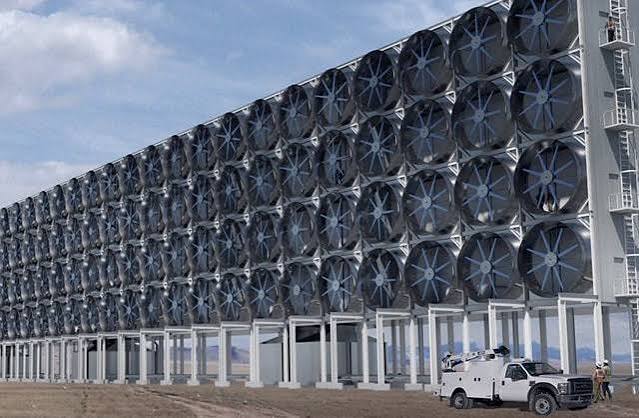
Direct air capture is often presented as a technological safety net for climate policy: giant machines pull carbon dioxide directly from the atmosphere, concentrate it, and then store it underground or put it to use.

The concept sounds simple. The physics and economics are not.

NCEA's brief, The Energy Impacts of Capturing CO₂ from the Air, examines whether direct air capture, commonly called DAC, can be deployed at a scale large enough to meaningfully affect the climate. Its conclusion is direct: DAC is extraordinarily energy-intensive, extremely expensive, and unlikely to produce a measurable climate benefit at the scale envisioned by its supporters.

Capturing CO₂ from the Air Is Fundamentally Difficult

Carbon dioxide makes up only about 0.042% of the atmosphere, or approximately 425 parts per million. That means DAC systems must process enormous volumes of air to capture relatively small amounts of CO₂.

To capture 1 billion tons of CO₂, even at a theoretical 100% capture efficiency, would require moving nearly 2.8 trillion tons of air. In practice, capture efficiencies are lower, which means even more air must be processed.

DAC systems use large fans to move air through chemical filters or sorbent materials. The captured CO₂ must then be separated from those materials, compressed, transported, and either stored underground or used in applications such as enhanced oil recovery.

Every step requires energy. NCEA estimates that real-world DAC systems could require roughly 1.8 to 3.6 megawatt-hours of electricity per ton of CO₂ removed when upstream and infrastructure requirements are included. By comparison, the average U.S. household uses about 850 kilowatt-hours of electricity per month—meaning removing one ton of CO₂ through DAC could require more electricity than an average American home uses in two months.

The Energy Requirements Quickly Become Enormous

The U.S. Department of Energy has cited potential DAC targets ranging from 100 million to 2 billion tons of CO₂ removal per year by 2050.

Even the lower target would require approximately 100 terawatt-hours of electricity using a relatively conservative assumption of 1 megawatt-hour per ton. Removing 2 billion tons would require more than 2,000 terawatt-hours: nearly half of total U.S. electricity consumption in 2025.

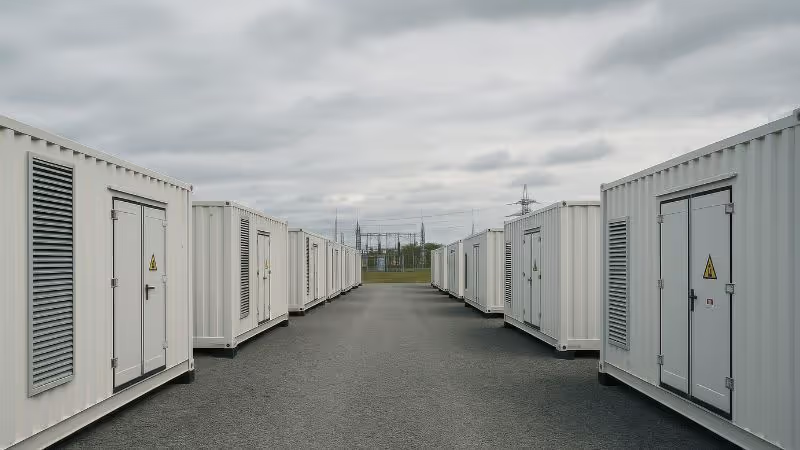
That electricity would need to be reliable and available around the clock. Using wind and solar power would require substantial overbuilding, along with batteries and other backup systems to keep DAC facilities operating when the wind is not blowing or the sun is not shining.

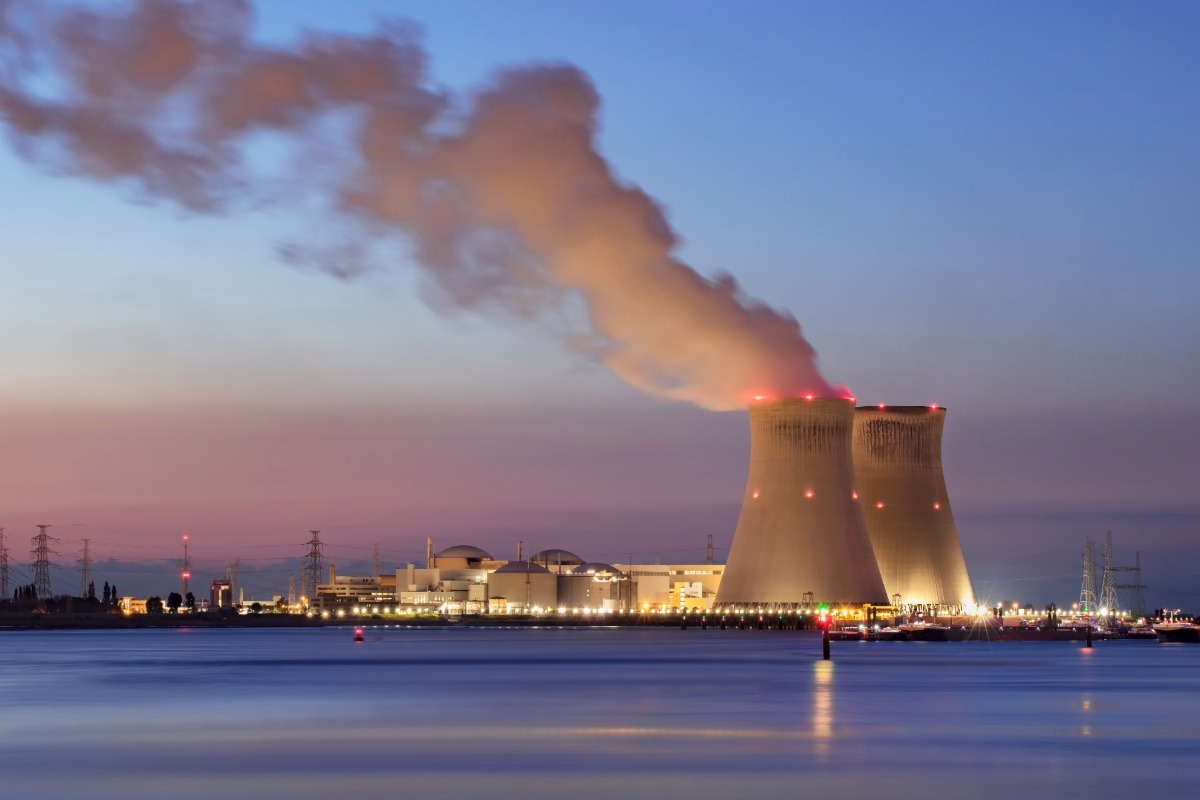
Using nuclear power would avoid the intermittency problem, but the scale would still be massive. Capturing 2 billion tons of CO₂ annually would require at least 260 gigawatts of new nuclear capacity—nearly three times the size of the existing U.S. nuclear fleet. NCEA estimates that building that capacity would cost more than $2 trillion before financing, transmission, and other infrastructure costs.

This illustrates a basic tradeoff: electricity used to capture carbon from the atmosphere cannot simultaneously be used by households, manufacturers, data centers, hospitals, or other businesses. DAC does not eliminate the need for energy. It adds another enormous demand to an already strained power system.

The Costs Are High—and the Climate Benefits Are Tiny

DAC's energy requirements are only part of the problem. The facilities themselves are expensive to build.

Occidental Petroleum's Stratos plant in the Permian Basin is designed to capture more than 500,000 tons of CO₂ annually. Its estimated capital cost is approximately $1.3 billion. Based on the plant's expected capacity, NCEA calculates an annualized capital cost of roughly $240 per ton of CO₂ captured, before accounting for energy, operations, and maintenance.

Other studies estimate total DAC costs ranging from approximately $330 to $630 per ton, depending on the technology and energy source.

Those costs would be difficult to justify even if DAC produced a substantial climate effect. But NCEA's analysis finds that the expected temperature impact is extremely small.

Removing 110 million tons of CO₂ in one year would lower average global temperatures by an estimated 0.0002 degrees Fahrenheit. Removing 2 billion tons would lower temperatures by approximately 0.004 degrees Fahrenheit: far smaller than the uncertainty in global temperature measurements.

Even under a scenario in which 2.2 billion tons of CO₂ were removed every year from 2030 through 2100, the estimated reduction in global temperature would be about 0.108 degrees Fahrenheit. NCEA notes that this effect would still be smaller than the typical uncertainty range in global temperature estimates.

In other words, DAC would consume vast amounts of energy and capital to produce a climate effect that would be difficult or impossible to measure.

Subsidies Do Not Change the Underlying Physics

The federal Section 45Q tax credit provides up to $162 per ton for CO₂ captured from the air and permanently stored underground, with lower credits for CO₂ used in enhanced oil recovery.

If DAC facilities capable of capturing 100 million tons annually were built by 2033, NCEA estimates that the tax credits could cost taxpayers approximately $18 billion per year—or $180 billion over the 10-year eligibility period.

Subsidies can encourage investment, but they cannot repeal the laws of thermodynamics or make an energy-intensive process inexpensive. They can also obscure the real cost of a technology by shifting expenses from project developers to taxpayers and consumers.

That does not mean every form of carbon capture should be treated identically. Capturing CO₂ from concentrated industrial emissions is a different technical challenge from removing CO₂ from ambient air. But policies should not assume that success in one application automatically translates to success in the other.

Why This Matters

The central issue is not whether DAC is innovative, but whether it is a practical use of scarce energy and public resources.

Every dollar and kilowatt-hour directed toward DAC has an opportunity cost. The same resources could support electricity generation, grid infrastructure, advanced nuclear research, industrial efficiency, or technologies that provide more immediate and measurable benefits.

Climate policies should be evaluated not only by their aspirations, but also by whether they produce meaningful benefits without undermining affordability, reliability, and economic growth.

Direct air capture may continue to have a role in research and small-scale experimentation. But treating it as a major solution to climate change would require extraordinary amounts of energy, materials, land, and taxpayer funding for minimal measurable results.

The better policy is realism: understand the physics, account for the full costs, and prioritize energy technologies capable of delivering reliable and meaningful benefits.


More from the blog

China is often held up as proof that a major economy can rapidly ditch fossil fuels while leading the clean-energy revolution.
Commentary

Two-Headed Dragon: How China Does Fossil Fuels and Renewables

China is often held up as proof that a major economy can rapidly ditch fossil fuels while leading the clean-energy revolution.

National Center for Energy Analytics · · 4 min read

Data centers are often blamed for rising electricity bills. But the evidence tells a more complicated, and more useful, story.
Commentary

The Data Center Blame Game: What's Actually Driving Your Electric Bill

Data centers are often blamed for rising electricity bills. But the evidence tells a more complicated, and more useful, story.

National Center for Energy Analytics · · 4 min read

The United Arab Emirates' decision to leave OPEC was a major blow to the organization; but its most important consequences may come later.
Commentary

What the UAE's OPEC Exit Means for Oil Markets

The United Arab Emirates' decision to leave OPEC was a major blow to the organization; but its most important consequences may come later.

National Center for Energy Analytics · · 5 min red

When oil and gas prices rise, consumers understandably look to government for relief. But history offers a warning
Commentary

When Energy Prices Spike, Resist the Crisis-Driven Fix

When oil and gas prices rise, consumers understandably look to government for relief. But history offers a warning

National Center for Energy Analytics · · 6 min read

Commentary

Coal Isn't Disappearing. Energy Policy Should Deal With That Reality.

For decades, Western policymakers have treated coal as a fuel on the way out. But global energy markets are telling a different story.

National Center for Energy Analytics · · 4 min read

Commentary

The $4 Trillion Problem With a Battery-Powered Grid

Batteries are often presented as the missing piece of a wind- and solar-powered electric grid.

· · 5 min read

A long, brightly lit aisle between rows of server racks in a data center
News

Building the Next Generation of Energy Research

Why NCEA is building a custom AI agent and dynamic tools such as the Index of Leading Energy Indicators and NCEA-EMIT.

· Sep 24, 2026 · 9 min

Commentary

America's Electric Grid: A Century-Old System Meets a 21st-Century Surge

NCEA's report by Jonathan Lesser and Patrick McCormick finds America's aging electric grid badly unprepared for a sudden surge in demand.

· ·

Commentary

The Wind Energy Reality Check Nobody Wants to Have

Jonathan Lesser and Portia Roberts test whether decades of promises about cheaper, cleaner, more secure wind power have actually held up.

· ·

Commentary

America's Nuclear Ambition Has a Workforce Problem

Bipartisan support and data center demand put nuclear back on the agenda. The workforce needed to quadruple U.S. capacity by 2050 does not exist.

· ·

For years, the world's most-cited energy forecast told a clean story: oil demand was about to peak, and the transition was on track
Commentary

The World's Top Energy Forecaster Just Quietly Admitted It Got Oil Wrong

For years, the world's most-cited energy forecast told a clean story: oil demand was about to peak, and the transition was on track

National Center for Energy Analytics · Jan 30, 2026 · 3 min

Unlocking U.S. nuclear growth and waste management graphic
Commentary

Solving the Nuclear Waste "Problem"

Public support for nuclear is near record highs, but unease about radioactive waste remains the objection that has stalled expansion for 50 years.

Brett Rampal · May 12, 2026 · 2 min read

NCEA quote graphic on the benefits of natural gas and oil
Commentary

It's a Wonderful Fuel

George Green had reached the end of his rope. Humanity just didn't get that its large and growing appetite for energy was killing the planet.

· Apr 22, 2026 · 4 min read

U.S. Energy Security Index NCEA cover graphic
Commentary

Leading Energy Indicators: Introducing the U.S. Energy Security Index

Energy security rarely dominates the news - until something breaks. A supply disruption. A geopolitical conflict. A cyberattack. A price shock.

· Mar 12, 2026 · 3 min read

Energy sanctions and U.S. global power presentation graphic
Commentary

Energy Sanctions and American Power: How Long Can the Leverage Last?

Not long ago, the United States was an oil supplicant - managing OPEC relationships carefully and constrained by import dependence.

Matthew McManus · Feb 26, 2026 · 2 min read

NCEA quote graphic debunking fossil fuel subsidy claims
Commentary

The $7 Trillion Number That Doesn't Exist

The IMF's $7 trillion fossil fuel subsidy figure is cited worldwide. Most of that sum is not a subsidy in any meaningful sense.

Paul H. Tice · Dec 17, 2025 · 2 min read

NCEA quote graphic on utility-scale battery storage limitations
Commentary

The Grid Doesn't Charge Like a Phone

Picture a battery. A phone that runs out. A laptop that needs plugging in. The battery depletes, you refill it, life goes on.

· Dec 03, 2025 · 2 min read

Rising electricity bill graphic showing increasing costs
Commentary

Why Your Electric Bill Keeps Rising-And What the Usual Explanations Miss

For years, I've watched the debate over rising retail electric rates drift further from the underlying realities of how our power system works.

Jonathan Lesser, PhD · Nov 19, 2025 · 2 min read

NCEA quote graphic on renewable energy decommissioning costs
Commentary

Taxpayers on the Hook? The Coming Renewable Decommissioning Debt

When an oil well runs dry, or a nuclear plant reaches the end of its life, or a coal mine closes, there are rules for what comes next.

Curtis Schube · Oct 28, 2025 · 2 min read

NCEA quote graphic on Britain's net zero climate policies
Commentary

What President Trump Needs to Say About Britain's Economy-Destroying Net Zero Climate Policies

This week, President Trump is making his second state visit to Britain, a country that is Ground Zero of Net Zero.

· Sep 18, 2025 · 2 min read

NCEA quote graphic on energy education at U.S. universities
Commentary

Energy Education: Reality Check, Part 2

In Part 1 of our Energy Education survey, we found that the nation's top 50 universities overwhelmingly frame energy courses through the lens of climate change.

Mark P. Mills · Sep 03, 2025 · 1 min read

NCEA quote graphic on building large nuclear reactors in America
Commentary

Why We're Not Building Large Nuclear Reactors (and How to Start Again)

For the first time in a generation, the stars have aligned for a nuclear energy comeback. Public support is rising. Bipartisan enthusiasm is real.

Paul H. Tice · Aug 12, 2025 · 2 min read

NCEA quote graphic on EIA capacity data and gigawatts
Commentary

Gigawatts Aren't All Created Equal: Why the EIA's Capacity Data Misleads Policymakers

Headlines credit wind and solar with 80% of new capacity, but EIA capacity data measures something different from electricity actually delivered.

Jonathan Lesser, PhD · Jul 24, 2025 · 2 min read

NCEA quote graphic on energy education research findings
Commentary

Is Energy Education Grounded in Reality? New Research Suggests Otherwise

What students are taught matters. This is especially true for energy-an input fundamental to every activity, product, or service in society.

Mark P. Mills · Jul 09, 2025 · 1 min read

Social cost of carbon analysis graphic
Commentary

The Social Cost of Carbon: A High-Stakes, Flawed Metric

For over a decade, the so-called "social cost of carbon" (SCC) has become a central justification for wide-ranging U.S. climate and energy policies.

Jonathan Lesser, PhD · Apr 23, 2025 · 3 min read

Container ship at sea representing global maritime shipping
Commentary

Is Global Shipping the Hidden Weak Link in the Energy Transition?

Maritime shipping moves 80% of world trade, including the minerals behind the energy transition, and may be the bottleneck nobody planned for.

G. Allen Brooks · Apr 09, 2025 · 3 min read

Power lines and electrical infrastructure at sunset
Commentary

Electrification Without Electricity-The Infrastructure Challenge

Demand for electricity is climbing fast as EVs and heat pumps spread, but the infrastructure needed to deliver that power is not keeping pace.

Jonathan Lesser, PhD · Jan 23, 2025 · 2 min read

LNG tanker ship transporting liquefied natural gas
Commentary

America's LNG Future

As our planet becomes more electrified and industrialized, demand for energy of all kinds increases. One fuel where America has an advantage is natural gas.

· Oct 23, 2024 · 3 min read

SEC building exterior representing climate disclosure regulations
Commentary

SEC's Climate Disclosure Rules: A Threat to Economic Growth and Energy Security

In March 2024, the SEC adopted climate disclosure rules requiring U.S. corporations to report their carbon footprint and climate-related risks.

Paul H. Tice · Sep 11, 2024 · 3 min read

Electric vehicle charging at a home charging station
Commentary

What would an all-EV future look like?

Eighteen states will require all new vehicles to be electric by 2035. NCEA counts the true cost, starting at $1,750 per home for charging alone.

Jonathan Lesser, PhD · Aug 07, 2024 · 5 min read