ESC

Search NCEA

Find research, scholars, events, and media

Grid reliabilityMark MillsNuclearRenewable costs
Research
42results

Ask a question

Get an AI-powered answer grounded in NCEA research

Costs of renewable mandatesGrid reliability
Commentary

Solving the Nuclear Waste "Problem"
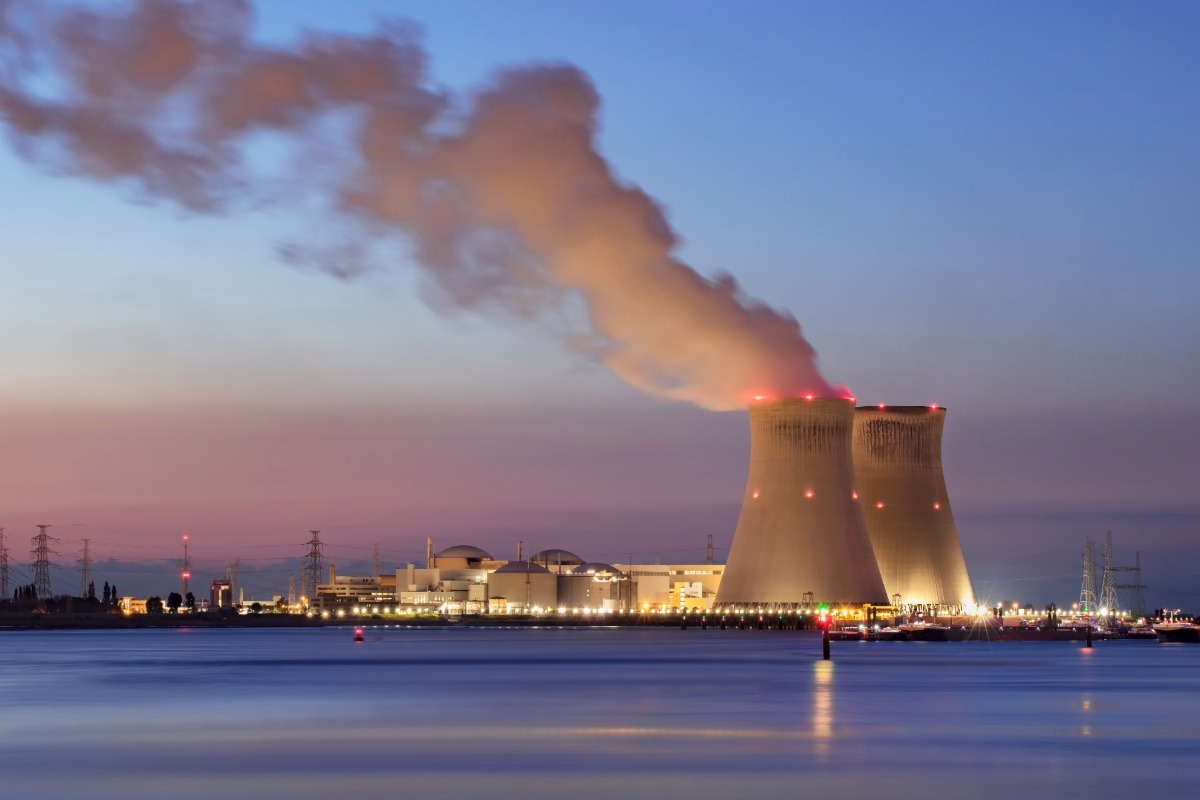

Unlocking U.S. nuclear growth and waste management graphic
Energy Policy & Regulation
Nuclear Energy

Nuclear is the new darling of the energy sector. Popular support for adding nuclear energy capacity is near an all-time high. Sentiments toward radioactive waste, however, remain uneasy.

Objections that stymied nuclear expansion for half a century ultimately resurface around what to do with and where to put commercial nuclear waste storage sites. Indeed, policy paralysis has resulted in 95,000 metric tons of used fuel sitting in pools and dry casks at 73 sites across the country. Fear drives inaction.

While the anti-nuclear crowd paints a grim picture of nuclear waste management, the problem is solvable and, indeed, must be solved to unleash the promise of nuclear power.

The Truth About Nuclear Waste

During decades of commercial storage, used nuclear fuel has caused no documented harm to workers, the public, or the environment. It sits in sealed steel casks, shielded, and monitored. It has a light footprint: Without shielding, the entire volume of commercial used fuel ever produced in the U.S. fits inside half a typical Walmart Supercenter.

We have demonstrated the fact that properly managed nuclear waste is not dangerous. The science is settled. Geologic disposal is the global consensus. Yet policymakers have failed to establish long-term, scalable policies for nuclear waste management.

A Half-Century of Political Failure

Politics have repeatedly thwarted a sensible policy solution.

Over $51 billion sits in the Nuclear Waste Fund, collected from ratepayers for the purpose of waste management. Only $11.5 billion of the funds have been spent.

After decades of work and billions spent on Yucca Mountain, Nevada's political opposition killed it. The site never opened. Even if it had, its statutory capacity couldn't hold all the fuel now in storage. What remains is a patchwork of 73 interim sites - a permanent solution in everything but name.

A new request for information by the Department of Energy seeks to shift perspectives on nuclear waste by positioning the problem as an economic opportunity.

The Recycling Option

Discharged fuel still contains roughly 95% of its original uranium. Reprocessing - separating that unused material for reuse - can reduce disposal volumes by a factor of four and shrink the required isolation period from hundreds of millennia to mere centuries.

France and Russia have done it commercially for decades. In fact, the U.S. invented the underlying technology but walked away from it over proliferation concerns in 1977.

The second Trump administration has made reprocessing a priority, framing integrated fuel cycle campuses as economic development opportunities for host states. It's the right reframe - but reprocessing alone doesn't eliminate the need for permanent disposal. It does, however, change what needs to be buried, how much, and for how long.

"This is not a problem waiting for a technological breakthrough. It is a problem waiting for a political one - and the window may not stay open indefinitely."

The used fuel in dry casks today is an opportunity. It is a solvable engineering challenge wrapped in an unsolved political one. As Visiting Fellow Brett Rampal documents in his issue brief, the money is there; the science is there, and no unresolved technical barriers remain. What's needed is the will to seize the opportunity.


Read the Brief

More from the blog

NCEA quote graphic on the benefits of natural gas and oil
Op-Eds

It's a Wonderful Fuel

George Green had reached the end of his rope. Humanity just didn't get that its large and growing appetite for energy was killing the planet.

· Apr 22, 2026 · 4 min read

U.S. Energy Security Index NCEA cover graphic
News

Leading Energy Indicators: Introducing the U.S. Energy Security Index

Energy security rarely dominates the news - until something breaks. A supply disruption. A geopolitical conflict. A cyberattack. A price shock.

· Mar 12, 2026 · 3 min read

Energy sanctions and U.S. global power presentation graphic
Commentary

Energy Sanctions and American Power: How Long Can the Leverage Last?

Not long ago, the United States was an oil supplicant - managing OPEC relationships carefully and constrained by import dependence.

Matthew McManus · Feb 26, 2026 · 2 min read

NCEA quote graphic debunking fossil fuel subsidy claims
Commentary

The $7 Trillion Number That Doesn't Exist

"Global fossil fuel subsidies hit $7 trillion." The IMF publishes it. The UN Secretary-General cites it from podiums. Climate organizations build campaigns around it.

Paul H. Tice · Dec 17, 2025 · 2 min read

NCEA quote graphic on utility-scale battery storage limitations
Commentary

The Grid Doesn't Charge Like a Phone

Picture a battery. A phone that runs out. A laptop that needs plugging in. The battery depletes, you refill it, life goes on.

· Dec 03, 2025 · 2 min read

Rising electricity bill graphic showing increasing costs
Commentary

Why Your Electric Bill Keeps Rising-And What the Usual Explanations Miss

For years, I've watched the debate over rising retail electric rates drift further from the underlying realities of how our power system works.

Jonathan Lesser, PhD · Nov 19, 2025 · 2 min read

NCEA quote graphic on renewable energy decommissioning costs
Commentary

Taxpayers on the Hook? The Coming Renewable Decommissioning Debt

When an oil well runs dry, or a nuclear plant reaches the end of its life, or a coal mine closes, there are rules for what comes next.

Curtis Schube · Oct 28, 2025 · 2 min read

NCEA quote graphic on Britain's net zero climate policies
Op-Eds

What President Trump Needs to Say About Britain's Economy-Destroying Net Zero Climate Policies

This week, President Trump is making his second state visit to Britain, a country that is Ground Zero of Net Zero.

· Sep 18, 2025 · 2 min read

NCEA quote graphic on energy education at U.S. universities
Commentary

Energy Education: Reality Check, Part 2

In Part 1 of our Energy Education survey, we found that the nation's top 50 universities overwhelmingly frame energy courses through the lens of climate change.

Mark P. Mills · Sep 03, 2025 · 1 min read

NCEA quote graphic on building large nuclear reactors in America
Commentary

Why We're Not Building Large Nuclear Reactors (and How to Start Again)

For the first time in a generation, the stars have aligned for a nuclear energy comeback. Public support is rising. Bipartisan enthusiasm is real.

Paul H. Tice · Aug 12, 2025 · 2 min read

NCEA quote graphic on EIA capacity data and gigawatts
Commentary

Gigawatts Aren't All Created Equal: Why the EIA's Capacity Data Misleads Policymakers

The United States is in the midst of a historic shift in how it produces electricity, spurred by tax credits, state mandates, and sweeping federal legislation like the "One Big Beautiful Bill Act." More than 1,100...

Jonathan Lesser, PhD · Jul 24, 2025 · 2 min read

NCEA quote graphic on energy education research findings
Commentary

Is Energy Education Grounded in Reality? New Research Suggests Otherwise

What students are taught matters. This is especially true for energy-an input fundamental to every activity, product, or service in society.

Mark P. Mills · Jul 09, 2025 · 1 min read

Social cost of carbon analysis graphic
Commentary

The Social Cost of Carbon: A High-Stakes, Flawed Metric

For over a decade, the so-called "social cost of carbon" (SCC) has become a central justification for wide-ranging U.S. climate and energy policies.

Jonathan Lesser, PhD · Apr 23, 2025 · 3 min read

Container ship at sea representing global maritime shipping
Commentary

Is Global Shipping the Hidden Weak Link in the Energy Transition?

In today's globalized economy, nearly everything we consume-electronics, cars, food, and even the raw materials that power the so-called green revolution-travels by sea.

G. Allen Brooks · Apr 09, 2025 · 3 min read

Power lines and electrical infrastructure at sunset
Commentary

Electrification Without Electricity-The Infrastructure Challenge

As America pushes toward an electrified future, demand for electricity is skyrocketing. From electric vehicles to heat pumps replacing gas-fired systems, the shift to electricity touches every corner of our lives.

Jonathan Lesser, PhD · Jan 23, 2025 · 2 min read

LNG tanker ship transporting liquefied natural gas
Commentary

America's LNG Future

As our planet becomes more electrified and industrialized, demand for energy of all kinds increases. One fuel where America has an advantage is natural gas.

· Oct 23, 2024 · 3 min read

SEC building exterior representing climate disclosure regulations
Op-Eds

SEC's Climate Disclosure Rules: A Threat to Economic Growth and Energy Security

In March 2024, the SEC adopted climate disclosure rules requiring U.S. corporations to report their carbon footprint and climate-related risks.

Paul H. Tice · Sep 11, 2024 · 3 min read

Electric vehicle charging at a home charging station
Commentary

What would an all-EV future look like?

Installing EV chargers requires significant upgrades. A dedicated home charger costs about $400, but most homes need a new service panel, raising individual costs to $1,750, and collectively over $1 million per neighborhood.

Jonathan Lesser, PhD · Aug 07, 2024 · 5 min read