ESC

Search NCEA

Find research, scholars, events, and media

Grid reliabilityMark MillsNuclearRenewable costs
Research
42results

Ask a question

Get an AI-powered answer grounded in NCEA research

Costs of renewable mandatesGrid reliability
Op-Eds

It's the Economy, Stupid — Again

Trading floor screens showing stocks falling and oil prices moving, with the Nasdaq and Dow tickers in red
No items found.

"It's the economy, stupid." It’s election season and the ghosts of Clinton, Carville, Penn, and Schoen are back — or their playbook for electoral advantage, anyway. We're back to the '90s, but today's Democrats haven't relearned the lesson the centrist Clinton knew: the golden goose of abundance doesn't lay its eggs under all political conditions.

Inflation is eating into the daily pursuit and possession of happiness. If Bill Clinton were still president, he’d be deploying his famous line: “I feel your pain.” The climb toward hand-to-mouth living is getting steeper. Families are going into debt. You need to keep the lights and the heat on, the tank full, everything else be damned. That suffering is real.

And that suffering is the rising tide lifting Democrats' prospects this fall. Sadly, my fellow American, Democratic policy is not prescriptive to mitigating that pain. It only makes it worse.

We're less than 60 days from a midterm election, and this is an affordability election — which makes it an energy election. The rising tide of general prosperity is locked at the hip to an abundant supply of affordable energy. Energy is the neglected input behind the price of everything, and getting the policy right is what makes everything downstream easier. Remember that in November.

The American people want affordable, reliable energy at the pump and the plug. Both are within reach. We're sitting on hundreds of years of natural gas that can deliver falling electricity prices if the political will is there. Sadly, we don't habitually vote for the policies that would get us there — we want the benefits of abundance without voting for the means.

I read the RealClearPolitics average, and I don't like what I'm seeing: Democrats are headed toward a protest-vote win. Good for them. But is it good for you and yours?

This crop of Democrats is among the least prepared in memory to bring down the cost of energy. They have "solutions" — a wholesale transformation of the energy economy — but affordability born of abundance isn't their path. Scarcity and higher prices are the necessary outcome of green mandates applied to everything. My honest read on a Democrat-controlled Congress: nothing improves on affordability unless it comes wrapped in a subsidy.

Republicans are the abundance party. Democrats are the scarcity party. Republicans fixate on juicing supply, Democrats on regulating demand. The former brings more supply and lower costs; the latter constrains supply and drives prices up.

A Democratic Congress won't move the price of crude — that's set globally. But it can slow the permitting, leasing, and infrastructure decisions that determine whether domestic supply keeps expanding over the next 5 years. That's the real stakes of this election.

Yes, domestic production rose under Biden — but that was a wartime necessity forced by a proxy war of choice with Russia, not a policy default. "Drill, baby, drill. Build, baby, build" is Trump's default position, not his emergency response. There's also a lag between pro-drilling policies and production increases — in other words, much of the production growth under Biden happened because of conditions put into play during Trump’s first term. Prices are high today because we spent decades building expensive, unreliable solar and wind while sitting on a natural gas boom we refused to fully use.

In fairness to Trump: he built his congressional majority on shaky ground — clowns to his right in the House, jokers to his left in the Senate, and a deep state resisting throughout — which is why most of his energy agenda has moved through executive orders rather than legislation.

This midterm also carries a consequence most voters haven't priced in: AI. AI is a massive economic bet the stock market and our broader economy are riding. AI firms want to build their own energy supply because they need more power, faster, than utilities can deliver — and they've shown willingness to feed surplus back into the neighboring grid. That's a good deal.

Block a data center, and two things happen: short term, AI firms already in your state still draw from your grid and still pass the cost through to you; long term, the next data center — its jobs, its tax base, its generation capacity — gets built in a state that said yes. Either way, you don't get lower prices. Vote against a data center and you're voting for higher energy costs, less growth, and less tax revenue. That's a Polymarket line I'd take all day.

Vote for one, and you get the opposite. If a Democrat anywhere runs on this logic, vote for them. Looking at Pennsylvania, Michigan, Iowa, and Colorado — where it matters — the frontrunners aren't.

Now let's turn to the pump. The war with Iran is not a forever war, and pump prices will come down — not in time for this election, but before 2028. Iran won't give up its nuclear ambitions without suffering a crushing defeat, and it's proven over the past several months that it cannot be allowed to have the bomb. So crushing defeat it is.

Why do they keep playing a losing hand? Partly us — our adversaries read us as short-sighted and soft, and that shows up in the polling. I'd infer their rationale is rational: prolonged high prices at the pump help Democrats in the midterms, and a Democratic Congress is good for Iran. Meanwhile their people are in genuine economic depression while we complain about prices still near Biden-era levels. Iranians are suffering 69% inflation; Americans, 3%. Steady the course.

The fundamentals still favor relief: oil and gas extraction are scaling up domestically and globally. OPEC is no longer the price-maker it once was — the UAE is effectively out of OPEC discipline and wants the pumps open to fuel abundance, and Venezuela is quietly moving outside OPEC too, rebuilding its pre-Chavista capacity with our help. Scaling up production is how prices fall, for energy and everything else.

The American people want abundance. Only one party is currently building toward it. Vote for it, and alleviate your own pain instead of adding to it.

David DesRosiers is the Publisher of RealClearMediaGroup and Conference Co-Chair of the annual Energy Future Forum.

This article was originally published by RealClearEnergy.

More from the blog

China is often held up as proof that a major economy can rapidly ditch fossil fuels while leading the clean-energy revolution.
Commentary

Two-Headed Dragon: How China Does Fossil Fuels and Renewables

China is often held up as proof that a major economy can rapidly ditch fossil fuels while leading the clean-energy revolution.

National Center for Energy Analytics · · 4 min read

Data centers are often blamed for rising electricity bills. But the evidence tells a more complicated, and more useful, story.
Commentary

The Data Center Blame Game: What's Actually Driving Your Electric Bill

Data centers are often blamed for rising electricity bills. But the evidence tells a more complicated, and more useful, story.

National Center for Energy Analytics · · 4 min read

The United Arab Emirates' decision to leave OPEC was a major blow to the organization; but its most important consequences may come later.
Commentary

What the UAE's OPEC Exit Means for Oil Markets

The United Arab Emirates' decision to leave OPEC was a major blow to the organization; but its most important consequences may come later.

National Center for Energy Analytics · · 5 min red

When oil and gas prices rise, consumers understandably look to government for relief. But history offers a warning
Commentary

When Energy Prices Spike, Resist the Crisis-Driven Fix

When oil and gas prices rise, consumers understandably look to government for relief. But history offers a warning

National Center for Energy Analytics · · 6 min read

Commentary

Coal Isn't Disappearing. Energy Policy Should Deal With That Reality.

For decades, Western policymakers have treated coal as a fuel on the way out. But global energy markets are telling a different story.

National Center for Energy Analytics · · 4 min read

Commentary

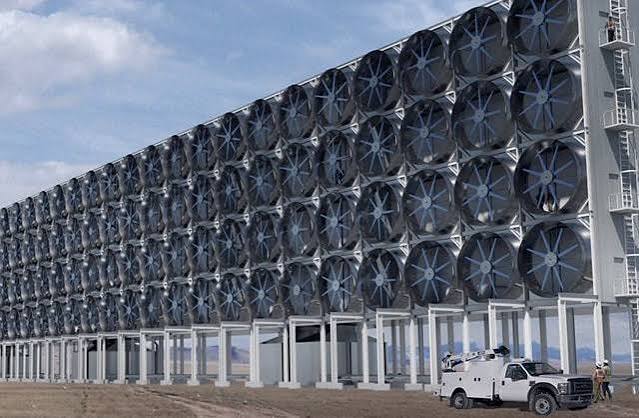
Direct Air Capture: A Lot of Energy for Very Little Climate Impact

Direct air capture is often presented as a technological safety net for climate policy

National Center for Energy Analytics · · 5 min read

Commentary

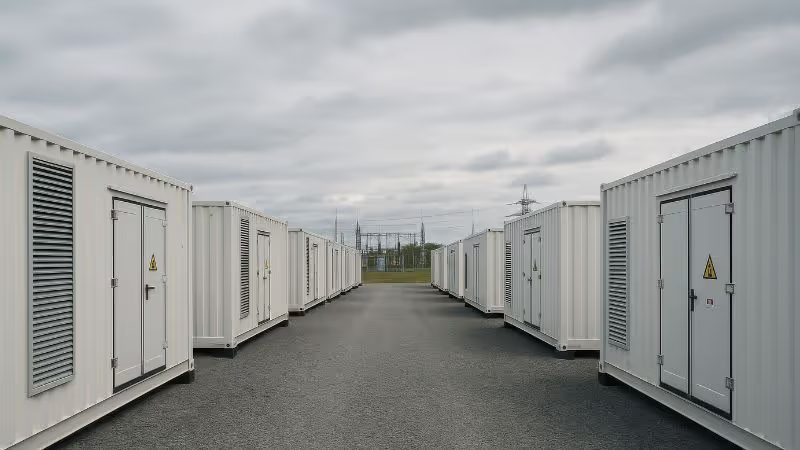
The $4 Trillion Problem With a Battery-Powered Grid

Batteries are often presented as the missing piece of a wind- and solar-powered electric grid.

· · 5 min read

A long, brightly lit aisle between rows of server racks in a data center
News

Building the Next Generation of Energy Research

Why NCEA is building a custom AI agent and dynamic tools such as the Index of Leading Energy Indicators and NCEA-EMIT.

· Sep 24, 2026 · 9 min

Commentary

America's Electric Grid: A Century-Old System Meets a 21st-Century Surge

NCEA's report by Jonathan Lesser and Patrick McCormick finds America's aging electric grid badly unprepared for a sudden surge in demand.

· ·

Commentary

The Wind Energy Reality Check Nobody Wants to Have

Jonathan Lesser and Portia Roberts test whether decades of promises about cheaper, cleaner, more secure wind power have actually held up.

· ·

Commentary

America's Nuclear Ambition Has a Workforce Problem

Bipartisan support and data center demand put nuclear back on the agenda. The workforce needed to quadruple U.S. capacity by 2050 does not exist.

· ·

For years, the world's most-cited energy forecast told a clean story: oil demand was about to peak, and the transition was on track
Commentary

The World's Top Energy Forecaster Just Quietly Admitted It Got Oil Wrong

For years, the world's most-cited energy forecast told a clean story: oil demand was about to peak, and the transition was on track

National Center for Energy Analytics · Jan 30, 2026 · 3 min

Unlocking U.S. nuclear growth and waste management graphic
Commentary

Solving the Nuclear Waste "Problem"

Public support for nuclear is near record highs, but unease about radioactive waste remains the objection that has stalled expansion for 50 years.

Brett Rampal · May 12, 2026 · 2 min read

NCEA quote graphic on the benefits of natural gas and oil
Commentary

It's a Wonderful Fuel

George Green had reached the end of his rope. Humanity just didn't get that its large and growing appetite for energy was killing the planet.

· Apr 22, 2026 · 4 min read

U.S. Energy Security Index NCEA cover graphic
Commentary

Leading Energy Indicators: Introducing the U.S. Energy Security Index

Energy security rarely dominates the news - until something breaks. A supply disruption. A geopolitical conflict. A cyberattack. A price shock.

· Mar 12, 2026 · 3 min read

Energy sanctions and U.S. global power presentation graphic
Commentary

Energy Sanctions and American Power: How Long Can the Leverage Last?

Not long ago, the United States was an oil supplicant - managing OPEC relationships carefully and constrained by import dependence.

Matthew McManus · Feb 26, 2026 · 2 min read

NCEA quote graphic debunking fossil fuel subsidy claims
Commentary

The $7 Trillion Number That Doesn't Exist

The IMF's $7 trillion fossil fuel subsidy figure is cited worldwide. Most of that sum is not a subsidy in any meaningful sense.

Paul H. Tice · Dec 17, 2025 · 2 min read

NCEA quote graphic on utility-scale battery storage limitations
Commentary

The Grid Doesn't Charge Like a Phone

Picture a battery. A phone that runs out. A laptop that needs plugging in. The battery depletes, you refill it, life goes on.

· Dec 03, 2025 · 2 min read

Rising electricity bill graphic showing increasing costs
Commentary

Why Your Electric Bill Keeps Rising-And What the Usual Explanations Miss

For years, I've watched the debate over rising retail electric rates drift further from the underlying realities of how our power system works.

Jonathan Lesser, PhD · Nov 19, 2025 · 2 min read

NCEA quote graphic on renewable energy decommissioning costs
Commentary

Taxpayers on the Hook? The Coming Renewable Decommissioning Debt

When an oil well runs dry, or a nuclear plant reaches the end of its life, or a coal mine closes, there are rules for what comes next.

Curtis Schube · Oct 28, 2025 · 2 min read

NCEA quote graphic on Britain's net zero climate policies
Commentary

What President Trump Needs to Say About Britain's Economy-Destroying Net Zero Climate Policies

This week, President Trump is making his second state visit to Britain, a country that is Ground Zero of Net Zero.

· Sep 18, 2025 · 2 min read

NCEA quote graphic on energy education at U.S. universities
Commentary

Energy Education: Reality Check, Part 2

In Part 1 of our Energy Education survey, we found that the nation's top 50 universities overwhelmingly frame energy courses through the lens of climate change.

Mark P. Mills · Sep 03, 2025 · 1 min read

NCEA quote graphic on building large nuclear reactors in America
Commentary

Why We're Not Building Large Nuclear Reactors (and How to Start Again)

For the first time in a generation, the stars have aligned for a nuclear energy comeback. Public support is rising. Bipartisan enthusiasm is real.

Paul H. Tice · Aug 12, 2025 · 2 min read

NCEA quote graphic on EIA capacity data and gigawatts
Commentary

Gigawatts Aren't All Created Equal: Why the EIA's Capacity Data Misleads Policymakers

Headlines credit wind and solar with 80% of new capacity, but EIA capacity data measures something different from electricity actually delivered.

Jonathan Lesser, PhD · Jul 24, 2025 · 2 min read

NCEA quote graphic on energy education research findings
Commentary

Is Energy Education Grounded in Reality? New Research Suggests Otherwise

What students are taught matters. This is especially true for energy-an input fundamental to every activity, product, or service in society.

Mark P. Mills · Jul 09, 2025 · 1 min read

Social cost of carbon analysis graphic
Commentary

The Social Cost of Carbon: A High-Stakes, Flawed Metric

For over a decade, the so-called "social cost of carbon" (SCC) has become a central justification for wide-ranging U.S. climate and energy policies.

Jonathan Lesser, PhD · Apr 23, 2025 · 3 min read

Container ship at sea representing global maritime shipping
Commentary

Is Global Shipping the Hidden Weak Link in the Energy Transition?

Maritime shipping moves 80% of world trade, including the minerals behind the energy transition, and may be the bottleneck nobody planned for.

G. Allen Brooks · Apr 09, 2025 · 3 min read

Power lines and electrical infrastructure at sunset
Commentary

Electrification Without Electricity-The Infrastructure Challenge

Demand for electricity is climbing fast as EVs and heat pumps spread, but the infrastructure needed to deliver that power is not keeping pace.

Jonathan Lesser, PhD · Jan 23, 2025 · 2 min read

LNG tanker ship transporting liquefied natural gas
Commentary

America's LNG Future

As our planet becomes more electrified and industrialized, demand for energy of all kinds increases. One fuel where America has an advantage is natural gas.

· Oct 23, 2024 · 3 min read

SEC building exterior representing climate disclosure regulations
Commentary

SEC's Climate Disclosure Rules: A Threat to Economic Growth and Energy Security

In March 2024, the SEC adopted climate disclosure rules requiring U.S. corporations to report their carbon footprint and climate-related risks.

Paul H. Tice · Sep 11, 2024 · 3 min read

Electric vehicle charging at a home charging station
Commentary

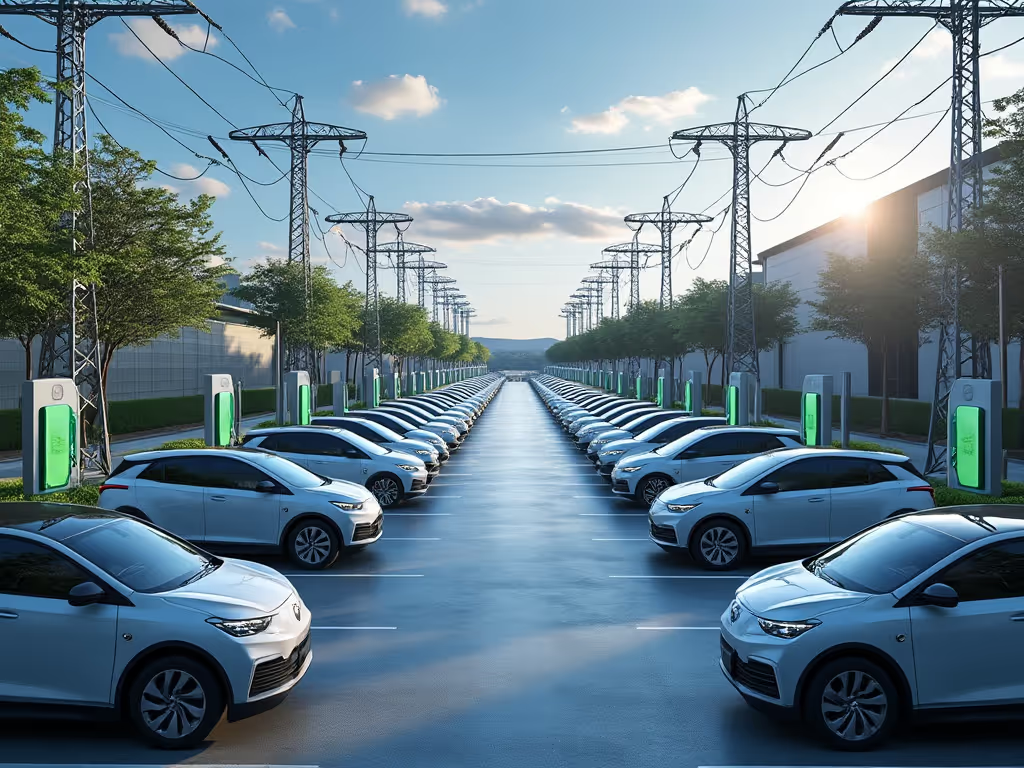
What would an all-EV future look like?

Eighteen states will require all new vehicles to be electric by 2035. NCEA counts the true cost, starting at $1,750 per home for charging alone.

Jonathan Lesser, PhD · Aug 07, 2024 · 5 min read