America’s Energy Dominance Has a Shipping Problem

The United States exports more oil and LNG than any other country. Getting it to market depends on ships it doesn’t own.
The Strait of Hormuz crisis has made one point painfully clear: energy that can’t move is energy that can’t help anyone. The United States has spent the past several months acting as a pressure valve for a world short on oil and gas, exporting enormous volumes to buyers cut off from the Persian Gulf. But almost none of that energy leaves U.S. ports on U.S.-flagged ships. A new issue brief from the National Center for Energy Analytics, U.S. Energy Security Comes Only with Maritime Strength, by Senior Fellow G. Allen Brooks, argues that this gap is the hidden weak point in America’s energy dominance.
Producing Is Not the Same as Delivering
On paper, America’s position looks unassailable. By May 2026, the country was exporting 13.3 million barrels per day of crude and refined products while importing 7.4 million, leaving it a net exporter of roughly 6 million barrels per day. It is also the world’s largest LNG exporter, a remarkable rise for an industry that only began exporting in 2016.
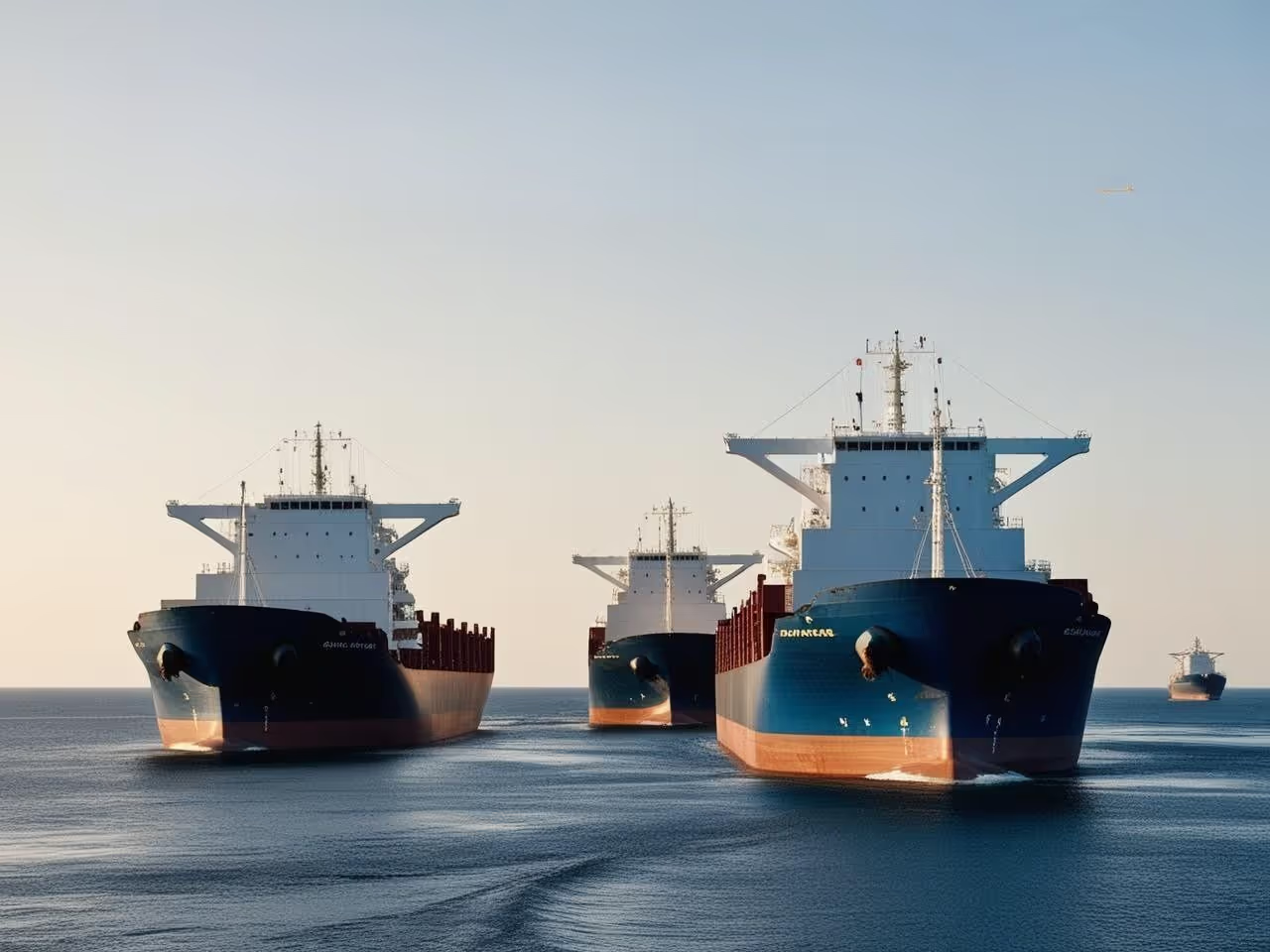
The catch is the fleet. The U.S.-flagged oceangoing fleet numbers just 188 vessels, and few of its tankers are suited to hauling crude for export. Nearly every barrel and every cargo of gas sails under someone else’s flag. If foreign shipowners ever boycotted American cargo, whether at an adversary’s urging or for reasons of their own, U.S. production would have nowhere to go.
One Ship
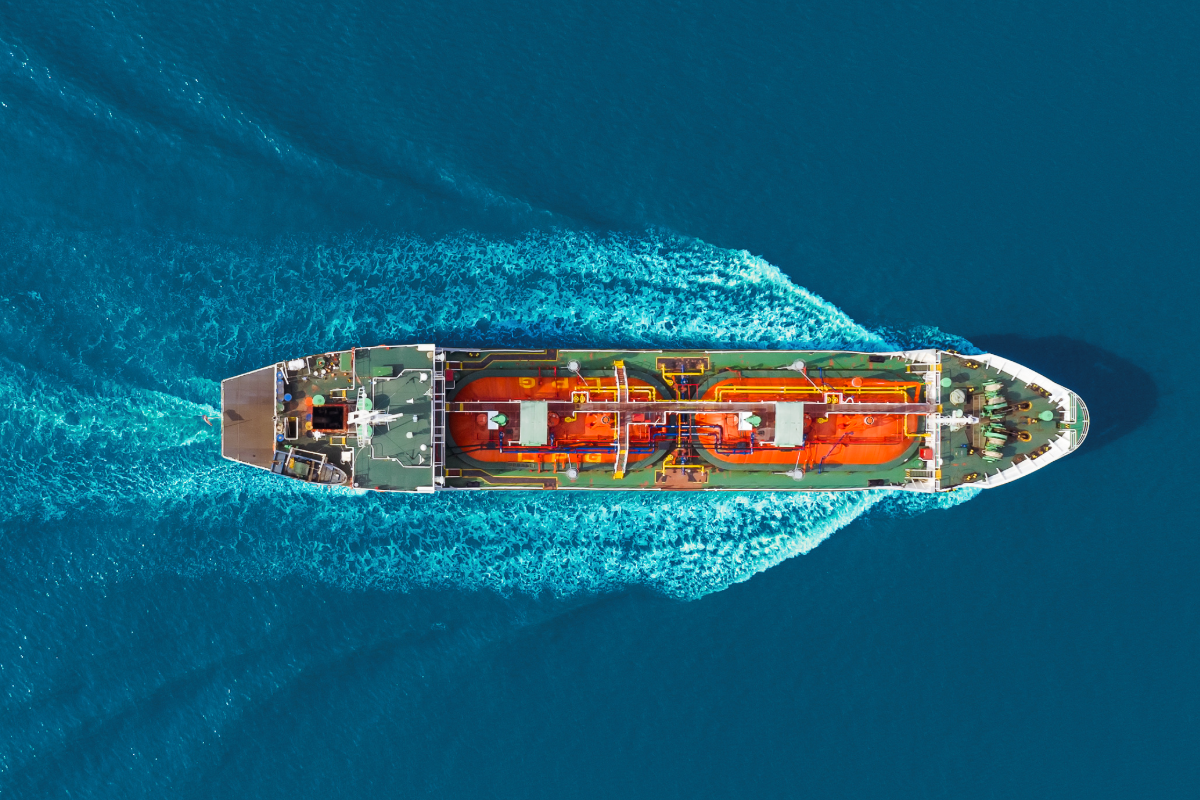
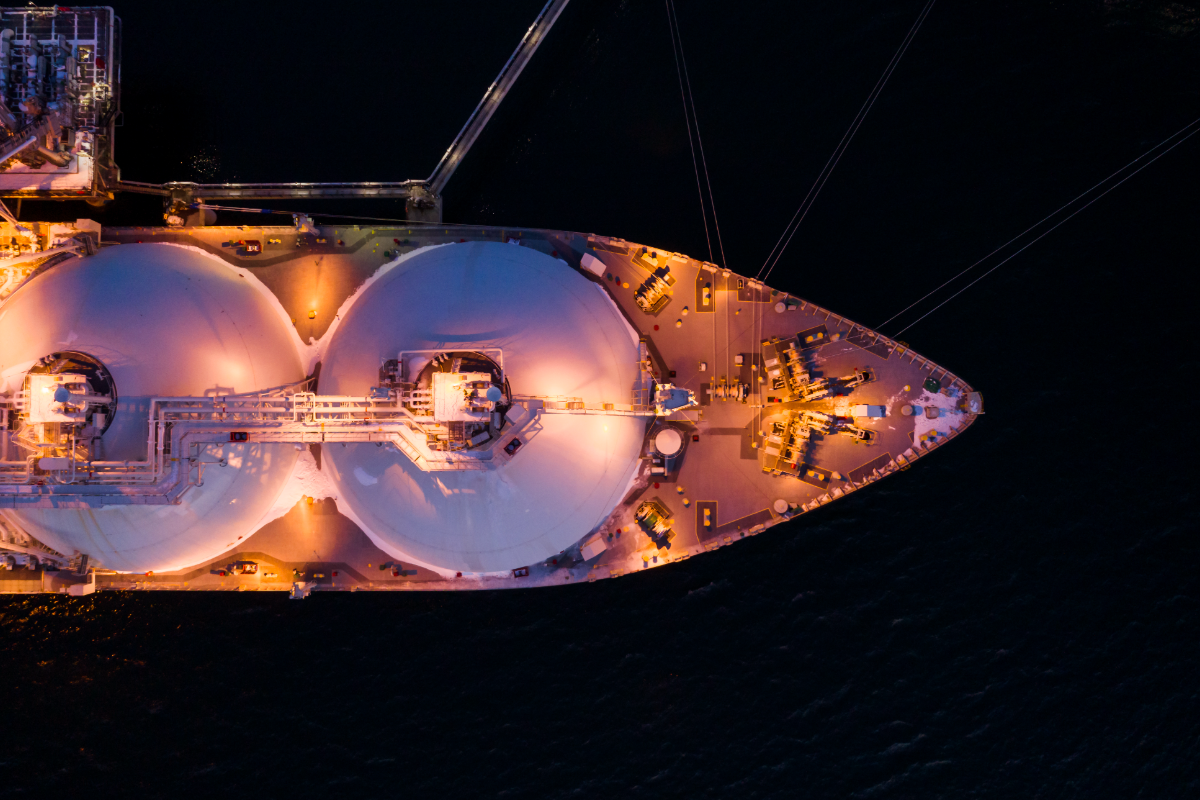
LNG shows the vulnerability most starkly. The United States has exactly one U.S.-flagged LNG carrier: the American Energy, a 32-year-old, foreign-built vessel that was reflagged and now serves Puerto Rico. It holds about half the cargo of some larger modern carriers.
The scale of the mismatch becomes clear when you run the numbers. U.S. LNG exports averaged about 15 billion cubic feet per day in 2025. Moving that volume takes roughly three large carriers every day, or more than 1,000 voyages a year. Distance changes everything. A Houston-to-Rotterdam run would require about 60 ships to carry that output; a Houston-to-Singapore route would require about 180.
Now consider how long those ships take to build. A typical LNG carrier takes about 51 months to construct. If American yards could deliver five a year, the last ship for a Europe-only fleet would arrive in 2042. An Asia-focused fleet wouldn’t be complete until the 2060s. That’s before accounting for the export growth already forecast for the end of this decade.
The Problem at Home
This is not only a global trade story. California offers a preview of what a ship shortage does to domestic markets. Years of political attacks on the oil industry, backed by taxes and mandates, have led companies to shut down production and refining operations. The state now imports 61% of the crude its refineries run and has lost another 17% of its refining capacity in recent months. Gasoline imports in 2025 were more than double their 2023 level.
The Jones Act requires U.S.-built, U.S.-flagged ships for cargo moving between American ports, and there aren’t enough suitable tankers. About 12% of California’s shipborne gasoline in 2025 came by way of the Bahamas as a workaround. Now, with Asian countries hoarding refined products, the state must lean harder on Gulf Coast supplies, which it also needs to serve roughly 50 Defense Department facilities in Western states. The shortage of U.S.-flagged tankers prompted the federal government to issue a Jones Act waiver to head off supply shortages.
A Decline Decades in the Making
How did a country whose shipyards built the merchant and naval fleets of World War II end up here? In 1981, the federal government ended the construction-differential subsidy that had covered up to half the cost of building commercial ships in American yards. Orders for large oceangoing vessels fell from 69 in 1980 to zero by 1988. Of 80 shipyards that have built for U.S. customers since World War I, 60 are gone.
Meanwhile, competitors went the other way. In 2024, China built 55% of the world’s new ship tonnage, and China, Japan, and South Korea together built 95%. The United States built 0.04%. Foreign yards are heavily subsidized, and their ships often cost a small fraction of what an American-built vessel does.
What Rebuilding Would Take
There are early signs of life. An order from Hanwha Shipping at the Hanwha Philly Shipyard marks the first U.S. order for an LNG carrier in 50 years, and both Congress and the administration have put forward plans to revive the industry. But the brief is clear that none of this happens quickly or cheaply.
The realistic tools include modernizing the shipyards, persuading foreign owners to reflag under the U.S. registry with guaranteed cargo to offset higher operating costs, and targeted subsidies so that domestic construction can compete with foreign yards that have been subsidized for decades. Reflagging would be faster; building requires shipyards to become far more productive first.
The case is one of national security, and it has been written into federal law since 1936: a country that depends on the sea for trade and defense needs a merchant fleet of its own. Energy dominance that rests on someone else’s ships is dominance on loan.