Why $200 Oil Never Arrived When Hormuz Closed

The world’s most feared energy scenario finally happened. The safeguards built after the 1970s held up better than the forecasts did.
For decades, a closure of the Strait of Hormuz was the scenario energy analysts loved to war-game and assumed would never happen. Iran, the thinking went, needed the oil revenue too badly, and Washington would never risk the disruption. Both assumptions proved wrong when the strait closed in March 2026. So did many of the predictions about what would follow. In New Energy Lessons and Realities from the Hormuz Crisis, NCEA Senior Fellow Matthew McManus and Research Associate Parth Sarthi Bajaj look at what the experts expected, what actually happened, and what the gap between the two should teach policymakers.
Prediction vs. Reality
- Predicted: Roughly 20% of world oil would be removed from the market. What happened: As much as 70% of Persian Gulf oil, condensate, and products kept reaching buyers through most of the initial closure.
- Predicted: $200-per-barrel oil. What happened: Prices spiked, with physical Brent barrels peaking at $144 in April, but stayed well short of that mark.
- Predicted: A wavering response from the IEA. What happened: Member governments authorized a record 400-million-barrel coordinated stock release, including 172 million barrels from the U.S. reserve.
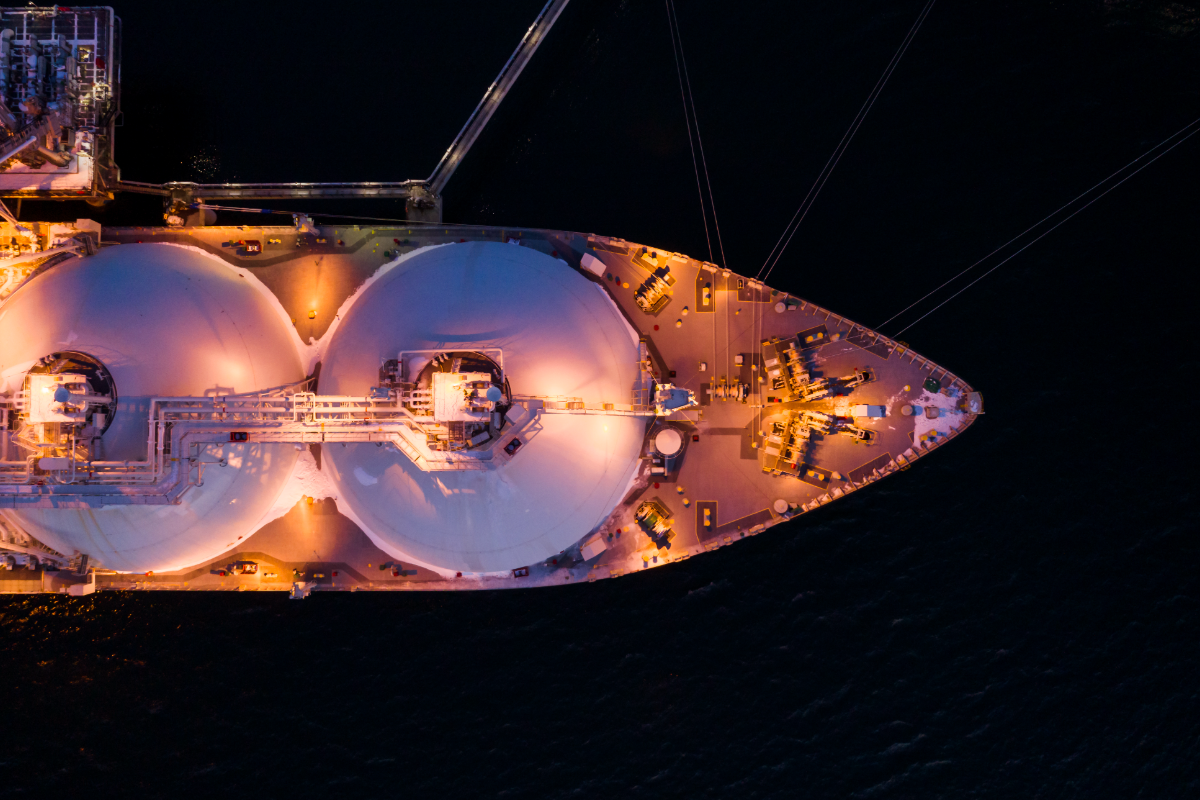
- Predicted: Oil would be the main vulnerability. What happened: LNG, largely overlooked by analysts, was the one area with no easy workaround.
The System Worked as Designed
The biggest surprise is how well the institutions of global energy security performed. The International Energy Agency and its strategic stockpiles were created through American-led diplomacy after the Arab oil embargoes of the 1970s. Half a century later, the agency’s member governments promptly authorized the largest emergency release in its history.
Producers had prepared too. Saudi Arabia’s East–West pipeline ran beyond its nameplate capacity, carrying about 7 million barrels per day to the Red Sea at Yanbu. The United Arab Emirates’ pipeline to Fujairah, built more than a decade ago and now being doubled, routed crude around the strait to a terminal with more than 70 million barrels of storage. Iraq revived its pipeline to Turkey’s Mediterranean coast and is negotiating a route through Syria. Kuwait, which built no bypass, had far fewer options.
The Weak Spots
Not everything held. Refined products ran shorter than crude, and losses deepened after the strait closed a second time in June, while attacks on Russian refineries cut global capacity further. Qatar saw all of its domestic LNG exports curtailed, and it lost some 17% of its LNG capacity to Iranian missiles. Because liquefaction plants are so capital-intensive, there were few economic options for building redundant capacity. That gap deserves serious attention once the crisis ends.
Two Very Different Swing Players
The crisis also revealed which countries could be counted on. China became the unexpected swing consumer, cutting oil imports by nearly 4 million barrels per day, about 32%, in the second quarter. It reversed builds to its strategic reserve, likely drew from it, and switched some petrochemical feedstocks to coal. But it also suspended fuel exports just when the market needed supply and withheld data on its reserve levels when markets needed transparency.
The United States played the opposite role. U.S. oil production is on track to average a record 13.8 million barrels per day in 2026, and crude exports surged 21% above their previous record. LNG exports are expected to set yet another quarterly record. America kept shipping in record volumes, without restrictions, even while drawing down its own reserve. That is what a reliable energy partner looks like.
India, for its part, showed what adaptability looks like. It diversified suppliers, bought U.S. liquefied petroleum gas, ordered refiners to maximize LPG output, escorted tankers with its navy, and absorbed short-term losses to avoid rationing.
The Hemisphere Rises
The longer-term shift may be the most important. The Western Hemisphere now produces 40% of the world’s oil. A fifth production vessel is set to push Guyana past 1 million barrels per day this year, Venezuela is now above that mark, and Canada’s heavy crude, Brazil’s pre-salt, and Argentina’s Vaca Muerta production have all set records. A wave of new U.S.-aligned governments in Latin America is strengthening cooperation on natural resources, including critical minerals. The marginal petrodollar is increasingly headed for the Americas.
Time to Refill the Reserve
The Strategic Petroleum Reserve has fallen from 415 million barrels in February to 285 million in September, well below its 727-million-barrel capacity. Barrels released through exchanges will come back with bonus oil. Still, the brief argues it’s time for Congress to begin the long-overdue debate over funding a full refill, a debate that could, for once, draw support from both parties.
The broader lesson is humility about forecasts and confidence in preparation. Diversified supply, redundant infrastructure, and strategic stocks did what they were built to do. The best Iran can now hope for is a larger share of a shrinking market. The United States, by contrast, is emerging as the world’s proven swing supplier of first and last resort.